Copper Peptides vs Niacinamide
Copper Peptides vs Niacinamide matters because ingredients and product types are often compared as if they do the same job. This guide separates the roles clearly so you can build a cleaner GHK-Cu skincare routine.
The simple rule is to choose the step based on the goal, not the trend. GHK-Cu is the copper peptide step, while the other ingredient or product may support hydration, exfoliation, cleansing, comfort or daytime protection.

Clear answer
Copper peptides and niacinamide are different ingredients with different routine roles. Niacinamide is often used for balanced skin and barrier support, while GHK-Cu is Copper Tripeptide-1, a copper peptide used in CopperTheory routines for smoother skin, hydration support and visible firmness.
Copper Peptides vs Niacinamide matters because ingredients and product types are often compared as if they do the same job. This guide separates the roles clearly so you can build a cleaner GHK-Cu skincare routine.
The simple rule with copper peptides and niacinamide is to pick each step by the job it does, not by the trend, so GHK-Cu stays your copper peptide step while niacinamide covers barrier and balance support.
Key points
- The direct answer to the skin question
- The relevant ingredient or product role
- Routine order or placement where it matters
- Compatibility, comfort and gradual introduction
- Realistic cosmetic expectations
What this means in plain English
The better option depends on what you want from the step. Niacinamide is usually chosen for barrier support and a more balanced complexion, while GHK-Cu Face Serum is the focused copper peptide step for smoother, firmer skin. They answer different goals, so neither has to win. A clinical review of topical niacinamide covers its barrier, texture, tone and formulation evidence.
CopperTheory keeps this practical: treat niacinamide and copper peptides as two different jobs rather than rivals, place GHK-Cu Face Serum as the copper peptide step, and only keep niacinamide in the routine if it earns its spot.
Ingredient or product role
Identify whether the topic concerns cleansing, a leave-on serum, moisturising, masking or another skin-focused step.
Routine context
Use the product where directed and keep the order simple enough to understand what each step contributes.
Comfort and consistency
Introduce changes gradually and judge a repeatable routine rather than constantly changing several products at once.
Skincare routine context
Copper peptides versus niacinamide is a question of routine roles, not a contest for a single winner. Niacinamide is commonly used for barrier and balance support, while GHK-Cu Face Serum is the focused copper peptide step, and the two can share a routine rather than replace each other.
For CopperTheory customers, the aim is to keep GHK-Cu easy to place: cleanse first, apply the copper peptide serum, and slot niacinamide, moisturiser or sunscreen around it only where they make the routine clearer.
Key points
- Cleanse according to skin needs and product directions.
- Apply leave-on serums before richer creams when the formulas are designed for that order.
- Use daytime sun protection where relevant to the routine and local conditions.
- Introduce potentially irritating products gradually instead of stacking several changes at once.
- Adjust the routine when the skin feels persistently uncomfortable.
What to pair and what to separate
A common approach is niacinamide for barrier and balance, GHK-Cu Face Serum as the copper peptide step, then moisturiser and daytime sunscreen. Introduce one at a time so you can tell how your skin responds to each.
If the routine feels dry, tight or overloaded, simplify first. You do not need both ingredients on the same day to benefit; keeping GHK-Cu as the clear serum step is usually enough while your skin adjusts.
Support the skin barrier
Gentle cleansing, hydration and moisturising can help keep an active-style routine comfortable.
Introduce carefully
Retinoids, acidic vitamin C, exfoliating acids and multiple new products may need gradual introduction rather than immediate stacking.
Patch test when appropriate
Test new products cautiously when the skin is reactive or when the directions recommend it.
Common mistakes to avoid
The main mistake is assuming one ingredient must replace the other. Copper peptides and niacinamide do different jobs, so dropping a step you like just because you added the other usually makes the routine harder to read.
Another mistake is starting both on the same day, which makes it impossible to tell what your skin is reacting to. Add one, give it time, then decide whether the second earns a place.
Key points
- Changing several products before the skin has time to adjust
- Using more product than the directions recommend
- Ignoring persistent irritation or barrier discomfort
- Treating ingredient research as proof of a guaranteed finished-product result
- Judging a longer-term cosmetic routine after only one or two uses
How to judge the routine without guessing
In the first week, focus on comfort and whether both steps sit easily together without leaving skin tight or greasy. This is about fit in the routine, not fast results.
Over several weeks, judge whether keeping both is genuinely better for your skin than either alone. The practical expectation is steady, consistent use, with visible changes assessed across a sustained routine rather than a single application.
First applications
Judge comfort, layering, finish and whether the routine is easy to follow.
First month
Judge consistency and changes in hydration, texture or overall appearance without changing several variables at once.
Longer term
Compare the overall pattern over time rather than reacting to a single use, lighting condition or daily fluctuation.
Who this guide is for
This guide is for anyone deciding whether to choose copper peptides, niacinamide, or both. It suits people who want to understand the routine roles rather than pick a side based on hype.
This guide provides practical topical-product and routine guidance grounded in the ingredient roles, formula design and evidence discussed throughout the page.
Key points
- People comparing skincare ingredients or product roles
- People building a clear facial routine
- People deciding how to order or introduce products
- People who want realistic cosmetic expectations
- People who value clear evidence limits and skin comfort
Key summary
Copper peptides versus niacinamide is best answered by role, not rivalry. GHK-Cu Face Serum is the copper peptide step, niacinamide is a barrier-and-balance support, and many routines have room for both.
The practical takeaway is to build around GHK-Cu as the copper peptide step and add niacinamide only if it earns its place. Choose the serum alone, add the face cream, or use the complete skincare routine for the mapped order.
Continue with the relevant skincare steps
Use the product and guide links below only where they directly help apply this article’s answer within a clear skincare routine.
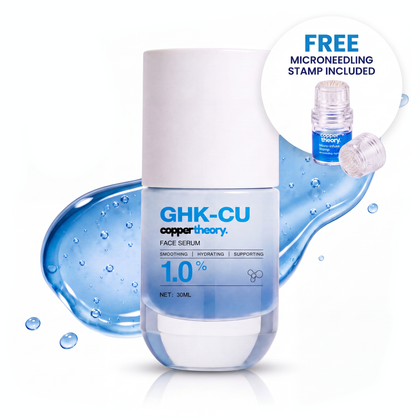
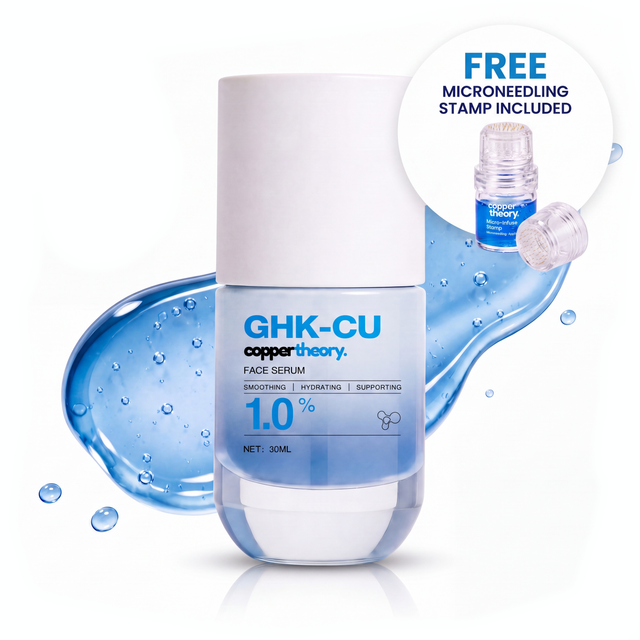
GHK-Cu Face Serum
The hero GHK-Cu copper peptide skincare step for texture, hydration, visible firmness and daily routine support.
Shop GHK-Cu Face Serum
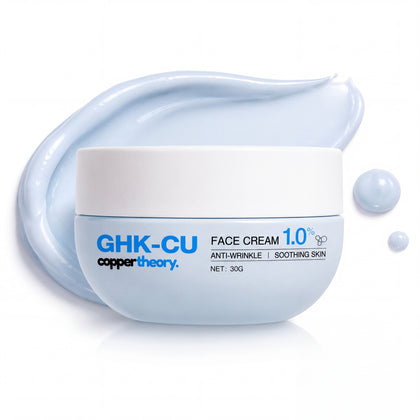
GHK-Cu Face Cream
The moisturising step after serum for comfort, hydration and barrier support.
Shop GHK-Cu Face Cream
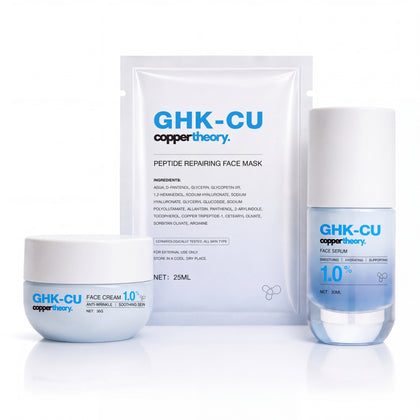
Complete GHK-Cu Skincare Routine
The complete CopperTheory skincare order when you want cleanser, serum, cream and support steps together.
Shop Complete GHK-Cu Skincare RoutineHow to Layer GHK-Cu Serum
Place GHK-Cu in the right order so the routine stays simple and repeatable.
Read: How to Layer GHK-Cu SerumIngredient Compatibility Chart
Check what to pair, separate or introduce slowly when using copper peptide products.
Read: Ingredient Compatibility ChartWhat Not to Mix With Copper Peptides
Avoid overcrowding your routine with too many strong steps at once.
Read: What Not to Mix With Copper PeptidesHow to Use GHK-Cu Face Serum
Turn copper peptide skincare into a simple cleanse, serum and cream routine.
Read: How to Use GHK-Cu Face SerumCopper Peptides With Moisturiser
Pair your serum with the comfort step that helps the routine feel complete.
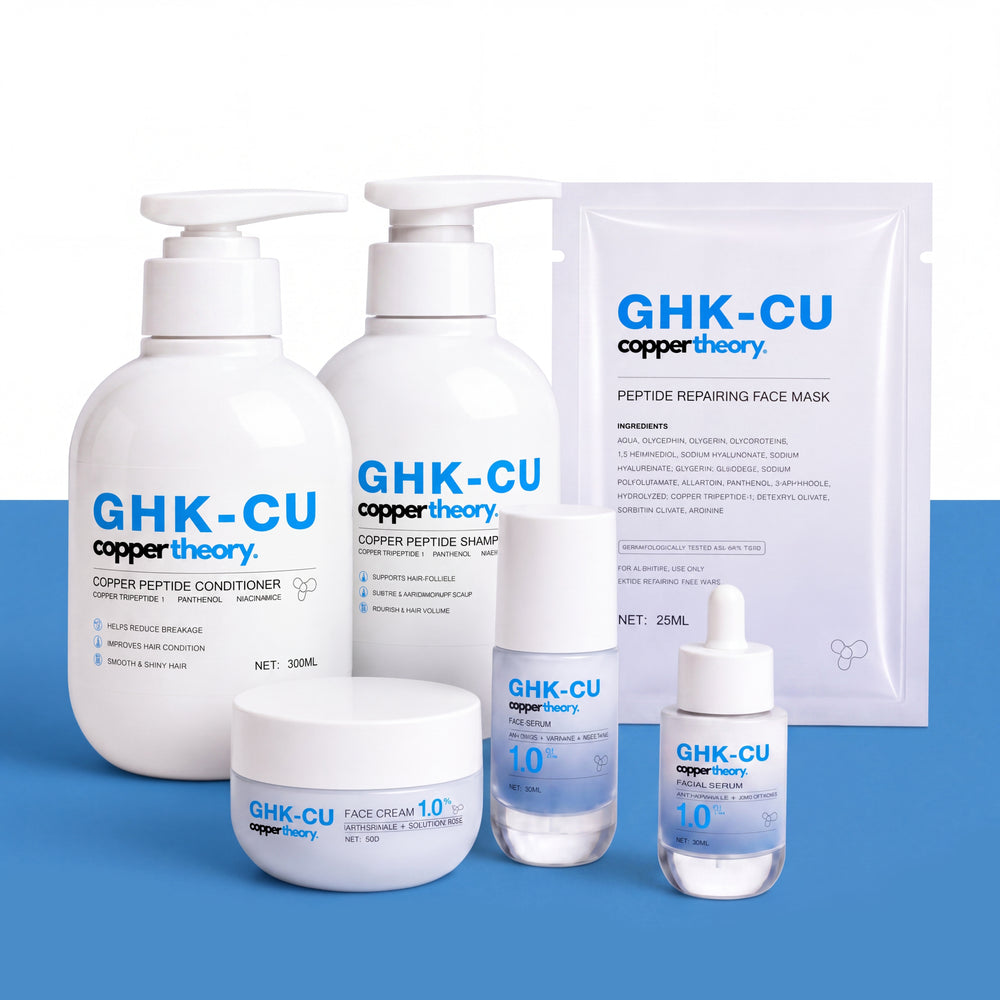
Read: Copper Peptides With MoisturiserShop CopperTheory Skincare
Browse GHK-Cu skincare products for serum, cream, masks and complete skin routines.
Shop CopperTheory SkincareSources and further reading
Inline citations connect specific statements to primary research, regulatory documents or professional guidance. CopperTheory’s current ingredient lists and formula records are tested, verified and disclosed; the source labels below show whether the supporting evidence is ingredient-level, preclinical, human, regulatory or professional guidance.
Copper Peptides vs Niacinamide FAQ
Are copper peptides and niacinamide the same?
No. Niacinamide and copper peptides are different cosmetic ingredients. They can both appear in skincare routines, but GHK-Cu is the copper peptide hero step in CopperTheory formulas.
Can I use copper peptides and niacinamide together?
Yes. They do different jobs, so many people use niacinamide for barrier and balance support and GHK-Cu Face Serum as the copper peptide step. Introduce them one at a time so you can see how your skin responds to each.
Should I choose copper peptides or niacinamide?
It depends on your goal rather than one being better. Niacinamide is often chosen for balance and barrier support, while GHK-Cu is chosen as a copper peptide step for smoother, firmer skin. You do not have to pick only one.
Do copper peptides and niacinamide cancel each other out?
In a normal cosmetic routine they are generally used together without issue. If your skin feels sensitised, simplify by spacing them out or using them at different times of day rather than dropping either completely.
Which CopperTheory product fits this topic?
CopperTheory GHK-Cu Anti-Aging Face Serum is the leave-on peptide step for visible wrinkles, fine lines, firmness, pores, uneven tone, texture, dullness and hydration. It combines Copper Tripeptide-1 with supporting peptides and hydration ingredients for consistent use by men and women. View GHK-Cu Anti-Aging Face Serum.
Should I apply copper peptides or niacinamide first?
Both are lightweight, so either can go first, but many people apply niacinamide and then GHK-Cu Face Serum, or simply use them at different times of day. What matters more is introducing them one at a time so you can see how your skin handles each.
Can niacinamide replace a copper peptide serum?
Not really, because they do different jobs. Niacinamide supports barrier and balance, while GHK-Cu is the copper peptide step aimed at smoother, firmer skin. If you specifically want copper peptides, niacinamide is not a substitute.
Is it too much to use copper peptides and niacinamide together?
For most people it is not, since both are gentle cosmetic steps. If your skin starts to feel sensitised, space them out or use one in the morning and the other at night rather than dropping either completely.
Give copper peptides a clear role
Use GHK-Cu Face Serum as your focused copper peptide step alongside niacinamide, add GHK-Cu Face Cream for hydration, or start with the Complete GHK-Cu Skincare Routine for the full order.