CopperTheory Skin Guide

Why Is GHK-Cu Blue

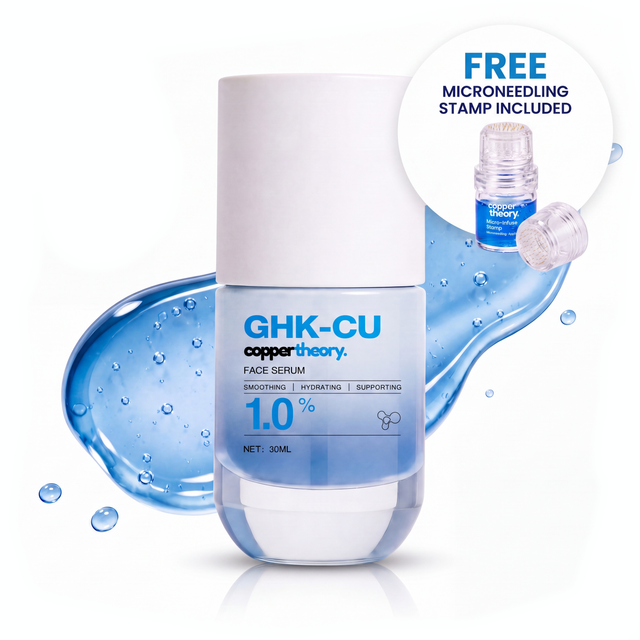
GHK-Cu is blue because of the copper it carries. The 'Cu' in GHK-Cu is a copper ion bound to the GHK peptide, and copper complexes are naturally blue, the same reason many copper solutions look blue. The colour is normal and expected. In a CopperTheory routine, GHK-Cu is the focused copper peptide step, with GHK-Cu Face Serum as the collagen-support skincare hero.

This guide explains why GHK-Cu has its signature blue colour, what that copper bond means, and how GHK-Cu Face Serum fits into a simple CopperTheory routine.

The goal is a routine you can repeat: cleanse, apply the focused serum step, add moisturising support, and avoid adding too many strong products before you know how your skin responds.

GHK-CuCopper peptidesSkin + hair routinesCopperTheory
1.4% GHK-Cu Face Serum for Wrinkles, Firmness & Hydration – 30 mL
Clear answerThe direct answer appears before the supporting explanation.
Skin contextIngredient and product roles are kept within a clear topical skincare routine.
Practical useOrder, compatibility, comfort and consistency are explained where relevant.
Evidence-awareCosmetic appearance support is kept separate from medical or guaranteed outcomes.
01

Clear answer

GHK-Cu is blue because of the copper it carries. The 'Cu' in GHK-Cu is a copper ion bound to the GHK peptide, and copper complexes are naturally blue, the same reason many copper solutions look blue. The colour is normal and expected. In a CopperTheory routine, GHK-Cu is the focused copper peptide step, with GHK-Cu Face Serum as the collagen-support skincare hero.

Why Is GHK-Cu Blue matters because skincare routines work better when every step has a clear job. This guide explains the answer directly, then connects it back to GHK-Cu and the CopperTheory product pathway.

The takeaway is simple: the blue is just the copper doing its job, so let the colour reassure you and focus on using GHK-Cu Face Serum consistently rather than judging it by its shade.

Main takeaway: GHK-Cu is blue because of the copper it carries. The 'Cu' in GHK-Cu is a copper ion bound to the GHK peptide, and copper complexes are naturally blue, the same reason many copper solutions look blue. The colour is normal and expected. In a CopperTheory routine, GHK-Cu is the focused copper peptide step, with GHK-Cu Face Serum as the collagen-support skincare hero.

Key points

  • The direct answer to the skin question
  • The relevant ingredient or product role
  • Routine order or placement where it matters
  • Compatibility, comfort and gradual introduction
  • Realistic cosmetic expectations
02

What this means in plain English

In plain English, GHK-Cu is blue because it is a copper complex: the GHK tripeptide is bound to a copper ion, and copper gives the molecule its blue tint. A blue-tinted copper peptide serum is normal, not a sign of a problem. The evidence base includes a PubMed review of GHK/GHK-Cu research and a review of GHK-Cu regenerative and protective research. CopperTheory connects that ingredient research to its tested, verified and disclosed topical formula.

For CopperTheory customers, GHK-Cu Face Serum is the blue-tinted copper peptide step you build around. Face cream, cleansing and sunscreen support it, and the colour never changes where any of those steps sit.

Ingredient or product role

Identify whether the topic concerns cleansing, a leave-on serum, moisturising, masking or another skin-focused step.

Routine context

Use the product where directed and keep the order simple enough to understand what each step contributes.

Comfort and consistency

Introduce changes gradually and judge a repeatable routine rather than constantly changing several products at once.

03

Skincare routine context

In use, the blue colour makes no difference to where GHK-Cu sits in your routine: cleanse first, apply GHK-Cu Face Serum as the copper peptide step, then follow with GHK-Cu Face Cream or moisturiser, and finish the morning with sunscreen. The tint is cosmetic and does not change how you layer it.

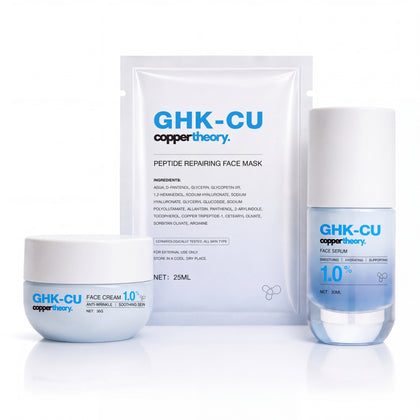
For skin goals, GHK-Cu Face Serum is the hero whatever its tint, GHK-Cu Face Cream supports hydration and comfort afterwards, and the Complete GHK-Cu Skincare Routine maps out the order so the blue serum has a clear place.

Main takeaway: Give each skincare step a clear role and introduce changes gradually enough to judge comfort and fit.

Key points

  • Cleanse according to skin needs and product directions.
  • Apply leave-on serums before richer creams when the formulas are designed for that order.
  • Use daytime sun protection where relevant to the routine and local conditions.
  • Introduce potentially irritating products gradually instead of stacking several changes at once.
  • Adjust the routine when the skin feels persistently uncomfortable.
04

What to pair and what to separate

The blue GHK-Cu Face Serum pairs comfortably with gentle cleansing, hydration, face cream and sunscreen, and the colour does not clash with other steps. Hydrating support such as niacinamide, panthenol, allantoin and sodium hyaluronate-style ingredients suits a simple routine, while retinol, strong acidic vitamin C and exfoliating acids are best introduced slowly, especially on sensitive skin.

If the routine starts to feel tight or overloaded, that has nothing to do with the blue colour, so simplify the steps first. Judge the serum by how your skin feels, not by how deep or pale the tint looks in the bottle.

Support the skin barrier

Gentle cleansing, hydration and moisturising can help keep an active-style routine comfortable.

Introduce carefully

Retinoids, acidic vitamin C, exfoliating acids and multiple new products may need gradual introduction rather than immediate stacking.

Patch test when appropriate

Test new products cautiously when the skin is reactive or when the directions recommend it.

05

Common mistakes to avoid

The most common mistake is reading the blue colour as a warning sign. People assume a blue serum has gone off, has been dyed, or will stain the skin, when the tint simply comes from the copper the peptide carries. Treating a normal colour as a fault often leads to tossing a perfectly good serum.

Another mistake is judging strength by shade, assuming a deeper blue means a more powerful product or a paler blue means a weak one. Colour depth reflects the formula and the copper complex, not a performance score, so choose your serum by its role in the routine rather than by how blue it looks.

Main takeaway: A useful skincare routine is simple enough to repeat and gentle enough to assess.

Key points

  • Changing several products before the skin has time to adjust
  • Using more product than the directions recommend
  • Ignoring persistent irritation or barrier discomfort
  • Treating ingredient research as proof of a guaranteed finished-product result
  • Judging a longer-term cosmetic routine after only one or two uses
06

How to judge the routine without guessing

The blue is there from the very first drop and stays consistent, so there is no colour change to wait for or watch develop. What you are really building over time is the routine itself: in the first week judge comfort and whether the serum feels good to apply, and over about a month judge how your skin feels with steady, repeated use.

If the blue looks slightly different between batches or under different lighting, that is normal variation in a copper complex, not a signal to start over. Give the serum consistent use rather than reacting to small shifts in tint, and keep the rest of the routine simple so it stays easy to judge how your skin feels.

First applications

Judge comfort, layering, finish and whether the routine is easy to follow.

First month

Judge consistency and changes in hydration, texture or overall appearance without changing several variables at once.

Longer term

Compare the overall pattern over time rather than reacting to a single use, lighting condition or daily fluctuation.

07

Who this guide is for

This guide is for anyone who opened a copper peptide serum, saw the blue colour and wondered whether it is normal or a defect. It is useful if you are new to GHK-Cu, comparing copper peptide products, or simply reassuring yourself that a blue-tinted serum is exactly what a copper complex should look like.

This guide provides practical topical-product and routine guidance grounded in the ingredient roles, formula design and evidence discussed throughout the page.

Key points

  • People comparing skincare ingredients or product roles
  • People building a clear facial routine
  • People deciding how to order or introduce products
  • People who want realistic cosmetic expectations
  • People who value clear evidence limits and skin comfort
08

Key summary

The short version: GHK-Cu is blue because it is a copper complex, with the GHK peptide bound to a copper ion that gives the molecule its signature tint. The colour is a feature of the chemistry, not a flaw, and it appears in copper peptide products by design.

Once you know the blue means copper, you can stop worrying about the colour and focus on the routine: keep GHK-Cu Face Serum as the copper peptide step, support it with moisturiser and sunscreen, and use it consistently rather than judging it by its shade.

Main takeaway:GHK-Cu is blue because it is a copper complex: the tint is a feature of the chemistry, not a fault, so use the serum without worrying about its colour.
Next steps

Continue with the relevant skincare steps

Use the product and guide links below only where they directly help apply this article’s answer within a clear skincare routine.
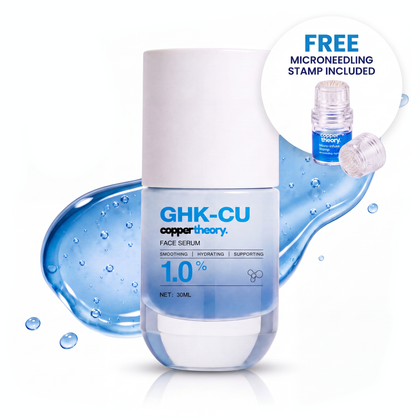
1.4% GHK-Cu Face Serum for Wrinkles, Firmness & Hydration – 30 mL

GHK-Cu Face Serum

The hero GHK-Cu copper peptide skincare step for texture, hydration, visible firmness and daily routine support.

Shop GHK-Cu Face Serum
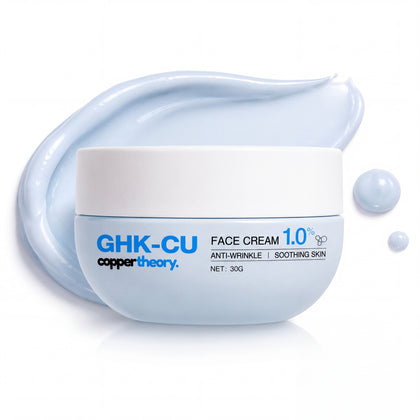
1.4% GHK-Cu Face Cream for Wrinkles, Firmness & Barrier Repair – 30 g

GHK-Cu Face Cream

The moisturising step after serum for comfort, hydration and barrier support.

Shop GHK-Cu Face Cream
Complete 3-Step GHK-Cu Skincare Routine for Wrinkles, Firmness & Hydration

Complete GHK-Cu Skincare Routine

The complete CopperTheory skincare order when you want cleanser, serum, cream and support steps together.

Shop Complete GHK-Cu Skincare Routine

How to Use GHK-Cu Face Serum

Turn copper peptide skincare into a simple cleanse, serum and cream routine.

Read: How to Use GHK-Cu Face Serum

How to Layer GHK-Cu Serum

Place GHK-Cu in the right order so the routine stays simple and repeatable.

Read: How to Layer GHK-Cu Serum

What Not to Mix With Copper Peptides

Avoid overcrowding your routine with too many strong steps at once.

Read: What Not to Mix With Copper Peptides

Copper Peptides With Moisturiser

Pair your serum with the comfort step that helps the routine feel complete.

Read: Copper Peptides With Moisturiser

Skin Barrier Explained

Understand why comfort, moisturiser and consistency matter around active-style products.

Read: Skin Barrier Explained

Copper Peptides for Skin

See how copper peptide skincare connects to texture, hydration, firmness and routine order.

Read: Copper Peptides for Skin
Evidence

Sources and further reading

Inline citations connect specific statements to primary research, regulatory documents or professional guidance. CopperTheory’s current ingredient lists and formula records are tested, verified and disclosed; the source labels below show whether the supporting evidence is ingredient-level, preclinical, human, regulatory or professional guidance.

  1. The potential of GHK as an anti-aging peptide (PMID 35083444)
  2. Regenerative and protective GHK-Cu research review (PMID 29986520)
FAQ

Why Is GHK-Cu Blue FAQ

Why is GHK-Cu blue?

GHK-Cu is blue because it is a copper complex: the GHK peptide is bound to a copper ion, and copper gives the molecule its characteristic blue colour. The blue tint is normal and expected in copper peptide products.

Does the blue colour stain my skin or pillowcase?

No. The blue tint in GHK-Cu comes from the copper complex in the formula and absorbs with the serum rather than dyeing your skin. Apply it as a normal serum step and follow with your usual moisturiser; in normal use you should not see the colour transfer to skin or fabric.

Does a darker blue mean the serum is stronger?

Not necessarily. The depth of blue reflects the formula and how the copper complex is presented, not a strength rating you can read by eye. Choose a copper peptide serum by its role and formulation rather than by how deep the blue looks.

Is it a problem if the blue colour looks slightly different between bottles?

Small differences in shade between batches, or under different lighting, are normal for a copper complex and are not a sign the serum has spoiled. As long as it has been stored sensibly and is within its use period, a minor variation in blue is expected.

Which CopperTheory product fits this topic?

CopperTheory GHK-Cu Anti-Aging Face Serum is the leave-on peptide step for visible wrinkles, fine lines, firmness, pores, uneven tone, texture, dullness and hydration. It combines Copper Tripeptide-1 with supporting peptides and hydration ingredients for consistent use by men and women. View GHK-Cu Anti-Aging Face Serum.

Is the blue colour of a copper peptide serum normal?

Yes. The blue tint comes from the copper in GHK-Cu and is expected. It is a natural feature of copper peptide formulas, not a fault.

Will the blue colour fade as the serum gets older?

A copper peptide serum keeps its blue tint because the colour comes from the copper bound in GHK-Cu, not from an added dye that washes out. Minor shifts in shade between batches or under different lighting are normal, but a stored, in-date serum should stay blue.

Does the blue colour change how I should layer or store the serum?

No. The tint is cosmetic, so you apply GHK-Cu Face Serum in the same place in your routine, after cleansing and before moisturiser, regardless of colour. Store it as you would any serum, away from heat and strong light.

Try the blue copper peptide serum

Start with GHK-Cu Face Serum, the blue-tinted copper peptide step, add GHK-Cu Face Cream for hydration and comfort, or choose the Complete GHK-Cu Skincare Routine when you want the full order mapped out.