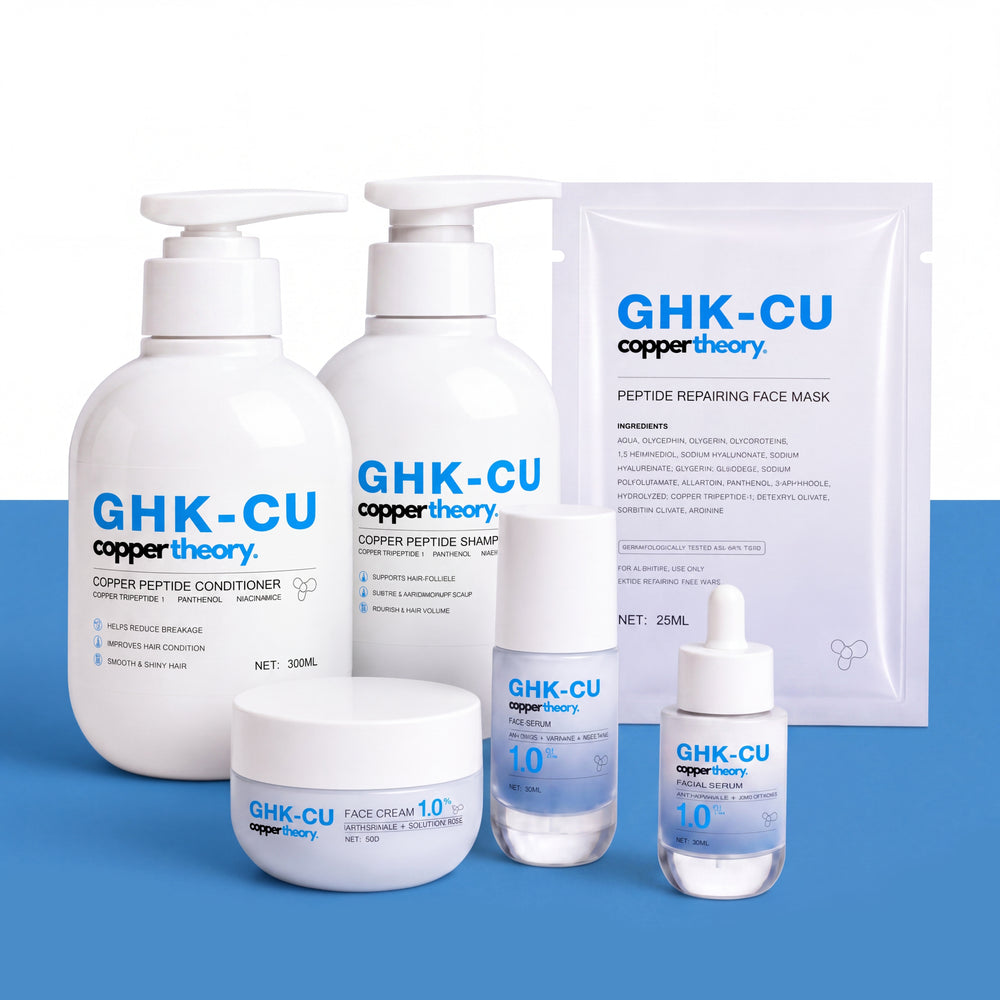
CopperTheory Hair Science

The Science of Hair Growth

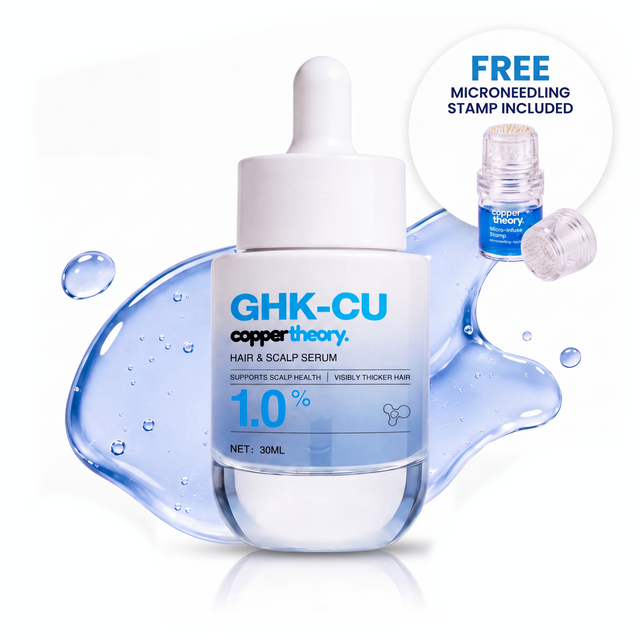
Hair grows in a repeating cycle of three phases: anagen (active growth), catagen (a short transition) and telogen (rest, then shedding). Most scalp hair is in anagen at any time. Thinning happens when the growth phase shortens and follicles produce finer, shorter hairs — so supporting the scalp environment is central to any hair routine. See the GHK-Cu Hair Serum used as the leave-on scalp step in this guide.

This guide explains how the hair growth cycle actually works — anagen, catagen and telogen — and what drives hair density, shedding and thinning at the hairline, temples and crown.

It also shows where a scalp-first copper peptide routine fits, and what topical care can and cannot do, so your expectations match the biology.

AnagenCatagenTelogenHair density
1.4% GHK-Cu Hair Growth Serum for Hair Loss, Thinning & Density – 30 mL
Clear answerThe direct answer appears before the supporting explanation.
Category clarityIngredients, finished cosmetics, preclinical findings, human evidence and medical use are not treated as interchangeable.
Practical meaningThe guide explains what the evidence can reasonably mean for a topical routine.
Limits statedUncertainty and evidence limits are kept visible instead of being turned into guarantees.
01

Clear answer

Every follicle moves through three phases. Anagen is the active growth phase, when the follicle produces a continuous hair fibre; it lasts years and sets how long hair can grow. Catagen is a brief transition of a few weeks, when growth stops and the follicle regresses. Telogen is the resting phase of a few months, after which the hair sheds and a new anagen hair begins.

At the base of each follicle sits the dermal papilla — a cluster of cells that signals the follicle through the cycle and influences how thick a hair it produces. The proportion of follicles in anagen versus telogen, and the condition of the dermal papilla, together shape how full the hair looks.

Hair density is a combination of how many follicles are active and how thick each fibre is. When more follicles rest in telogen, or produce finer hairs, density visibly drops — most noticeably at the hairline, temples and crown.

Main takeaway: Most scalp hair is in the growth phase at any moment; thinning reflects a shift toward shorter growth and finer fibres.

Key points

  • The direct answer to the question
  • What is being explained or compared
  • The type and strength of supporting evidence
  • Important limits or uncertainty
  • The practical takeaway without overclaiming
02

What this means in plain English

Shedding and breakage look alike but are different. Shedding is a natural part of the cycle — telogen hairs falling out with a small white bulb at the root — and losing some hairs daily is normal. Breakage is mechanical: the fibre snaps along its length, usually from friction, heat or over-processing, and leaves no root.

The distinction matters because each needs a different response. Shedding relates to the growth cycle and the scalp environment; breakage relates to how you handle and condition the hair. A complete routine addresses both — a supported scalp and a conditioned, resilient fibre.

What it is

Start by defining the ingredient, structure, product category or route being discussed.

What evidence can show

Separate laboratory, preclinical, human, regulatory and professional guidance according to what each source actually supports.

What it cannot prove

Ingredient research or a mechanistic explanation does not automatically prove a finished product will deliver a guaranteed outcome.

03

Practical context

A scalp-first routine works with the cycle rather than against it. Cleanse the scalp to remove buildup, condition the hair to keep the fibre resilient, then apply a leave-on scalp treatment where thinning shows. That order puts the targeted step in contact with the scalp, where the follicle lives.

CopperTheory positions GHK-Cu (Copper Tripeptide-1) around scalp condition, renewal signalling and the environment surrounding the hair follicle, while Acetyl Tetrapeptide-3 with Red Clover is focused on fuller density and the area around the hair root. Used consistently, it is the leave-on step of the routine.

Main takeaway: Keep ingredient theory, finished-product evidence, cosmetic use and medical use in their correct categories.

Key points

  • Define the exact question before comparing evidence.
  • Separate topical cosmetics from injections, medicines and clinical procedures.
  • Distinguish ingredient-level findings from evidence on a finished formula.
  • Consider concentration, delivery, contact time and study population.
  • Use a qualified professional for medical decisions rather than extending cosmetic guidance beyond its scope.
04

What to compare and what to keep separate

Pair a copper peptide scalp routine with the basics that protect the cycle: gentle cleansing, conditioning the mid-lengths and ends, limiting heat and tension, and — above all — consistency, since the cycle turns over slowly. These habits reduce breakage while the scalp step supports the environment around the follicle.

Keep expectations separate from prescription treatments. Topical copper peptides are cosmetic scalp care; they are a complementary topical pathway with a different role from prescription options such as minoxidil or finasteride; copper peptides work through peptide and scalp-support pathways rather than DHT blocking. If you use both, they play different roles — visible appearance support alongside any medical routine.

Compare like with like

Compare evidence from similar routes, formulations, populations and outcomes rather than combining unlike categories.

Separate mechanism from outcome

A plausible biological mechanism can support a hypothesis without proving a visible or clinical result in a finished product.

Keep scope visible

Cosmetic education can explain topical use, but diagnosis, injections, medicines and treatment decisions require qualified professional guidance.

05

Common mistakes to avoid

The most common mistake is expecting the cycle to change overnight. Because anagen lasts years and telogen months, visible change is inherently gradual — judging a routine after a week or two misreads the biology. Another is mistaking normal shedding for loss and abandoning a routine during a natural shed.

Over-washing, aggressive brushing, tight styles and constant heat drive breakage that makes thinning look worse than it is. And chasing instant-result claims — fixed regrowth promises, fixed timelines — sets up disappointment. Steady, gentle, scalp-first care is what works with the cycle.

Main takeaway: The strongest conclusion is the one the available evidence actually supports.

Key points

  • Treating ingredient research as finished-product clinical proof
  • Treating laboratory or preclinical findings as confirmed human outcomes
  • Comparing topical cosmetics directly with injections, medicines or procedures
  • Ignoring formulation, concentration, delivery and contact time
  • Turning uncertainty into a guaranteed claim or forced product conclusion
06

How to judge the evidence without guessing

Judge results against the cycle, not the calendar week. Give a routine consistent months, and assess overall density and how the hair feels at the scalp rather than counting individual hairs. Photograph the same areas — hairline, temples, crown — in the same light over time.

A scalp-first routine supports scalp comfort, hair condition and consistent targeted placement across thinning-looking areas. Visible results develop over the hair cycle and reflect formula fit, placement and long-term consistency.

Evidence type

Identify whether a source is laboratory, preclinical, human, regulatory or professional guidance.

Product relevance

Check whether the evidence concerns the same ingredient, concentration, delivery route, formula and outcome being discussed.

Conclusion strength

State what is supported, what is only plausible and what remains unknown instead of presenting all evidence as equal.

07

Who this guide is for

This applies to anyone noticing thinning, reduced density or a weaker hairline, temples or crown — men and women, and all hair textures. Understanding the cycle helps you choose a routine you can keep to, which is what matters most.

It also helps you decide between a single leave-on serum and a full routine: the serum is the targeted scalp step, while shampoo and conditioner keep the fibre clean and resilient between applications.

Key points

  • People comparing ingredients, product categories or delivery routes
  • People trying to understand the strength of a claim
  • People separating cosmetic guidance from medical discussion
  • People who want uncertainty and evidence limits stated clearly
  • People deciding what the available evidence means in practice
08

Key summary

Hair grows in cycles — anagen, catagen, telogen — and density reflects how many follicles are actively growing and how thick each fibre is. Thinning is a shift toward shorter growth and finer hairs, seen first at the hairline, temples and crown.

A scalp-first routine works with the cycle: cleanse, condition, and apply a leave-on copper peptide step where thinning shows. Support the scalp environment, protect the fibre from breakage, and give it consistent time.

Main takeaway:Work with the cycle: support the scalp, protect the fibre, and measure progress in months.
Next steps

Continue with the relevant evidence and practical context

The products and guides below are included only where they directly relate to the question explained on this page.
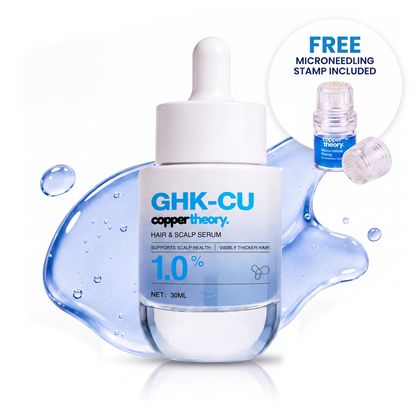
1.4% GHK-Cu Hair Growth Serum for Hair Loss, Thinning & Density – 30 mL

GHK-Cu Hair Serum

The leave-on scalp step. Copper Tripeptide-1 supports the scalp environment around the follicle, while Acetyl Tetrapeptide-3 and Red Clover focus on fuller density at the hairline, temples and crown.

Shop the Hair Serum
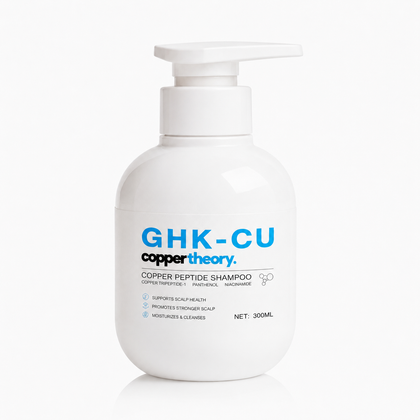
GHK-Cu Hair Growth Shampoo for Hair Loss, Buildup & Scalp Care – 300 mL

GHK-Cu Shampoo

Cleanses the scalp and removes buildup so the leave-on serum works on a clean base — the wash-day foundation of a scalp-first routine.

Shop the Shampoo
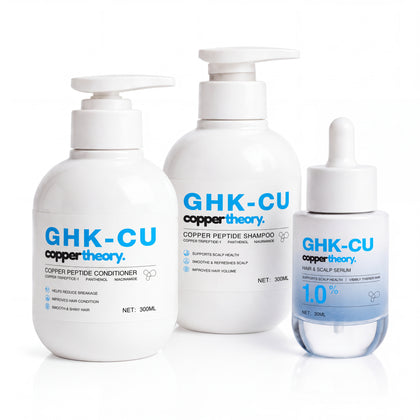
Complete 3-Step GHK-Cu Hair Growth Routine for Thinning Hair

Complete GHK-Cu Hair Care Routine

Shampoo, conditioner and the leave-on serum together — the full scalp-to-strand routine, in the right order, for consistency.

Build the routine

How to Use GHK-Cu Hair Serum

The application technique — where to part, how much, and why it is left on.

Read: How to Use GHK-Cu Hair Serum

GHK-Cu for Scalp Care

How a scalp-first, needle-free copper peptide routine supports the follicle's environment.

Read: GHK-Cu for Scalp Care

Copper Peptides for Hair

What copper peptides do for hair and scalp, and how the serum fits.

Read: Copper Peptides for Hair

Complete Hair Routine Checklist

A simple checklist to keep your scalp-first routine consistent.

Read: Complete Hair Routine Checklist

What Is GHK-Cu?

The copper peptide explained — what GHK-Cu is and how it is used.

Read: What Is GHK-Cu?

Complete GHK-Cu Hair Routine

The full routine pillar — every step and why it exists.

Read: Complete GHK-Cu Hair Routine
Evidence

Sources and further reading

Inline citations connect specific statements to primary research, regulatory documents or professional guidance. CopperTheory’s current ingredient lists and formula records are tested, verified and disclosed; the source labels below show whether the supporting evidence is ingredient-level, preclinical, human, regulatory or professional guidance.

  1. American Academy of Dermatology — healthy hair guidance
FAQ

The Science of Hair Growth FAQ

What are the three phases of the hair growth cycle?

Anagen (active growth, lasting years), catagen (a short transition of a few weeks) and telogen (rest for a few months, after which the hair sheds and a new one grows).

Why does hair thin at the hairline, temples and crown first?

These areas are most sensitive to the shift toward shorter growth phases and finer fibres, so reduced density tends to show there earliest.

What is the difference between shedding and breakage?

Shedding is a natural part of the cycle — telogen hairs falling with a small root bulb, and roughly 50 to 100 a day is a normal amount to lose. Breakage is different and mechanical, where the fibre snaps along its length from friction, heat or tension rather than being released at the root.

How long before a hair routine shows a difference?

Because the cycle turns over slowly, give a routine consistent months rather than days, and assess overall density in the same areas and light. Track visible density in the same areas and lighting over consistent monthly intervals.

Do copper peptides regrow hair or block DHT?

No. Topical copper peptides are cosmetic scalp care that supports the environment around the follicle; they work through peptide and scalp-support pathways and can sit alongside a separately managed prescription pathway.

Where does GHK-Cu fit in the hair growth cycle?

It is a leave-on scalp step that supports scalp condition and the environment surrounding the follicle, used consistently in a scalp-first routine — while Acetyl Tetrapeptide-3 and Red Clover focus on fuller density.

Is the hair growth routine suitable for men and women?

Yes — the cycle works the same way for everyone, and the scalp-first routine suits men and women and all hair textures.

Should I use sunscreen?

Yes. Use sunscreen during the day as the final morning step.

Support your scalp, work with the cycle

Start with the leave-on GHK-Cu Hair Growth Serum, or build the complete scalp-first routine.

COPPERTHEORY IN NZ

Shopping CopperTheory in New Zealand

CopperTheory—also written as Copper Theory—is an Australian-owned GHK-Cu skincare, hair care and scalp care brand that ships worldwide. This storefront is set for New Zealand and displays prices in New Zealand dollars (NZD).

Does CopperTheory ship to New Zealand?

Yes. CopperTheory ships to New Zealand through its international fulfilment network. Delivery options, charges and the final order total are confirmed at checkout.

What currency will I pay in?

Product prices on this market are shown in New Zealand dollars (NZD). Your checkout keeps the selected market and currency together.

Are price and availability localised?

Yes. Shopify Markets applies the price, currency and product availability configured for New Zealand. These can differ from another country’s storefront.