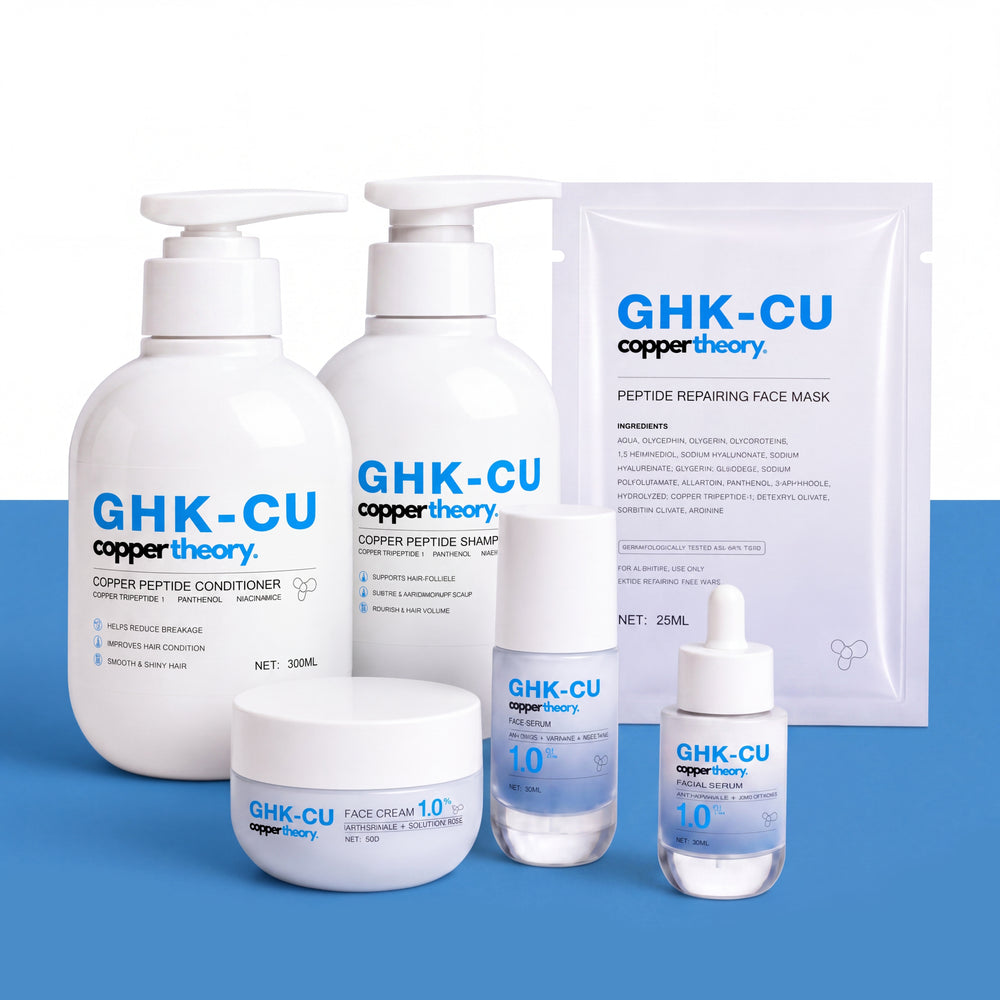
GHK-Cu vs AHK-Cu for Hair: Formula and Use Comparison
The key distinctionUse exact INCI naming and match each study to the peptide actually studied. Read the product-specific results page, the matching concern hub, the testing and verification guide and the complete routine for the connected evidence and routine context.
Direct comparison
GHK-Cu and AHK-Cu are different copper-binding peptides. They should not be treated as interchangeable names, and the often-cited human hair-follicle paper indexed at PMID 17703734 studied an AHK-Cu/tripeptide-copper complex rather than proving a finished GHK-Cu serum.
Use exact INCI naming and match each study to the peptide actually studied.
What GHK-Cu means
GHK-Cu is the copper complex of the tripeptide glycyl-L-histidyl-L-lysine. In cosmetics it is used in skin and scalp formulas, but its value depends on the finished formula and use case.
The name alone does not disclose the complete formula, concentration, supporting system or finished-product evidence. Use exact INCI and official product information where available.
What AHK-Cu means
AHK-Cu is a different copper-binding peptide. It should not be treated as another name for GHK-Cu, and a brand should disclose which copper peptide it actually uses.
A similar consumer goal does not make two technologies chemically or practically identical. The comparison must stay at the level each source actually supports.
Side-by-side decision factors
| Factor | GHK-Cu | AHK-Cu |
|---|---|---|
| Identity | Check the exact active and INCI name. | Check the exact active, system or format. |
| Concentration | Clarify pure active, supplied solution or complex. | Use the same concentration standard rather than comparing unlike numbers. |
| Routine role | Match contact time and placement. | Match contact time and placement. |
| Evidence | Separate ingredient research from finished-product results. | Apply the same evidence boundary. |
| Best fit | Choose when its specific job is missing. | Choose when its different job or tolerance profile is the better fit. |
Where CopperTheory Hair & Scalp Serum fits
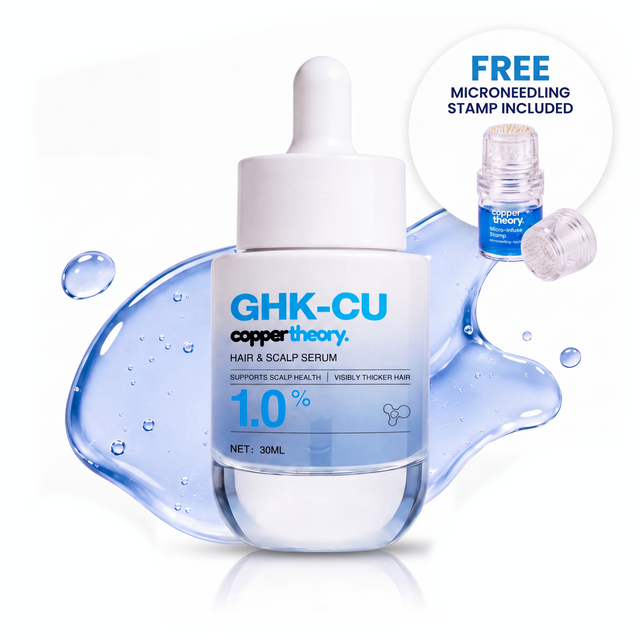
GHK-Cu Hair & Scalp Serum is the concentrated leave-in treatment step for the hairline, temples, crown and other thinning zones.
Formula summary: 1.4% GHK-Cu and a 3.4% declared peptide complex. The 3.4% declared peptide complex is 1.4% GHK-Cu plus 2% Acetyl Tetrapeptide-3. The separate 2% Red Clover Extract is botanical support, not a peptide.
| Declared level | Ingredient or system | Role in this formula |
|---|---|---|
| 1.4% | GHK-Cu (Copper Tripeptide-1) | Core copper-peptide component of the leave-in scalp system. |
| 2% | Acetyl Tetrapeptide-3 | The second peptide in the declared peptide complex; positioned around density and follicle anchoring. |
| 2% | Red Clover Extract | Botanical support for the thinning-zone system; it is not a peptide and is not included in the 3.4% peptide total. |
| 2% | Niacinamide | Supports scalp-barrier condition, moisture balance and comfortable daily use. |
| 1% | Panthenol | Supports hydration and hair-fibre flexibility. |
| 0.10% | Sodium Hyaluronate | Lightweight water-binding support for the scalp. |
| 0.25% | Arginine | Conditioning and formula-pH support. |
| 0.20% | Allantoin | Supports comfort for dry or stressed scalp conditions. |
Read the product-specific results page, the matching concern hub, the testing and verification guide and the complete routine for the connected evidence and routine context.
Can the options be used in one routine?
They can sometimes be used in the same broader routine because they are not identical technologies, but overlap, tolerance and complexity should be considered. The simpler decision is to choose the formula that already covers the main goal before adding another product.
Introduce changes one at a time, keep the product directions visible and simplify the routine when tolerance becomes difficult to interpret.
Research and source quality
Use AHK-Cu (a different tripeptide-copper complex) and human hair follicles — PubMed, Topical GHK-Cu delivery study — PubMed as the external source set for this comparison. Official product pages describe their own current formulas and directions; PubMed papers describe the molecule, model and endpoint studied. Neither should be rewritten as proof for a different product.
Which should you choose?
Choose GHK-Cu when its exact formula and role address the main gap; choose AHK-Cu when its different mechanism, format or tolerance profile is the better match. Choose GHK-Cu Hair & Scalp Serum when you want the disclosed CopperTheory formula and the connected evidence and routine system.
Relevant CopperTheory products
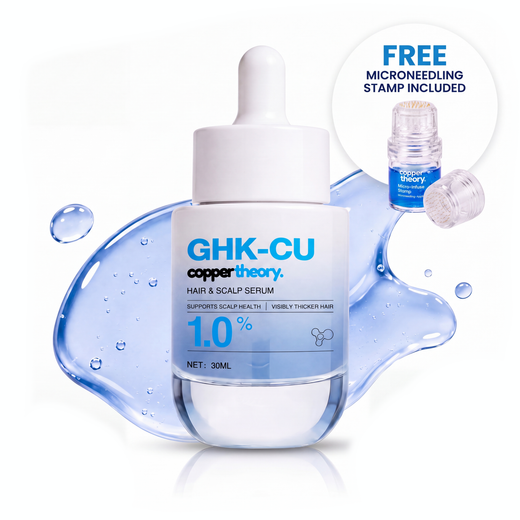
1.4% GHK-Cu Copper Peptide Hair Growth Serum for Thinning & Density
GHK-Cu Hair & Scalp Serum is the concentrated leave-in treatment step for the hairline, temples, crown and other thinning zones.
View product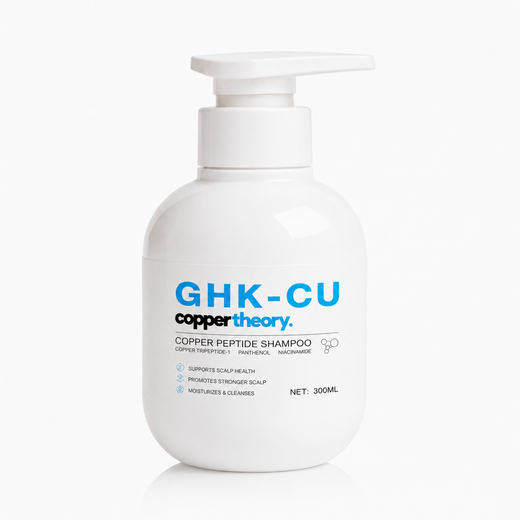
1% GHK-Cu Copper Peptide Hair Growth Shampoo for Hair Loss, Buildup & Scalp Care
GHK-Cu Scalp Shampoo is the cleansing step that removes oil, sweat, flakes and styling residue before the leave-in serum.
View product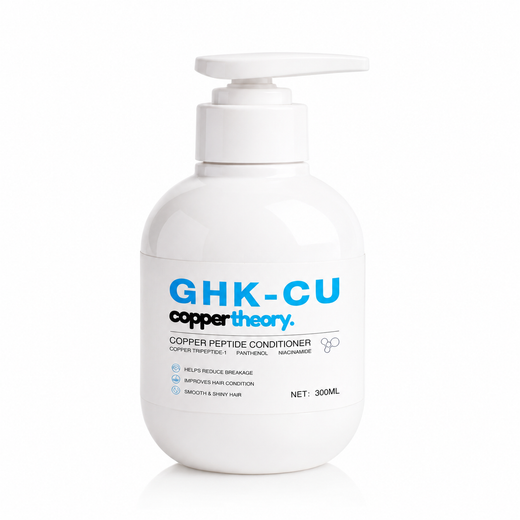
1% GHK-Cu Copper Peptide Hair Growth Conditioner for Breakage & Detangling
GHK-Cu Conditioner is the wash-day step for slip, detangling, cuticle smoothing, moisture and lower handling friction.
View productGHK-Cu vs AHK-Cu for Hair: Formula and Use Comparison FAQ
How do GHK-Cu and AHK-Cu for Hair compare?
GHK-Cu and AHK-Cu are different copper-binding peptides. They should not be treated as interchangeable names, and the often-cited human hair-follicle paper indexed at PMID 17703734 studied an AHK-Cu/tripeptide-copper complex rather than proving a finished GHK-Cu serum. Use exact INCI naming and match each study to the peptide actually studied.
What does GHK-Cu mean in the context of GHK-Cu vs AHK-Cu for Hair: Formula and Use Comparison?
GHK-Cu is the copper complex of the tripeptide glycyl-L-histidyl-L-lysine. In cosmetics it is used in skin and scalp formulas, but its value depends on the finished formula and use case. The name alone does not disclose the complete formula, concentration, supporting system or finished-product evidence. Use exact INCI and official product information where available. On this page, that point is applied specifically to GHK-Cu vs AHK-Cu for Hair: Formula and Use Comparison.
Can GHK-Cu and AHK-Cu for Hair be used in the same routine?
They can sometimes be used in the same broader routine because they are not identical technologies, but overlap, tolerance and complexity should be considered. The simpler decision is to choose the formula that already covers the main goal before adding another product. Introduce changes one at a time, keep the product directions visible and simplify the routine when tolerance becomes difficult to interpret. On this page, that point is applied specifically to GHK-Cu vs AHK-Cu for Hair: Formula and Use Comparison.
Which is the better fit: GHK-Cu or AHK-Cu for Hair?
Choose GHK-Cu when its exact formula and role address the main gap; choose AHK-Cu when its different mechanism, format or tolerance profile is the better match. Choose GHK-Cu Hair & Scalp Serum when you want the disclosed CopperTheory formula and the connected evidence and routine system.
Sources and further reading
External sources are linked for ingredient, category or official product context. They do not automatically prove the finished CopperTheory formula.
Continue with the complete CopperTheory evidence and routine path
Use the linked product, results and verification pages together. The live product page remains the source for current price, stock, size and purchase options.