02What this means in plain English
Shedding and breakage look alike but are different. Shedding is a natural part of the cycle — telogen hairs falling out with a small white bulb at the root — and losing some hairs daily is normal. Breakage is mechanical: the fibre snaps along its length, usually from friction, heat or over-processing, and leaves no root.
The distinction matters because each needs a different response. Shedding relates to the growth cycle and the scalp environment; breakage relates to how you handle and condition the hair. A complete routine addresses both — a supported scalp and a conditioned, resilient fibre.
What it is
Start by defining the ingredient, structure, product category or route being discussed.
What evidence can show
Separate laboratory, preclinical, human, regulatory and professional guidance according to what each source actually supports.
What it cannot prove
Ingredient research or a mechanistic explanation does not automatically prove a finished product will deliver a guaranteed outcome.
04What to compare and what to keep separate
Pair a copper peptide scalp routine with the basics that protect the cycle: gentle cleansing, conditioning the mid-lengths and ends, limiting heat and tension, and — above all — consistency, since the cycle turns over slowly. These habits reduce breakage while the scalp step supports the environment around the follicle.
Keep expectations separate from prescription treatments. Topical copper peptides are cosmetic scalp care; they are a complementary topical pathway with a different role from prescription options such as minoxidil or finasteride; copper peptides work through peptide and scalp-support pathways rather than DHT blocking. If you use both, they play different roles — visible appearance support alongside any medical routine.
Compare like with like
Compare evidence from similar routes, formulations, populations and outcomes rather than combining unlike categories.
Separate mechanism from outcome
A plausible biological mechanism can support a hypothesis without proving a visible or clinical result in a finished product.
Keep scope visible
Cosmetic education can explain topical use, but diagnosis, injections, medicines and treatment decisions require qualified professional guidance.
06How to judge the evidence without guessing
Judge results against the cycle, not the calendar week. Give a routine consistent months, and assess overall density and how the hair feels at the scalp rather than counting individual hairs. Photograph the same areas — hairline, temples, crown — in the same light over time.
A scalp-first routine supports scalp comfort, hair condition and consistent targeted placement across thinning-looking areas. Visible results develop over the hair cycle and reflect formula fit, placement and long-term consistency.
Evidence type
Identify whether a source is laboratory, preclinical, human, regulatory or professional guidance.
Product relevance
Check whether the evidence concerns the same ingredient, concentration, delivery route, formula and outcome being discussed.
Conclusion strength
State what is supported, what is only plausible and what remains unknown instead of presenting all evidence as equal.
08Key summary
Hair grows in cycles — anagen, catagen, telogen — and density reflects how many follicles are actively growing and how thick each fibre is. Thinning is a shift toward shorter growth and finer hairs, seen first at the hairline, temples and crown.
A scalp-first routine works with the cycle: cleanse, condition, and apply a leave-on copper peptide step where thinning shows. Support the scalp environment, protect the fibre from breakage, and give it consistent time.
Main takeaway:Work with the cycle: support the scalp, protect the fibre, and measure progress in months.
Next stepsContinue with the relevant evidence and practical context
The products and guides below are included only where they directly relate to the question explained on this page.
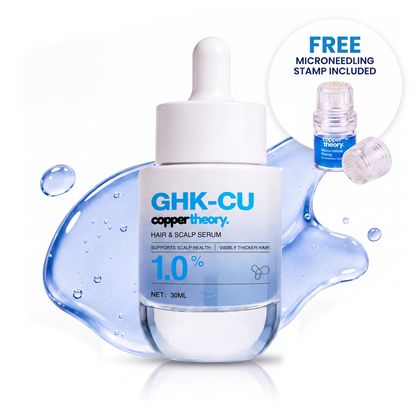
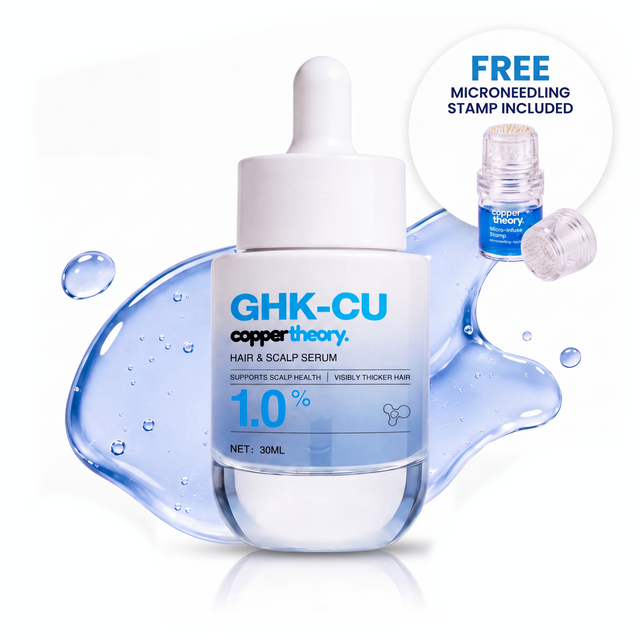
GHK-Cu Hair Serum
The leave-on scalp step. Copper Tripeptide-1 supports the scalp environment around the follicle, while Acetyl Tetrapeptide-3 and Red Clover focus on fuller density at the hairline, temples and crown.
Shop the Hair Serum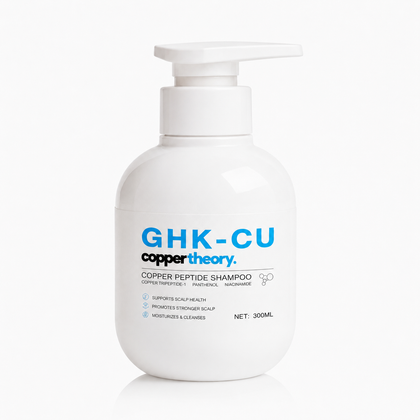
GHK-Cu Shampoo
Cleanses the scalp and removes buildup so the leave-on serum works on a clean base — the wash-day foundation of a scalp-first routine.
Shop the Shampoo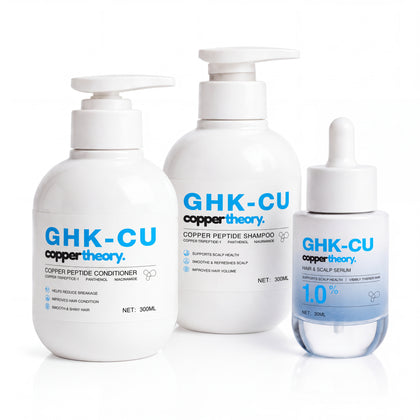
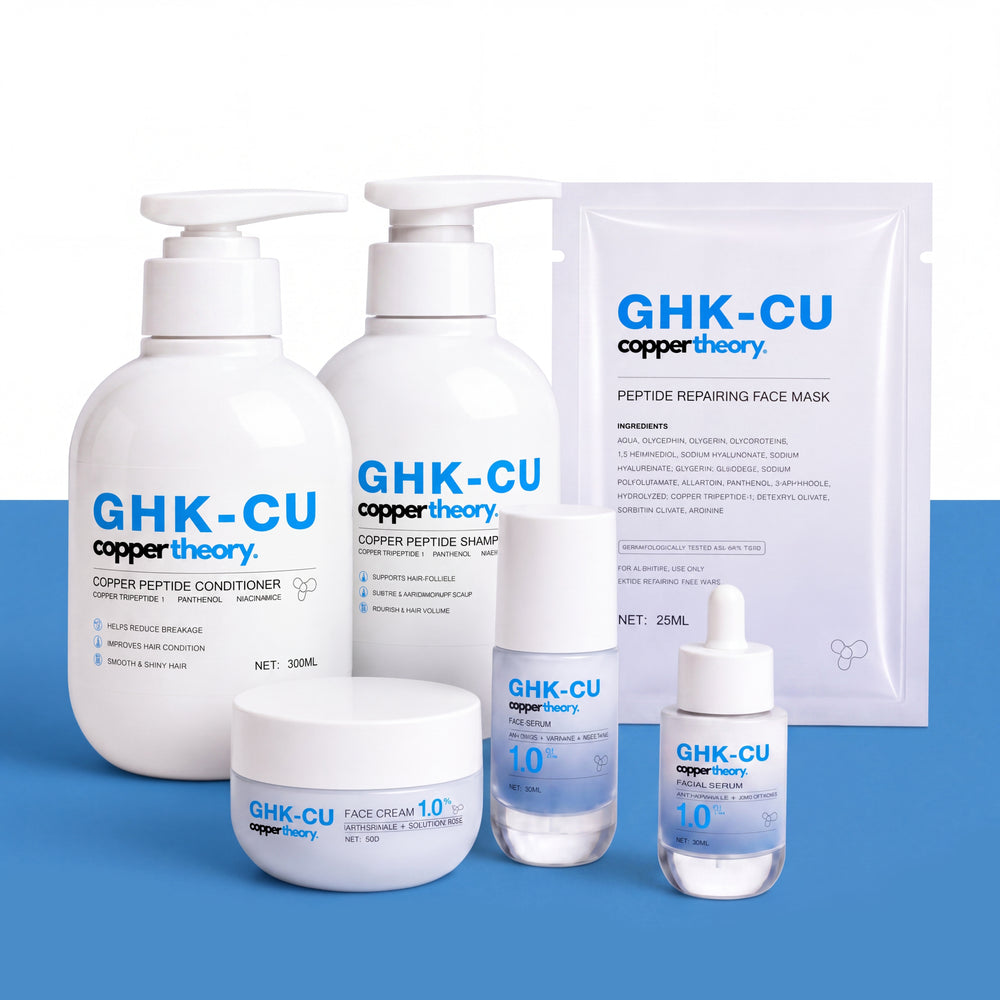
Complete GHK-Cu Hair Care Routine
Shampoo, conditioner and the leave-on serum together — the full scalp-to-strand routine, in the right order, for consistency.
Build the routineGHK-Cu for Scalp Care
How a scalp-first, needle-free copper peptide routine supports the follicle's environment.
Read: GHK-Cu for Scalp Care EvidenceSources and further reading
Inline citations connect specific statements to primary research, regulatory documents or professional guidance. CopperTheory’s current ingredient lists and formula records are tested, verified and disclosed; the source labels below show whether the supporting evidence is ingredient-level, preclinical, human, regulatory or professional guidance.
- American Academy of Dermatology — healthy hair guidance