Niacinamide in Skincare and Scalp Care
Niacinamide turns up in almost every kind of formula, which can make it seem like a cure-all. In CopperTheory its role is specific and consistent: it supports the barrier and moisture balance on skin and scalp, working quietly alongside the hero copper peptide.
The goal is not to make niacinamide the centrepiece. It is to understand what a versatile support active actually does. This guide explains niacinamide's role on skin and scalp and how it complements GHK-Cu.

Clear answer
Niacinamide is a form of vitamin B3. On skin it supports the barrier, improves moisture retention and helps refine uneven tone and texture; on the scalp it supports the scalp barrier and helps it retain moisture and stay balanced.
That versatility is why CopperTheory includes it across formats — the Hair Serum, Face Serum and Face Cream all carry niacinamide as a supporting active around the copper peptide.
Because it is already in the formulas, you do not need a separate niacinamide step. It complements the hero copper peptide from inside the same product.
Key points
- The direct answer across skin, hair or scalp
- Separate pathways for facial skincare and scalp care
- Correct rinse-off and leave-on product roles
- Compatibility, placement and routine order
- Realistic expectations for each pathway
What this means in plain English
In plain English, niacinamide is the all-round support active: barrier, moisture and texture on skin, and barrier and balance on the scalp. It sits alongside panthenol and allantoin as part of the supporting cast.
For CopperTheory customers that matters because niacinamide and GHK-Cu are already paired in-formula. There is no need to engineer that combination yourself — the formulas are built with it.
Skin pathway
Facial products follow their own cleanse, leave-on and moisturising roles according to the product directions.
Hair and scalp pathway
Shampoo, conditioner and leave-on scalp care perform different jobs and should not be treated as one interchangeable step.
Keep categories clear
A complete routine can include both pathways without applying every product to every area.
Skin, hair and scalp routine context
If you are building around GHK-Cu for skin, the hero step is GHK-Cu Face Serum after cleansing, with niacinamide already inside it for barrier and texture support. GHK-Cu Face Cream carries niacinamide too, supporting the barrier as it seals hydration.
For scalp and hair, GHK-Cu Hair Serum includes niacinamide to support the scalp barrier and moisture balance. In every case the copper peptide is the hero and niacinamide is broad support.
Key points
- Keep facial skincare on the face and scalp products on the intended scalp areas.
- Use rinse-off shampoo and conditioner before leave-on scalp care.
- Apply skin serums and creams in the order directed by their formulas.
- Do not assume a product designed for one area belongs everywhere.
- Change one pathway at a time when comfort or tolerance needs troubleshooting.
How to keep product roles separate
Niacinamide is broadly compatible and gentle, so it does not need special sequencing. It sits comfortably with the copper peptide and with hydration and comfort ingredients in the same routine.
If you are also using strong vitamin C or acids elsewhere in your routine, keep those to separate times from the copper peptide step. Niacinamide itself is easy-going and rarely the cause of sensitivity.
Skin support
Keep facial products within a clear skincare order and adjust when the skin becomes uncomfortable.
Hair and scalp support
Keep rinse-off haircare separate from leave-on scalp products and avoid coating the scalp with unnecessary buildup.
Avoid cross-category overload
Do not introduce several new face, scalp and hair products at the same time when you need to identify what is helping or irritating.
Common mistakes to avoid
The most common mistake is buying a standalone niacinamide serum on top of formulas that already contain it, then layering overlapping actives around it. A well-built routine already includes niacinamide where it is useful.
Another mistake is expecting niacinamide to be the hero. It is a versatile support active; GHK-Cu is the copper peptide the range is built around.
Key points
- Using face, scalp and hair products interchangeably
- Applying every product to every area
- Introducing several changes across both pathways at once
- Expecting rinse-off and leave-on products to perform the same role
- Judging skin and hair outcomes on the same timeline
How to judge each pathway without guessing
Barrier and texture support is a gradual, cumulative story. In the first weeks, focus on whether the routine feels comfortable and balanced rather than seeking dramatic change. A clinical review of topical niacinamide covers its barrier, texture, tone and formulation evidence.
Tone and texture respond to consistent habits over weeks. Give the copper peptide step regular use and let niacinamide support the barrier alongside it.
Skin pathway
Track comfort, hydration, texture and visible appearance while keeping the facial routine stable.
Scalp pathway
Track placement, residue, comfort and consistency of the leave-on and wash-day steps.
Hair lengths
Track softness, slip, manageability and breakage from handling separately from scalp or skin goals.
Who this guide is for
This guide is for anyone weighing up niacinamide for skin or scalp and wondering how it fits with a copper peptide. The short version: it is versatile support, and GHK-Cu is the hero.
This guide explains the ingredient and topical-routine evidence clearly; niacinamide offers cosmetic barrier, tone and texture support.
Key points
- People building both facial and hair or scalp routines
- People who need each product category kept in a clear role
- People comparing complete routines with individual products
- People troubleshooting comfort without changing everything at once
- People who want separate expectations for skin, scalp and hair lengths
Key summary
The takeaway is simple: niacinamide is a versatile support active for barrier, moisture and texture, and it is already paired with the hero copper peptide in CopperTheory's formulas.
Start with the GHK-Cu hero step for your goal, keep the routine short, and rely on the niacinamide already in each formula rather than adding a separate serum.
Continue with the relevant skin, hair and scalp steps
Use the links below where they help keep the facial, hair and scalp pathways clear and practical.
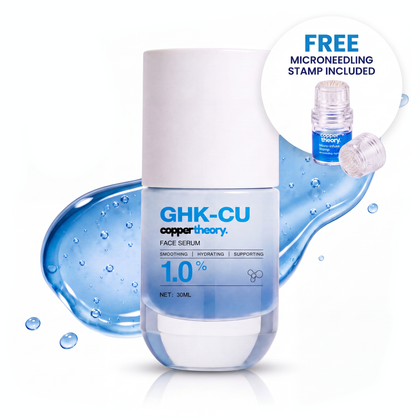
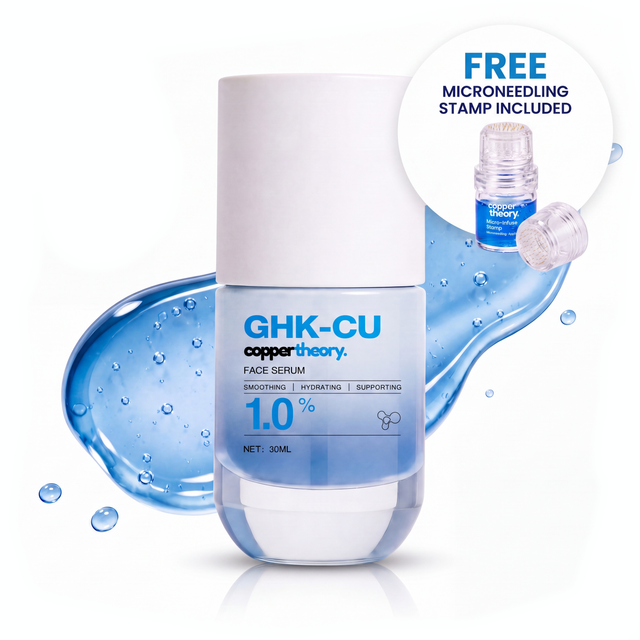
GHK-Cu Face Serum
The hero GHK-Cu copper peptide skincare step for texture, hydration, visible firmness and daily routine support.
Shop GHK-Cu Face Serum
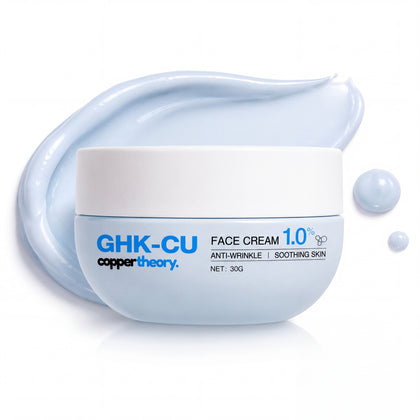
GHK-Cu Face Cream
The moisturising step after serum for comfort, hydration and barrier support.
Shop GHK-Cu Face Cream
Complete GHK-Cu Skincare Routine
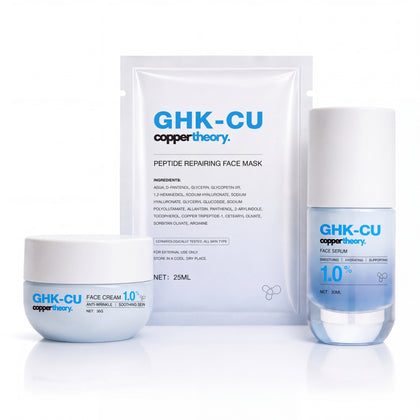
The complete CopperTheory skincare order when you want cleanser, serum, cream and support steps together.
Shop Complete GHK-Cu Skincare RoutineCopperTheory Ingredient Dictionary
Compare key skincare, scalp care and haircare ingredients in plain English.
Read: CopperTheory Ingredient DictionaryWhat Is GHK-Cu?
Use this guide to understand Copper Tripeptide-1 before building a skincare or scalp routine.
Read: What Is GHK-Cu?Ingredient Compatibility Chart
Check what to pair, separate or introduce slowly when using copper peptide products.
Read: Ingredient Compatibility ChartStrong Copper Peptide Formula
Learn what makes a copper peptide formula feel premium beyond the ingredient name.
Read: Strong Copper Peptide FormulaHow to Layer GHK-Cu Serum
Place GHK-Cu in the right order so the routine stays simple and repeatable.
Read: How to Layer GHK-Cu SerumShop CopperTheory Skincare
Browse GHK-Cu skincare products for serum, cream, masks and complete skin routines.
Shop CopperTheory SkincareSources and further reading
Inline citations connect specific statements to primary research, regulatory documents or professional guidance. CopperTheory’s current ingredient lists and formula records are tested, verified and disclosed; the source labels below show whether the supporting evidence is ingredient-level, preclinical, human, regulatory or professional guidance.
- Niacinamide dermal delivery and clinical evidence review (PMID 38722460)
- The potential of GHK as an anti-aging peptide (PMID 35083444)
- Regenerative and protective GHK-Cu research review (PMID 29986520)
- American Academy of Dermatology — healthy hair guidance
- American Academy of Dermatology — skin-care order guidance
- American Academy of Dermatology — sunscreen guidance
- Human hair-follicle study of AHK-Cu, a different tripeptide-copper complex (PMID 17703734)
- Preclinical topical GHK-Cu delivery study (PMID 38026438)
Niacinamide in Skincare and Scalp Care FAQ
What is niacinamide used for?
Niacinamide (vitamin B3) is a cosmetic ingredient commonly used in skincare and scalp care routines for a balanced, comfortable finish. It is different from GHK-Cu, which is Copper Tripeptide-1 and sits at the centre of CopperTheory copper peptide products.
Can you use niacinamide with copper peptides?
Yes - niacinamide is a widely tolerated support ingredient that can sit in the same routine as GHK-Cu, which stays the copper peptide hero step. Introduce them gradually and keep the overall routine simple so you can tell how your skin responds.
Is niacinamide the same as GHK-Cu?
No - niacinamide is vitamin B3, a support ingredient for a balanced, comfortable feel, while GHK-Cu is Copper Tripeptide-1, the copper peptide CopperTheory builds around. They do different jobs and can complement each other in a routine.
Can niacinamide be used on the scalp as well as the skin?
Niacinamide appears in both skincare and scalp-care formulas as a support ingredient for a balanced, comfortable finish. On the scalp it sits around the hero step, GHK-Cu Hair Serum, rather than replacing it.
Which CopperTheory product fits this topic?
CopperTheory GHK-Cu Anti-Aging Face Serum is the leave-on peptide step for visible wrinkles, fine lines, firmness, pores, uneven tone, texture, dullness and hydration. It combines Copper Tripeptide-1 with supporting peptides and hydration ingredients for consistent use by men and women. View GHK-Cu Anti-Aging Face Serum.
Do I apply niacinamide or GHK-Cu Face Serum first?
Both are generally well tolerated, so the exact order is flexible, but a common approach is the GHK-Cu step on clean skin with niacinamide-style support in a moisturiser layered around it. Keep the routine simple and introduce one product at a time.
Is niacinamide suitable for sensitive skin?
Niacinamide is generally considered gentle and widely tolerated, which is part of why it appears in so many formulas. As with any new product, introduce it gradually and patch test first if your skin is easily irritated. This is practical topical-routine guidance; introduce the product gradually and follow the exact directions.
Can niacinamide replace GHK-Cu in my routine?
No - they do different jobs. Niacinamide is a support ingredient for a balanced, comfortable feel, while GHK-Cu is the copper peptide hero the routine is built around. They can complement each other, but one does not stand in for the other.
Build your ingredient-smart CopperTheory routine
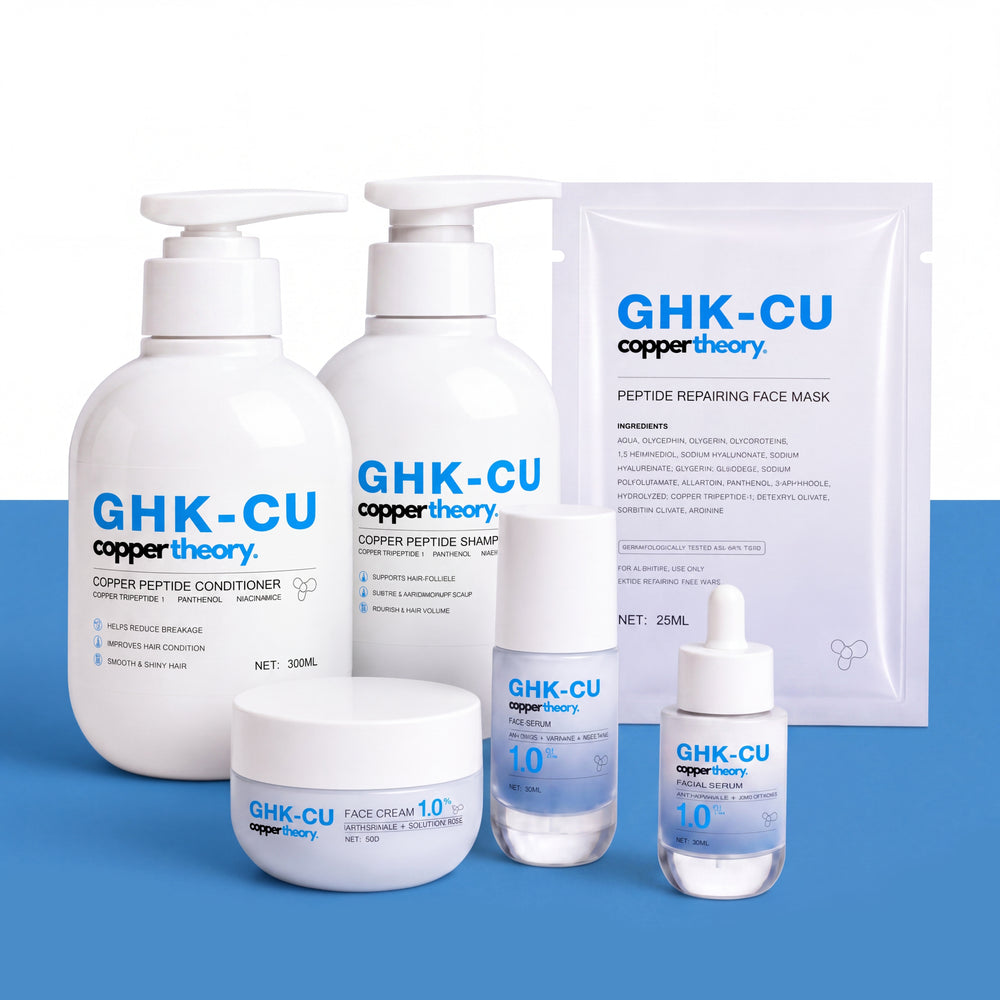
Keep GHK-Cu Face Serum as the focused copper peptide step for skin and GHK-Cu Hair Serum for the scalp, then add support products like face cream or a complete routine based on your goal.