The Ordinary Copper Peptides 1% vs NIOD CAIS
The key distinctionOfficial product pages can change, so the comparison should cite the current brand pages and avoid transferring either product’s claims to CopperTheory. Read the product-specific results page, the matching concern hub, the testing and verification guide and the complete routine for the connected evidence and routine context.
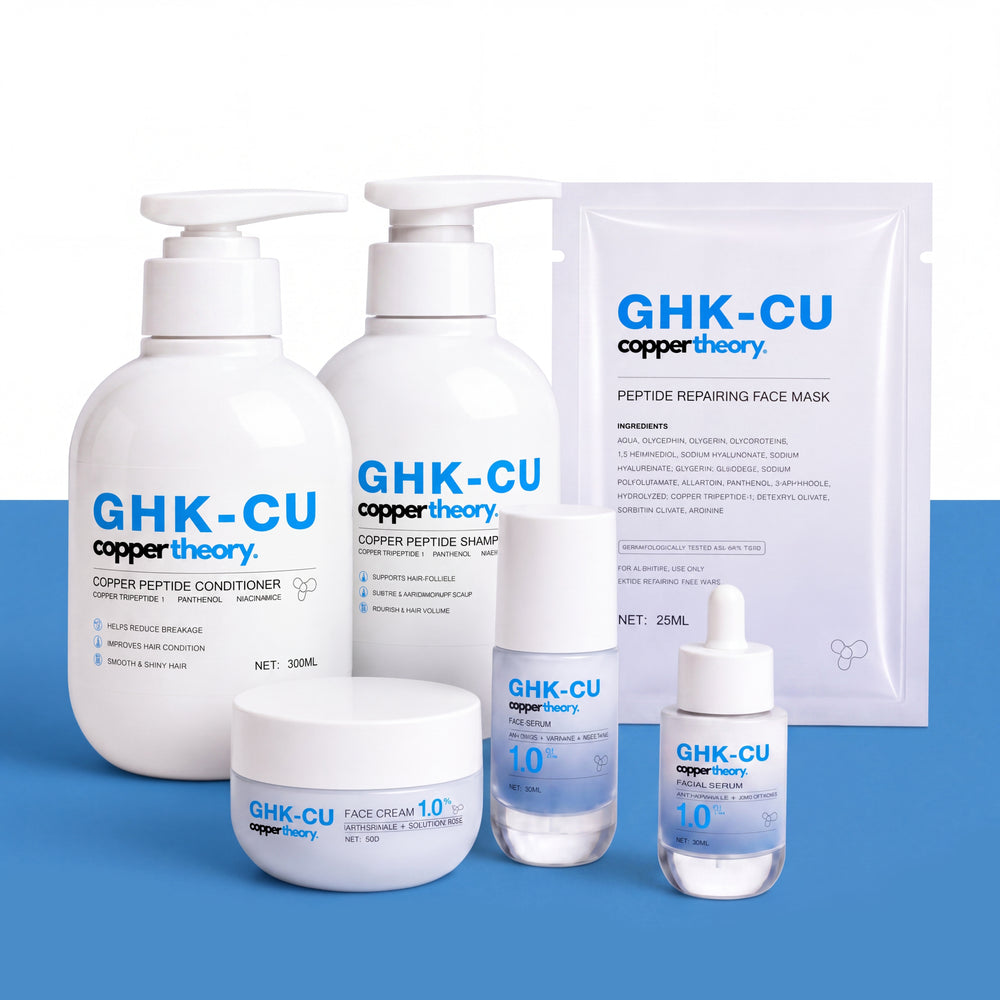
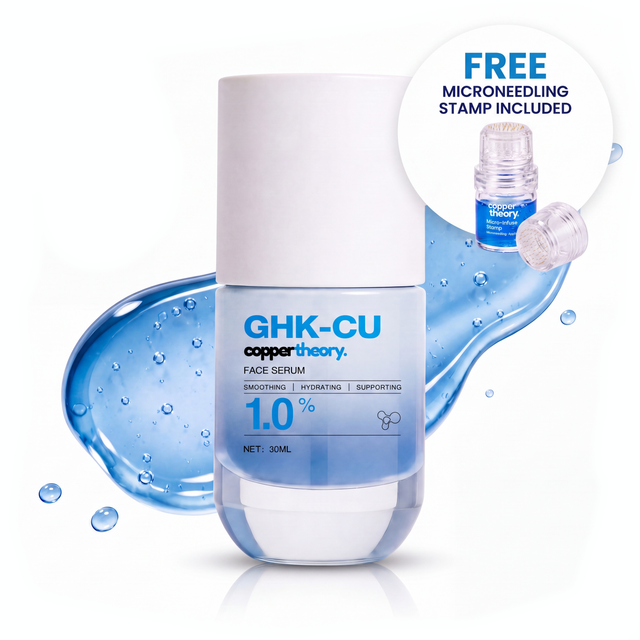
For a CopperTheory reference point, compare the current formula and routine role on the CopperTheory GHK-Cu Face Serum page.
Direct comparison
The Ordinary Multi-Peptide + Copper Peptides 1% is a broad multi-peptide water-based serum, while NIOD CAIS3 is positioned as a focused copper-amino isolate serum. Compare their current official ingredient lists, directions, price, format and routine compatibility rather than relying on brand reputation alone.
Official product pages can change, so the comparison should cite the current brand pages and avoid transferring either product’s claims to CopperTheory.
What The Ordinary Multi-Peptide + Copper Peptides 1% means
The Ordinary Multi-Peptide + Copper Peptides 1% describes a distinct ingredient system or product format. Evaluate its exact formula, concentration, evidence and routine role rather than relying on the category name.
The name alone does not disclose the complete formula, concentration, supporting system or finished-product evidence. Use exact INCI and official product information where available.
What NIOD CAIS3 means
NIOD CAIS3 describes a distinct ingredient system or product format. Evaluate its exact formula, concentration, evidence and routine role rather than relying on the category name.
A similar consumer goal does not make two technologies chemically or practically identical. The comparison must stay at the level each source actually supports.
Side-by-side decision factors
| Factor | The Ordinary Multi-Peptide + Copper Peptides 1% | NIOD CAIS3 |
|---|---|---|
| Identity | Check the exact active and INCI name. | Check the exact active, system or format. |
| Concentration | Clarify pure active, supplied solution or complex. | Use the same concentration standard rather than comparing unlike numbers. |
| Routine role | Match contact time and placement. | Match contact time and placement. |
| Evidence | Separate ingredient research from finished-product results. | Apply the same evidence boundary. |
| Best fit | Choose when its specific job is missing. | Choose when its different job or tolerance profile is the better fit. |
Where CopperTheory Face Serum fits
GHK-Cu Face Serum is the concentrated treatment step used after cleansing and before face cream.
Formula summary: 1.4% GHK-Cu and an 11.4% declared peptide complex by formula input. The 11.4% figure is a formula-input declaration: 1.4% GHK-Cu plus 10% Argireline solution as supplied. It must not be described as 11.4% pure peptide.
| Declared level | Ingredient or system | Role in this formula |
|---|---|---|
| 1.4% | GHK-Cu | Core copper peptide for the formula’s firmness and skin-renewal positioning. |
| 10% solution as supplied | Argireline / Acetyl Hexapeptide-8 solution | Expression-line support. This is a raw-material solution input, not 10% pure peptide. |
| 4% | Niacinamide | Barrier, tone, pores and texture support. |
| 1% | Panthenol | Hydration and barrier comfort. |
| 0.08% | Sodium Hyaluronate | Surface hydration. |
| 0.04% | Hydrolyzed Sodium Hyaluronate | Upper-layer water retention. |
| 0.20% | Allantoin | Skin comfort. |
| q.s. | Arginine | Hydration and pH support. |
Read the product-specific results page, the matching concern hub, the testing and verification guide and the complete routine for the connected evidence and routine context.
Can the options be used in one routine?
They can sometimes be used in the same broader routine because they are not identical technologies, but overlap, tolerance and complexity should be considered. The simpler decision is to choose the formula that already covers the main goal before adding another product.
Introduce changes one at a time, keep the product directions visible and simplify the routine when tolerance becomes difficult to interpret.
Research and source quality
Use The Ordinary Multi-Peptide + Copper Peptides 1% — official product page, NIOD Copper Amino Isolate Serum 3 1:1 — official collection page, GHK-Cu and skin regeneration pathways — PubMed review as the external source set for this comparison. Official product pages describe their own current formulas and directions; PubMed papers describe the molecule, model and endpoint studied. Neither should be rewritten as proof for a different product.
Which should you choose?
Choose The Ordinary Multi-Peptide + Copper Peptides 1% when its exact formula and role address the main gap; choose NIOD CAIS3 when its different mechanism, format or tolerance profile is the better match. Choose GHK-Cu Face Serum when you want the disclosed CopperTheory formula and the connected evidence and routine system.
Relevant CopperTheory products
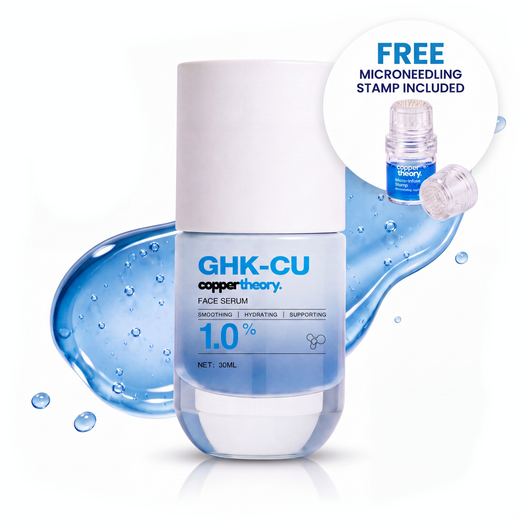
1.4% GHK-Cu Copper Peptide Face Serum for Wrinkles, Firmness & Hydration
GHK-Cu Face Serum is the concentrated treatment step used after cleansing and before face cream.
View product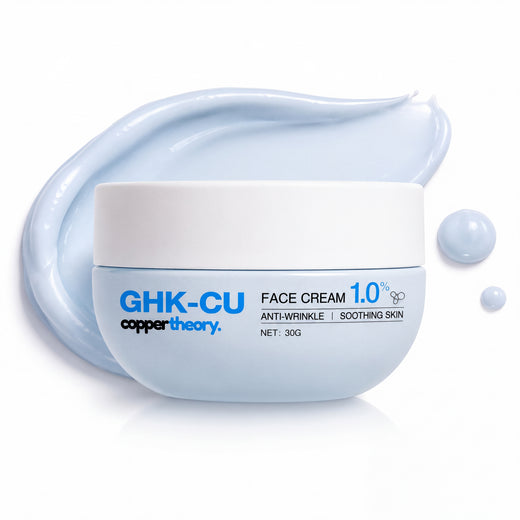
1.4% GHK-Cu Copper Peptide Face Cream for Wrinkles, Firmness & Barrier Repair
GHK-Cu Face Cream is the final moisturising and barrier-support step used after face serum.
View product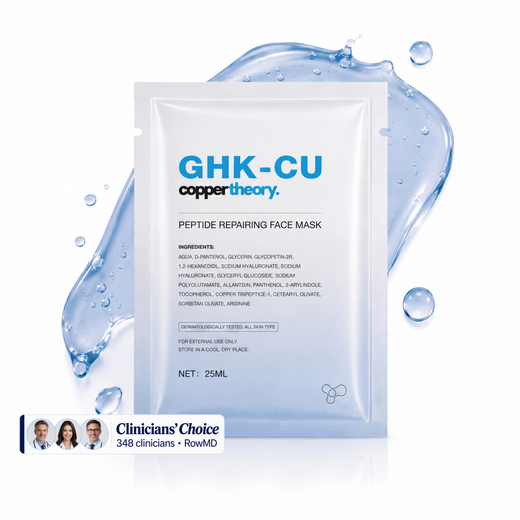
GHK-Cu Copper Peptide Face Mask 5 Pack for Hydration, Glow & Plumping
GHK-Cu Hydrating Face Mask — 5 Pack is an intensive one-use hydration, glow and surface-smoothing step.
View productThe Ordinary Copper Peptides 1% vs NIOD CAIS FAQ
How do The Ordinary Copper Peptides 1% and NIOD CAIS compare?
The Ordinary Multi-Peptide + Copper Peptides 1% is a broad multi-peptide water-based serum, while NIOD CAIS3 is positioned as a focused copper-amino isolate serum. Compare their current official ingredient lists, directions, price, format and routine compatibility rather than relying on brand reputation alone. Official product pages can change, so the comparison should cite the current brand pages and avoid transferring either product’s claims to CopperTheory.
What does The Ordinary Multi-Peptide + Copper Peptides 1% mean in the context of The Ordinary Copper Peptides 1% vs NIOD CAIS?
The Ordinary Multi-Peptide + Copper Peptides 1% describes a distinct ingredient system or product format. Evaluate its exact formula, concentration, evidence and routine role rather than relying on the category name. The name alone does not disclose the complete formula, concentration, supporting system or finished-product evidence. Use exact INCI and official product information where available.
Can The Ordinary Copper Peptides 1% and NIOD CAIS be used in the same routine?
They can sometimes be used in the same broader routine because they are not identical technologies, but overlap, tolerance and complexity should be considered. The simpler decision is to choose the formula that already covers the main goal before adding another product. Introduce changes one at a time, keep the product directions visible and simplify the routine when tolerance becomes difficult to interpret. On this page, that point is applied specifically to The Ordinary Copper Peptides 1% vs NIOD CAIS.
Which is the better fit: The Ordinary Copper Peptides 1% or NIOD CAIS?
Choose The Ordinary Multi-Peptide + Copper Peptides 1% when its exact formula and role address the main gap; choose NIOD CAIS3 when its different mechanism, format or tolerance profile is the better match. Choose GHK-Cu Face Serum when you want the disclosed CopperTheory formula and the connected evidence and routine system.
Sources and further reading
External sources are linked for ingredient, category or official product context. They do not automatically prove the finished CopperTheory formula.
Continue with the complete CopperTheory evidence and routine path
Use the linked product, results and verification pages together. The live product page remains the source for current price, stock, size and purchase options.