CopperTheory Skin Science

The Science of Skin Ageing

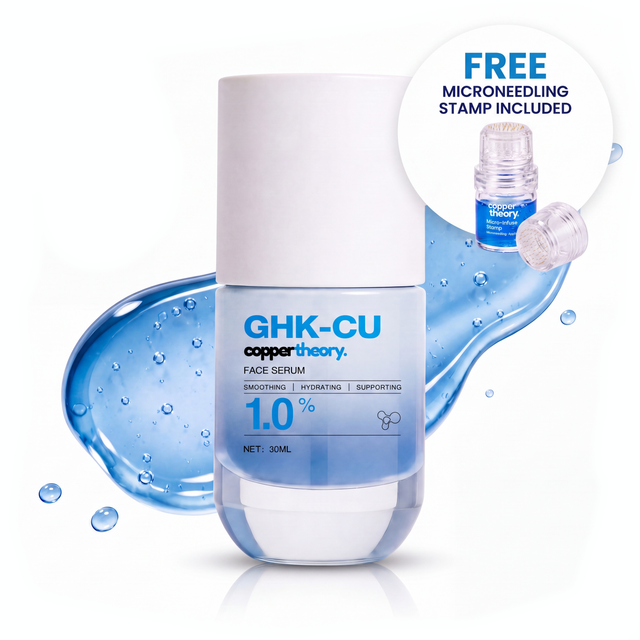
Skin ages through two overlapping processes: intrinsic ageing — the gradual, genetically programmed decline in collagen and elastin — and extrinsic ageing, the accelerated damage from UV, pollution and lifestyle. Both reduce firmness and elasticity and slow renewal, which shows as fine lines, laxity, uneven texture and dullness. Supporting skin's structure and barrier is the goal of an anti-ageing routine. See the GHK-Cu Face Serum used as the topical copper peptide step in this guide.

This guide explains what actually changes in ageing skin — collagen, elastin, fibroblasts and the barrier — and why firmness, texture and hydration shift over time.

It also shows where a copper peptide routine fits and what topical care can realistically support, so your expectations match the biology.

CollagenElastinFibroblastsSkin barrier
1.4% GHK-Cu Face Serum for Wrinkles, Firmness & Hydration – 30 mL
Clear answerThe direct answer appears before the supporting explanation.
Category clarityIngredients, finished cosmetics, preclinical findings, human evidence and medical use are not treated as interchangeable.
Practical meaningThe guide explains what the evidence can reasonably mean for a topical routine.
Limits statedUncertainty and evidence limits are kept visible instead of being turned into guarantees.
01

Clear answer

The dermis is a scaffold of collagen and elastin made by cells called fibroblasts. Collagen gives skin its firmness and structure; elastin gives it the ability to spring back. With age, fibroblasts become less active, collagen production slows, and existing collagen and elastin degrade faster than they are replaced.

Enzymes called MMPs break down collagen as part of normal turnover; UV and inflammation push MMP activity up, tipping the balance toward breakdown. The extracellular matrix — the gel of collagen, elastin and water-binding molecules between cells — becomes thinner and less organised.

At the surface, the skin barrier — the outermost layer of cells and lipids — holds water in and keeps irritants out. As it weakens with age, skin loses moisture more easily, which makes fine lines and rough texture more visible.

Main takeaway: Ageing skin makes and keeps less collagen and elastin, and holds less water — so firmness, bounce and smoothness decline.

Key points

  • The direct answer to the question
  • What is being explained or compared
  • The type and strength of supporting evidence
  • Important limits or uncertainty
  • The practical takeaway without overclaiming
02

What this means in plain English

In plain terms: the scaffold that holds skin firm is built and maintained more slowly with age, while everyday exposure speeds up its breakdown. The result is skin that looks less firm and even, feels drier, and shows fine lines and texture more readily.

Two levers are within reach of a good routine: supporting skin's structure and renewal, and reinforcing the barrier so skin stays hydrated and comfortable. That is the logic behind a treat-then-seal routine.

What it is

Start by defining the ingredient, structure, product category or route being discussed.

What evidence can show

Separate laboratory, preclinical, human, regulatory and professional guidance according to what each source actually supports.

What it cannot prove

Ingredient research or a mechanistic explanation does not automatically prove a finished product will deliver a guaranteed outcome.

03

Practical context

An anti-ageing routine follows a clear order: cleanse to prepare the skin, apply a lightweight treatment serum, then seal with a richer moisturiser. Each step has one job — cleanse, treat, seal — so actives are delivered and then locked in.

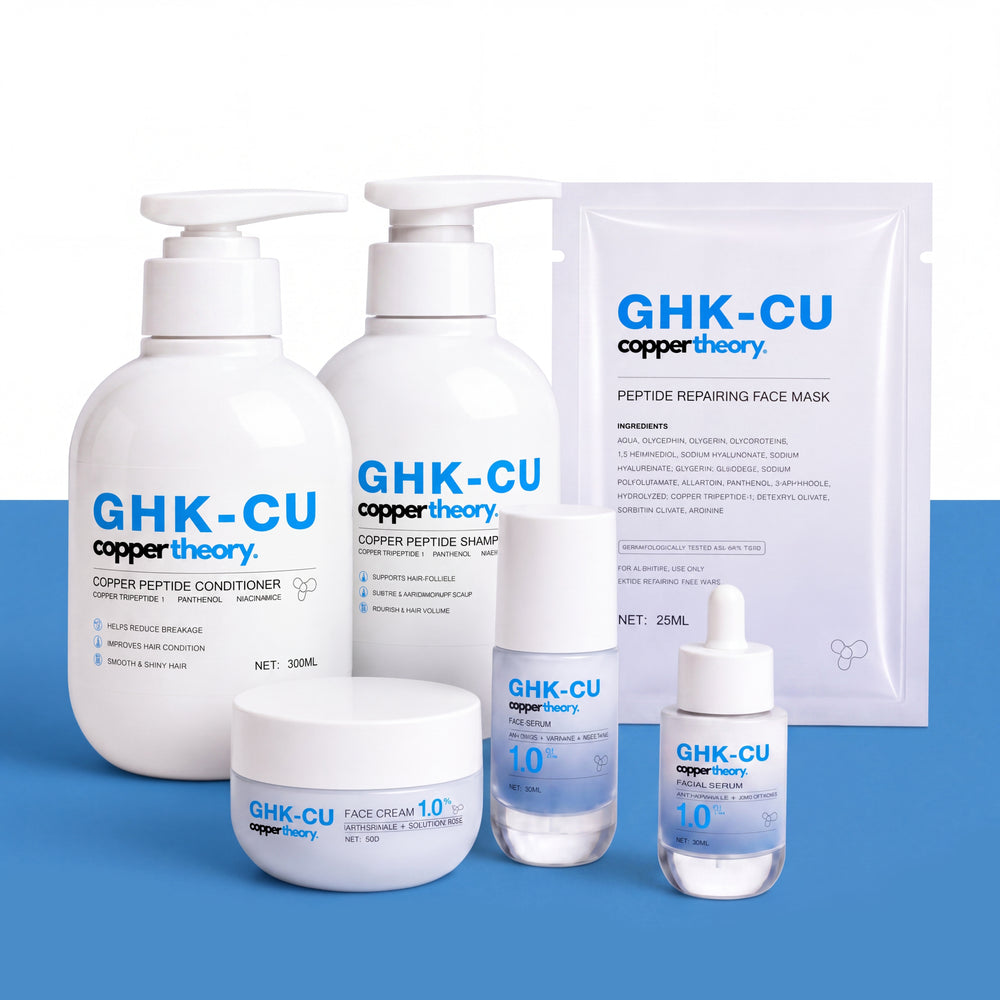
CopperTheory's GHK-Cu Face Serum is the treatment step, anchoring the routine's firming and renewal-supporting direction, while the Firming Face Cream is the barrier-sealing step, built with ceramides, cholesterol and phytosphingosine — the lipids the barrier is made from. Sunscreen each morning limits the extrinsic ageing that drives collagen breakdown.

Main takeaway: Keep ingredient theory, finished-product evidence, cosmetic use and medical use in their correct categories.

Key points

  • Define the exact question before comparing evidence.
  • Separate topical cosmetics from injections, medicines and clinical procedures.
  • Distinguish ingredient-level findings from evidence on a finished formula.
  • Consider concentration, delivery, contact time and study population.
  • Use a qualified professional for medical decisions rather than extending cosmetic guidance beyond its scope.
04

What to compare and what to keep separate

Copper peptides pair comfortably with hydration and barrier support — hyaluronic acid, niacinamide, panthenol and ceramides. Many people alternate copper peptides with retinol (one in the morning, one at night, or on different days) rather than layering both at once, and keep strong vitamin C or exfoliating acids to separate times to avoid over-doing actives.

track visible results over consistent use: cosmetic skincare supports visible firmer, smoother, more hydrated skin. It supports visible firmness, smoothness and hydration while a consistent routine protects the structure and barrier that ageing works against.

Compare like with like

Compare evidence from similar routes, formulations, populations and outcomes rather than combining unlike categories.

Separate mechanism from outcome

A plausible biological mechanism can support a hypothesis without proving a visible or clinical result in a finished product.

Keep scope visible

Cosmetic education can explain topical use, but diagnosis, injections, medicines and treatment decisions require qualified professional guidance.

05

Common mistakes to avoid

The biggest mistake is skipping sunscreen — UV is the largest driver of extrinsic ageing, so an anti-ageing routine without daily SPF works against itself. Another is over-exfoliating or stacking too many strong actives, which damages the barrier and makes skin look worse.

Expecting overnight change is a mistake too. Collagen turnover is slow, so firmness and texture improve gradually with consistency. And treating a serum as a moisturiser — or the reverse — leaves the routine unbalanced; the serum treats, the cream seals.

Main takeaway: The strongest conclusion is the one the available evidence actually supports.

Key points

  • Treating ingredient research as finished-product clinical proof
  • Treating laboratory or preclinical findings as confirmed human outcomes
  • Comparing topical cosmetics directly with injections, medicines or procedures
  • Ignoring formulation, concentration, delivery and contact time
  • Turning uncertainty into a guaranteed claim or forced product conclusion
06

How to judge the evidence without guessing

Judge an anti-ageing routine over consistent months, not days. Look at overall firmness, smoothness and hydration in the same lighting over time, rather than expecting a single line to vanish. Skin comfort and a stronger barrier often show first. The routine order and daytime-protection advice align with American Academy of Dermatology skin-care order guidance and American Academy of Dermatology sunscreen guidance.

Be practical: results are cosmetic and vary from person to person; visible outcomes develop gradually, with timelines shaped by formula fit, routine consistency and individual biology. Consistency and daily sun protection are the factors most within your control.

Evidence type

Identify whether a source is laboratory, preclinical, human, regulatory or professional guidance.

Product relevance

Check whether the evidence concerns the same ingredient, concentration, delivery route, formula and outcome being discussed.

Conclusion strength

State what is supported, what is only plausible and what remains unknown instead of presenting all evidence as equal.

07

Who this guide is for

This applies to anyone noticing early signs of ageing — fine lines, loss of firmness, uneven texture, dullness or dehydration — and to men and women wanting a considered routine rather than a single product.

Drier and more mature skin benefits most from pairing the treatment serum with the richer cream; balanced skin may be comfortable with the serum and a lighter finish. The routine flexes to your skin.

Key points

  • People comparing ingredients, product categories or delivery routes
  • People trying to understand the strength of a claim
  • People separating cosmetic guidance from medical discussion
  • People who want uncertainty and evidence limits stated clearly
  • People deciding what the available evidence means in practice
08

Key summary

Skin ages as fibroblasts slow, collagen and elastin decline, UV-driven breakdown rises, and the barrier weakens — showing as fine lines, laxity, texture and dullness.

A treat-then-seal routine works with this: cleanse, treat with a copper peptide serum, seal with a barrier-supporting cream, and protect with daily SPF. Support the structure and barrier, and give it consistent time.

Main takeaway:Support structure and barrier, protect from UV, and measure firmness and texture over months.
Next steps

Continue with the relevant evidence and practical context

The products and guides below are included only where they directly relate to the question explained on this page.
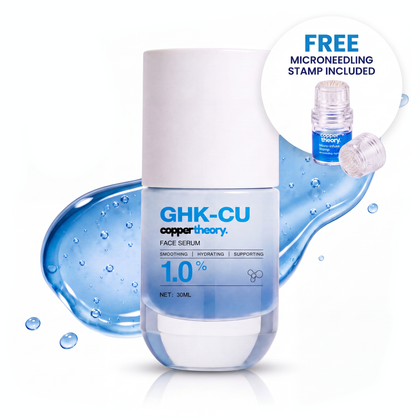
1.4% GHK-Cu Face Serum for Wrinkles, Firmness & Hydration – 30 mL

GHK-Cu Face Serum

The treatment step. Copper Tripeptide-1 anchors the serum's firming and renewal-supporting role, with niacinamide, two forms of hyaluronic acid and Acetyl Hexapeptide-8 supporting texture, tone and hydration.

Shop the Face Serum
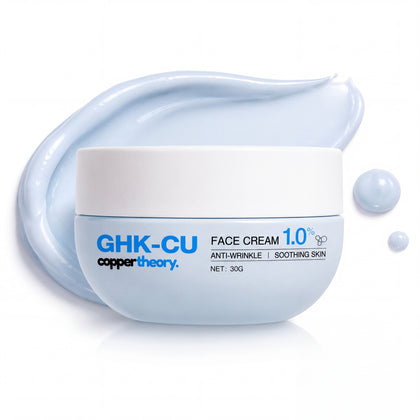
1.4% GHK-Cu Face Cream for Wrinkles, Firmness & Barrier Repair – 30 g

GHK-Cu Face Cream

The barrier-sealing step. Ceramide NP, cholesterol and phytosphingosine replenish the skin-lipid barrier, with squalane and argan to soften and lock in hydration.

Shop the Face Cream
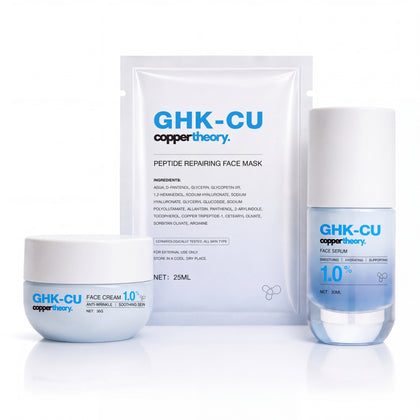
Complete 3-Step GHK-Cu Skincare Routine for Wrinkles, Firmness & Hydration

Complete GHK-Cu Skincare Routine

Cleanser, serum, cream and mask — the full treat-then-seal routine in the right order.

Build the routine

What Is GHK-Cu?

The copper peptide explained — what GHK-Cu is and how it is used on skin.

Read: What Is GHK-Cu?

Copper Peptides for Skin

What copper peptides do for skin, and how the serum and cream fit.

Read: Copper Peptides for Skin

How to Use GHK-Cu Face Serum

Where the serum sits in the routine, and how to apply it.

Read: How to Use GHK-Cu Face Serum

How to Layer GHK-Cu Serum

How to layer copper peptides with retinol, vitamin C and hydration.

Read: How to Layer GHK-Cu Serum

Ingredient Dictionary

Every verified ingredient, explained — what it is and why it is included.

Read: Ingredient Dictionary

Complete GHK-Cu Skincare Routine

The full skincare routine pillar — each step and why it exists.

Read: Complete GHK-Cu Skincare Routine
Evidence

Sources and further reading

Inline citations connect specific statements to primary research, regulatory documents or professional guidance. CopperTheory’s current ingredient lists and formula records are tested, verified and disclosed; the source labels below show whether the supporting evidence is ingredient-level, preclinical, human, regulatory or professional guidance.

  1. American Academy of Dermatology — skin-care order guidance
  2. American Academy of Dermatology — sunscreen guidance
FAQ

The Science of Skin Ageing FAQ

What is the difference between intrinsic and extrinsic skin ageing?

Intrinsic ageing is the gradual, genetically programmed decline in collagen and elastin over time; extrinsic ageing is accelerated damage from UV, pollution and lifestyle. Both reduce firmness and elasticity.

What do collagen and elastin actually do?

Collagen gives skin its firmness and structure; elastin lets it spring back. Both are made by fibroblasts and decline with age, which shows as lines and laxity.

Why does skin get drier and rougher with age?

The skin barrier weakens over time and holds less water, so skin loses moisture more easily — making fine lines and rough texture more visible.

Do copper peptides work with retinol and vitamin C?

They can. Many people alternate copper peptides with retinol rather than layering both at once, and keep strong vitamin C to a separate time, to avoid over-doing actives.

How long until an anti-ageing routine shows results?

Collagen turnover is slow, so give a routine consistent months and assess firmness, texture and hydration over time. visible results develop gradually and vary with formula fit, routine consistency and individual response.

Do I need both a serum and a cream?

They do different jobs — the serum treats, the cream seals and supports the barrier. Drier and mature skin benefits most from using both.

Does GHK-Cu rebuild collagen?

Copper peptides are studied at the ingredient level for supporting skin's structure and firmness, but topical cosmetic skincare supports visible firmer skin rather than medically rebuilding the dermis.

Should I use sunscreen?

Yes. Use sunscreen during the day as the final morning step.

Support skin's structure and barrier

Start with the GHK-Cu Face Serum, add the Firming Face Cream, and protect with daily SPF.

COPPERTHEORY IN CA

Shopping CopperTheory in Canada

CopperTheory—also written as Copper Theory—is an Australian-owned GHK-Cu skincare, hair care and scalp care brand that ships worldwide. This storefront is set for Canada and displays prices in Canadian dollars (CAD).

Does CopperTheory ship to Canada?

Yes. CopperTheory ships to Canada through its international fulfilment network. Delivery options, charges and the final order total are confirmed at checkout.

What currency will I pay in?

Product prices on this market are shown in Canadian dollars (CAD). Your checkout keeps the selected market and currency together.

Are price and availability localised?

Yes. Shopify Markets applies the price, currency and product availability configured for Canada. These can differ from another country’s storefront.