02What this means in plain English
Fibroblasts are the cells in the deeper layer of skin that produce collagen, elastin and other proteins that keep skin firm and springy. They are, in effect, the skin's own building crew for structure.
This matters for skincare because their activity naturally slows with age, which is when firmness fades and fine lines start to show, and where a copper peptide step like GHK-Cu Face Serum is aimed.
Product role
Know whether the product cleanses, moisturises, conditions, supports the scalp or works as the hero serum step.
Routine order
A clear order prevents random product stacking and makes the routine easier to follow.
Next step
The page should help the customer choose a CopperTheory product, not just read a definition.
04What to pair and what to separate
A firmness-focused routine keeps it simple: cleanse, apply GHK-Cu Face Serum, follow with face cream, and use sunscreen during the day. Sun protection matters because sun exposure is hard on skin structure over time.
There is no overnight fix here, since supporting firmness is about steady, repeated use rather than a single dramatic step. Give the routine consistent weeks rather than expecting a quick change.
Easy support steps
Hydration, moisturiser, gentle cleansing, conditioner or sunscreen can make the routine easier to follow.
Use caution
Retinol, strong acidic vitamin C, exfoliating acids, heavy oils and too many new products at once can make the routine harder to judge.
Patch test
Patch test when introducing new skincare or scalp care, especially if your skin or scalp reacts easily.
06How to judge results without guessing
Firmness-focused routines are slow by nature, so judge them by comfort and consistency rather than quick change. In the first week, notice whether the routine feels gentle and easy to repeat. Over consistent weeks and months, a steady copper peptide step is what gives a firmness-focused routine a fair chance.
Skin renews on its own timeline, so there is no honest overnight result to expect. The aim is a calm, repeatable routine you can maintain, not a promised transformation.
Week one
Judge comfort, product feel, irritation, heaviness and whether the product order is easy.
First month
Judge consistency, hydration, texture, scalp comfort, application habits and whether the routine is realistic.
Longer term
Judge the overall routine, not a single random use.
08Key summary
Fibroblasts are the skin cells that build collagen and elastin, and their slowdown with age is why skin can look less firm over time. You cannot apply them, but you can support a firmness-focused routine consistently.
Cleanse, use GHK-Cu Face Serum as the copper peptide step, and follow with face cream. Keep it simple and give it time.
Main takeaway: Fibroblasts build the skin's firmness, and a copper peptide step like GHK-Cu Face Serum supports that process with consistent use.
Next stepsContinue your CopperTheory routine
Use one clean pathway from this guide into the most relevant products, collections and education pages.
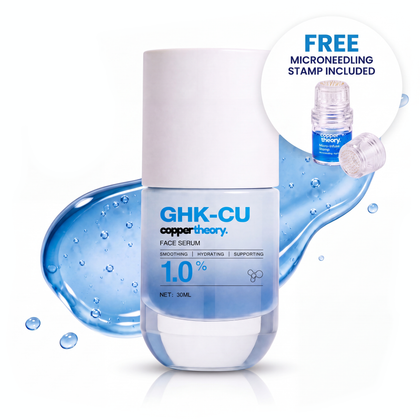
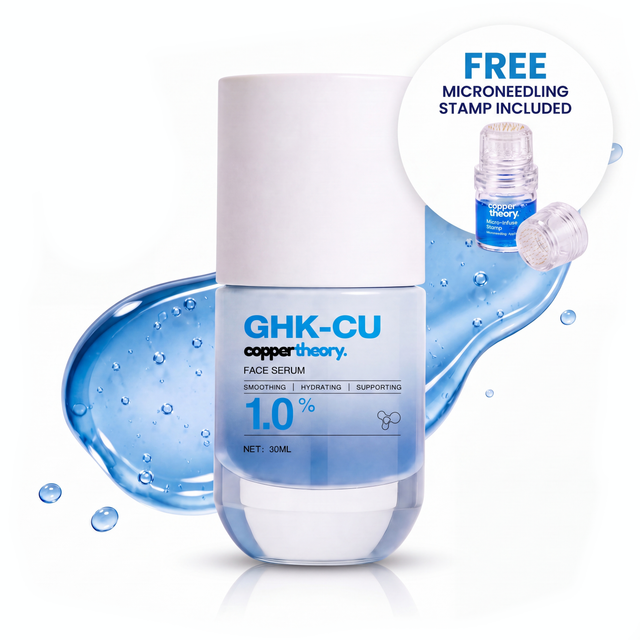
GHK-Cu Face Serum
The focused copper peptide skincare step for texture, hydration and firmer skin routines.
Shop GHK-Cu Face Serum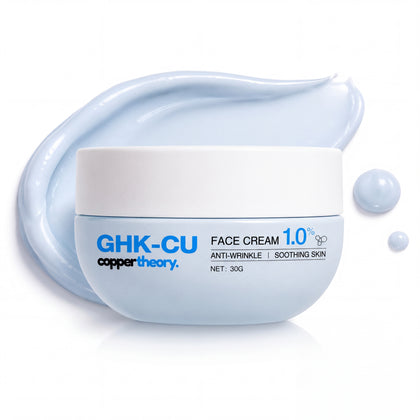
GHK-Cu Face Cream
The moisturising support step after serum for hydration, comfort and barrier support.
Shop GHK-Cu Face Cream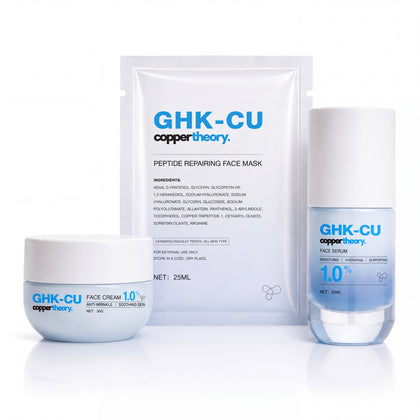
Complete GHK-Cu Skincare Routine
The complete CopperTheory skincare order when you want the steps mapped out.
Shop Skincare RoutineIngredient Dictionary
Compare copper peptides with support ingredients.
Read guideWhat Is GHK-Cu?
Learn the copper peptide basics behind CopperTheory.
Read guideCopper Peptides vs Regular Peptides
Understand how copper peptides differ from other peptide terms.
Read guideCopper Peptides for Skin
See the skin-focused CopperTheory pathway.
Read guideIngredient Transparency
See how CopperTheory explains ingredient roles clearly.
Read guideHow to Layer GHK-Cu Serum
Build a cleaner skincare order around GHK-Cu.
Read guide