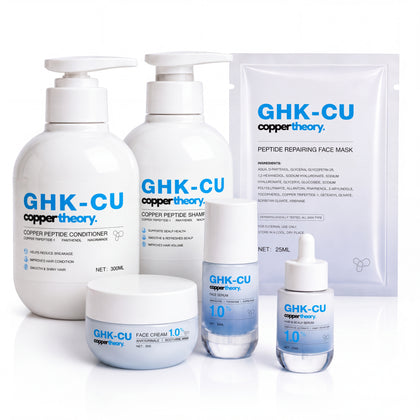
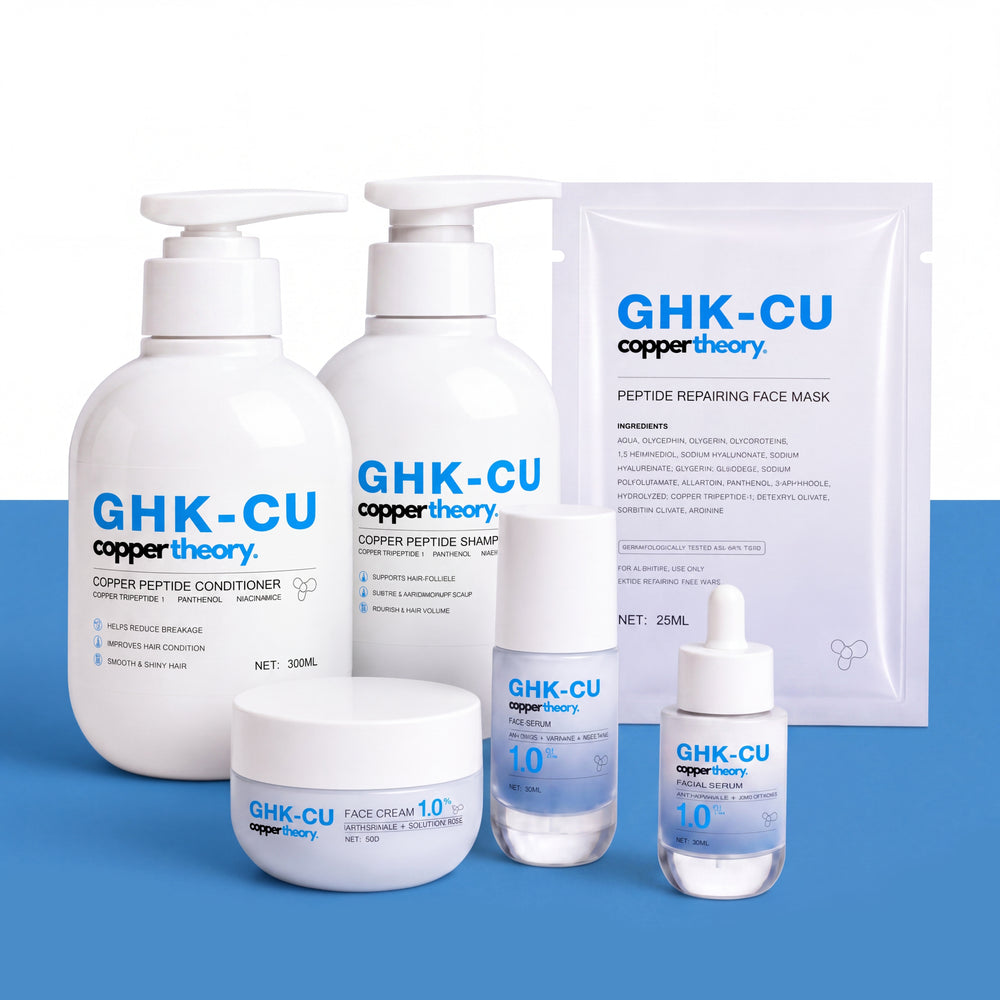
CopperTheory Topical GHK-Cu Guide

Copper Peptide Serum vs Injectable Peptides

A copper peptide serum and injectable peptides are not the same thing. CopperTheory GHK-Cu Face Serum is a topical cosmetic product you apply to the skin as part of a daily routine, with no needles involved. Injectable peptide discussions belong to a different, medical-style category, so the topical serum is the clear everyday alternative.

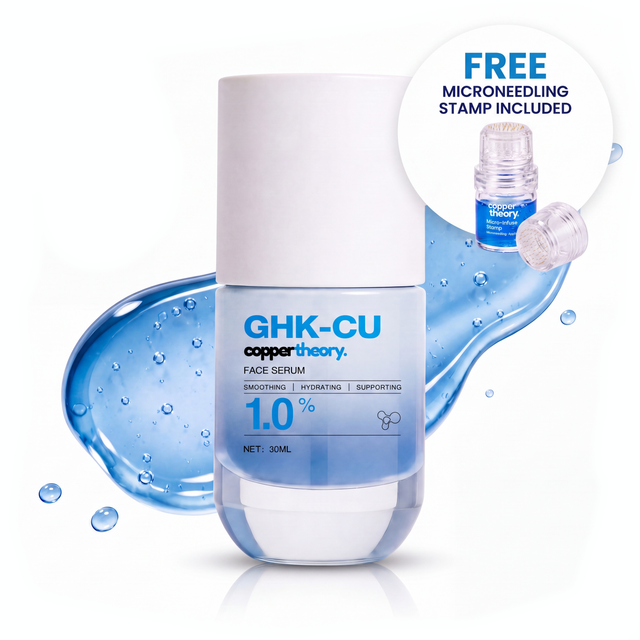
Copper Peptide Serum vs Injectable Peptides is about one clear distinction: CopperTheory is a topical cosmetic routine, not an injection protocol. This guide keeps that line simple so you can choose the daily topical GHK-Cu pathway with confidence.

The goal is to keep the message clear: CopperTheory products are topical cosmetic skincare, haircare and scalp care products, designed for daily routines rather than injection protocols.

GHK-CuCopper peptidesSkin + hair routinesCopperTheory
1.4% GHK-Cu Face Serum for Wrinkles, Firmness & Hydration – 30 mL
Clear answerThe direct answer appears before the supporting explanation.
Category clarityIngredients, finished cosmetics, preclinical findings, human evidence and medical use are not treated as interchangeable.
Practical meaningThe guide explains what the evidence can reasonably mean for a topical routine.
Limits statedUncertainty and evidence limits are kept visible instead of being turned into guarantees.
01

Clear answer

A copper peptide serum and injectable peptides are not the same thing. CopperTheory GHK-Cu Face Serum is a topical cosmetic product you apply to the skin as part of a daily routine, with no needles involved. Injectable peptide discussions belong to a different, medical-style category, so the topical serum is the clear everyday alternative.
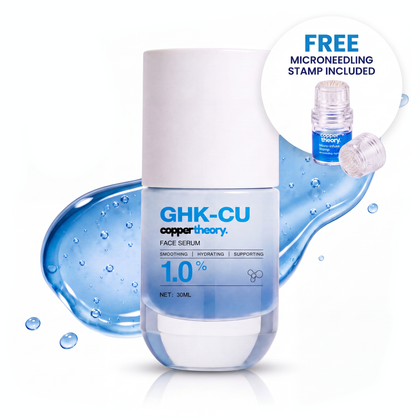
Copper Peptide Serum vs Injectable Peptides is about one clear distinction: CopperTheory is a topical cosmetic routine, not an injection protocol. This guide keeps that line simple so you can choose the daily topical GHK-Cu pathway with confidence.

The simplest way to hold the two apart is this: CopperTheory is something you apply to your skin as part of a daily routine, with no needles, while injectable peptides belong to a separate, medical-style conversation.

Main takeaway: A copper peptide serum and injectable peptides are not the same thing. CopperTheory GHK-Cu Face Serum is a topical cosmetic product you apply to the skin as part of a daily routine, with no needles involved. Injectable peptide discussions belong to a different, medical-style category, so the topical serum is the clear everyday alternative.
Key points

  • The direct answer to the question
  • What is being explained or compared
  • The type and strength of supporting evidence
  • Important limits or uncertainty
  • The practical takeaway without overclaiming
02

What this means in plain English

In plain English, the two live in different categories. GHK-Cu Face Serum is a topical cosmetic product you smooth onto the skin, whereas injectable peptides are a needle-based, medical-style approach that CopperTheory does not deal in. The broader evidence base is summarised in a PubMed review of GHK/GHK-Cu research and a review of GHK-Cu regenerative and protective research, while CopperTheory’s product statements remain tied to its tested, verified and disclosed formula.

Comparing them directly can be misleading because they are not interchangeable steps in the same routine. The topical serum is simply the everyday, no-needle option for people who want a daily skincare habit.

What it is

Start by defining the ingredient, structure, product category or route being discussed.

What evidence can show

Separate laboratory, preclinical, human, regulatory and professional guidance according to what each source actually supports.

What it cannot prove

Ingredient research or a mechanistic explanation does not automatically prove a finished product will deliver a guaranteed outcome.

03

Practical context

There is no injecting in a CopperTheory routine. The order is straightforward topical skincare: cleanse, apply GHK-Cu Face Serum, then follow with moisturiser and daytime sunscreen.

That keeps the whole routine in the cosmetic, apply-to-skin lane. Anything involving needles sits outside this guide and outside what CopperTheory offers.

Main takeaway: Keep ingredient theory, finished-product evidence, cosmetic use and medical use in their correct categories.

Key points

  • Define the exact question before comparing evidence.
  • Separate topical cosmetics from injections, medicines and clinical procedures.
  • Distinguish ingredient-level findings from evidence on a finished formula.
  • Consider concentration, delivery, contact time and study population.
  • Use a qualified professional for medical decisions rather than extending cosmetic guidance beyond its scope.
04

What to compare and what to keep separate

The topical serum pairs with the rest of your skincare - cleanser, moisturiser, sunscreen - the way any leave-on serum does. Injectable approaches are a different, medical-style category and are not something to combine with a cosmetic routine on your own.

If you are weighing injectable options, that is a conversation for a suitably qualified professional, not a skincare guide. For an everyday, at-home routine, the topical serum is the clear choice.

Compare like with like

Compare evidence from similar routes, formulations, populations and outcomes rather than combining unlike categories.

Separate mechanism from outcome

A plausible biological mechanism can support a hypothesis without proving a visible or clinical result in a finished product.

Keep scope visible

Cosmetic education can explain topical use, but diagnosis, injections, medicines and treatment decisions require qualified professional guidance.

05

Common mistakes to avoid

The biggest mistake here is treating a topical copper peptide serum and injectable peptides as the same thing with the same expectations. GHK-Cu Face Serum is a cosmetic product you apply to the skin; expecting it to behave like a medical injectable sets up disappointment and confusion.

Another is going seeking injection-style outcomes from a serum, or comparing them on price and speed as if they are interchangeable. They sit in different categories, so judge the serum as a daily topical skincare step, a distinct needle-free at-home topical pathway alongside any professional options.

Main takeaway: The strongest conclusion is the one the available evidence actually supports.

Key points

  • Treating ingredient research as finished-product clinical proof
  • Treating laboratory or preclinical findings as confirmed human outcomes
  • Comparing topical cosmetics directly with injections, medicines or procedures
  • Ignoring formulation, concentration, delivery and contact time
  • Turning uncertainty into a guaranteed claim or forced product conclusion
06

How to judge the evidence without guessing

A topical serum is assessed over weeks of steady daily use, which is a different timeline and a different kind of expectation than any injectable discussion. Early on, focus on comfort and fit in your routine, and give it consistent use before forming a view.

Do not benchmark a cosmetic serum against a medical procedure. Many people find the value of a topical is that it is a simple, needle-free step they can keep up every day, and that is the standard to judge it by.

Evidence type

Identify whether a source is laboratory, preclinical, human, regulatory or professional guidance.

Product relevance

Check whether the evidence concerns the same ingredient, concentration, delivery route, formula and outcome being discussed.

Conclusion strength

State what is supported, what is only plausible and what remains unknown instead of presenting all evidence as equal.

07

Who this guide is for

This is for anyone weighing a topical copper peptide serum against injectable peptide options and wanting a plain explanation of the difference - people who want a needle-free, at-home skincare step and are not seeking a clinical procedure.

This guide provides practical topical-product and routine guidance grounded in the ingredient roles, formula design and evidence discussed throughout the page.

Key points

  • People comparing ingredients, product categories or delivery routes
  • People trying to understand the strength of a claim
  • People separating cosmetic guidance from medical discussion
  • People who want uncertainty and evidence limits stated clearly
  • People deciding what the available evidence means in practice
08

Key summary

The takeaway is that these are different categories: GHK-Cu Face Serum is a topical cosmetic step you control at home, while injectable peptides belong to a medical-style discussion. The serum is the everyday, needle-free option.

If you want a simple daily routine, the topical serum is the clear starting point; anything involving injections is a medical conversation for a qualified professional. Keep the two clearly separate.

Main takeaway:A copper peptide serum is a topical, no-needle cosmetic step, which is a different category from injectable peptides.
Next steps

Continue with the relevant evidence and practical context

The products and guides below are included only where they directly relate to the question explained on this page.

1.4% GHK-Cu Face Serum for Wrinkles, Firmness & Hydration – 30 mL

GHK-Cu Face Serum

The topical copper peptide skincare step for daily use.

Shop Face Serum
1.4% GHK-Cu Hair Growth Serum for Hair Loss, Thinning & Density – 30 mL

GHK-Cu Hair Serum

The topical leave-on scalp serum step for hair and scalp routines.

Shop Hair Serum
Complete 6-Piece GHK-Cu Skin, Hair & Scalp Routine

Complete GHK-Cu Routine

A topical CopperTheory routine pathway across skin, hair and scalp.

Shop Complete Routine

Why CopperTheory Uses Topical GHK-Cu

Understand the topical product pathway.

Read: Why CopperTheory Uses Topical GHK-Cu

GHK-Cu Without a Syringe

Learn how topical routines avoid needle-based use.

Read: GHK-Cu Without a Syringe

Do You Need to Inject GHK-Cu?

Compare topical cosmetic routines with injection discussions.

Read: Do You Need to Inject GHK-Cu?

What Is GHK-Cu?

Learn the copper peptide basics behind CopperTheory.

Read: What Is GHK-Cu?

Copper Peptides for Skin

Explore the skin routine pathway.

Read: Copper Peptides for Skin

Copper Peptides for Hair

Explore the scalp and hair routine pathway.

Read: Copper Peptides for Hair
Evidence

Sources and further reading

Inline citations connect specific statements to primary research, regulatory documents or professional guidance. CopperTheory’s current ingredient lists and formula records are tested, verified and disclosed; the source labels below show whether the supporting evidence is ingredient-level, preclinical, human, regulatory or professional guidance.

  1. The potential of GHK as an anti-aging peptide (PMID 35083444)
  2. Regenerative and protective GHK-Cu research review (PMID 29986520)
FAQ

Copper Peptide Serum vs Injectable Peptides FAQ

What is the short answer for Copper Peptide Serum vs Injectable Peptides?

A copper peptide serum is the beauty routine path. Injectable peptide searches are a different journey. CopperTheory should be the clear topical alternative.

Is a copper peptide serum the same as injectable peptides?

No. GHK-Cu Face Serum is a topical cosmetic product you apply to the skin with no needles involved. Injectable peptides are a separate, medical-style category, so the two are not interchangeable.

Can a topical serum replace an injectable treatment?

They are different things, so it is not a like-for-like swap. A topical serum is a daily at-home skincare step; anything involving injections is a medical procedure to discuss with a qualified professional.

Why choose a topical copper peptide serum?

Many people prefer it because it is needle-free, easy to fit into a daily routine, and fully under their own control at home. It is the straightforward everyday option rather than a clinical procedure.

Which CopperTheory product fits this topic?

CopperTheory GHK-Cu Anti-Aging Face Serum is the leave-on peptide step for visible wrinkles, fine lines, firmness, pores, uneven tone, texture, dullness and hydration. It combines Copper Tripeptide-1 with supporting peptides and hydration ingredients for consistent use by men and women. View GHK-Cu Anti-Aging Face Serum.

Are copper peptides in a serum the same molecule as injectable peptides?

This guide is about how you use the product, not a chemistry comparison. What matters here is that GHK-Cu Face Serum is a topical cosmetic you apply to the skin, while injectable peptides are a separate, medical-style category.

Do I get faster results from injections than from a topical serum?

That is a medical-style question outside the scope of a cosmetic skincare guide, and we cannot make comparative claims. CopperTheory offers a topical routine for everyday use, and injectable options should be discussed with a qualified professional.

Why would someone choose a topical copper peptide serum over injections?

Many people simply want a no-needle step they can do at home as part of a daily routine. GHK-Cu Face Serum fits that - it is a topical cosmetic product, applied to clean skin before moisturiser.

Start with the needle-free copper peptide step

Choose GHK-Cu Face Serum as your topical copper peptide step for skin, or GHK-Cu Hair Serum for the scalp - or pick the Complete GHK-Cu Routine when you want the full at-home pathway.