The Science of Hair Growth
This guide explains how the hair growth cycle actually works — anagen, catagen and telogen — and what drives hair density, shedding and thinning at the hairline, temples and crown.
It also shows where a scalp-first copper peptide routine fits, and what topical care can and cannot do, so your expectations match the biology.

Clear answer
Every follicle moves through three phases. Anagen is the active growth phase, when the follicle produces a continuous hair fibre; it lasts years and sets how long hair can grow. Catagen is a brief transition of a few weeks, when growth stops and the follicle regresses. Telogen is the resting phase of a few months, after which the hair sheds and a new anagen hair begins.
At the base of each follicle sits the dermal papilla — a cluster of cells that signals the follicle through the cycle and influences how thick a hair it produces. The proportion of follicles in anagen versus telogen, and the condition of the dermal papilla, together shape how full the hair looks.
Hair density is a combination of how many follicles are active and how thick each fibre is. When more follicles rest in telogen, or produce finer hairs, density visibly drops — most noticeably at the hairline, temples and crown.
Key points
- Main answer
- Correct product order
- What to pair
- What to avoid
- Best CopperTheory product pathway
What this means in plain English
Shedding and breakage look alike but are different. Shedding is a natural part of the cycle — telogen hairs falling out with a small white bulb at the root — and losing some hairs daily is normal. Breakage is mechanical: the fibre snaps along its length, usually from friction, heat or over-processing, and leaves no root.
The distinction matters because each needs a different response. Shedding relates to the growth cycle and the scalp environment; breakage relates to how you handle and condition the hair. A complete routine addresses both — a supported scalp and a conditioned, resilient fibre.
Product role
Know whether the product cleanses, moisturises, conditions, supports the scalp or works as the hero serum step.
Routine order
A clear order prevents random product stacking and makes the routine easier to follow.
Next step
The page should help the customer choose a CopperTheory product, not just read a definition.
Best CopperTheory routine order
A scalp-first routine works with the cycle rather than against it. Cleanse the scalp to remove buildup, condition the hair to keep the fibre resilient, then apply a leave-on scalp treatment where thinning shows. That order puts the targeted step in contact with the scalp, where the follicle lives.
CopperTheory positions GHK-Cu (Copper Tripeptide-1) around scalp condition, renewal signalling and the environment surrounding the hair follicle, while Acetyl Tetrapeptide-3 with Red Clover is focused on fuller density and the area around the hair root. Used consistently, it is the leave-on step of the routine.
Key points
- Cleanse first so the skin is ready for serum.
- Apply GHK-Cu Face Serum as the copper peptide step.
- Follow with GHK-Cu Face Cream for hydration, comfort and barrier support.
- Use sunscreen during the day, especially when your routine includes active-style ingredients.
- Introduce retinol, strong vitamin C or exfoliating acids slowly instead of stacking everything at once.
What to pair and what to separate
Pair a copper peptide scalp routine with the basics that protect the cycle: gentle cleansing, conditioning the mid-lengths and ends, limiting heat and tension, and — above all — consistency, since the cycle turns over slowly. These habits reduce breakage while the scalp step supports the environment around the follicle.
Keep expectations separate from prescription treatments. Topical copper peptides are cosmetic scalp care; they are not a substitute for medical treatments such as minoxidil or finasteride, and copper peptides do not block DHT. If you use both, they play different roles — cosmetic support alongside any medical routine.
Easy support steps
Hydration, moisturiser, gentle cleansing, conditioner or sunscreen can make the routine easier to follow.
Use caution
Retinol, strong acidic vitamin C, exfoliating acids, heavy oils and too many new products at once can make the routine harder to judge.
Patch test
Patch test when introducing new skincare or scalp care, especially if your skin or scalp reacts easily.
Common mistakes to avoid
The most common mistake is expecting the cycle to change overnight. Because anagen lasts years and telogen months, visible change is inherently gradual — judging a routine after a week or two misreads the biology. Another is mistaking normal shedding for loss and abandoning a routine during a natural shed.
Over-washing, aggressive brushing, tight styles and constant heat drive breakage that makes thinning look worse than it is. And chasing miracle claims — guaranteed regrowth, fixed timelines — sets up disappointment. Steady, gentle, scalp-first care is what works with the cycle.
Key points
- Using too many active-style products on the same day
- Skipping moisturiser after serum
- Forgetting sunscreen in the morning
- Changing products every few days before judging the routine
- Treating copper peptides like a guaranteed overnight result
How to judge results without guessing
Judge results against the cycle, not the calendar week. Give a routine consistent months, and assess overall density and how the hair feels at the scalp rather than counting individual hairs. Photograph the same areas — hairline, temples, crown — in the same light over time.
Be realistic: cosmetic scalp care supports the environment for scalp comfort and hair condition; it does not guarantee regrowth, and results vary from person to person. Consistency is the single biggest factor within your control.
Week one
Judge comfort, product feel, irritation, heaviness and whether the product order is easy.
First month
Judge consistency, hydration, texture, scalp comfort, application habits and whether the routine is realistic.
Longer term
Judge the overall routine, not a single random use.
Who this is best for
This applies to anyone noticing thinning, reduced density or a weaker hairline, temples or crown — men and women, and all hair textures. Understanding the cycle helps you choose a routine you can keep to, which is what matters most.
It also helps you decide between a single leave-on serum and a full routine: the serum is the targeted scalp step, while shampoo and conditioner keep the fibre clean and resilient between applications.
Key points
- Customers comparing copper peptide products
- Customers building a skincare or haircare routine
- Customers who want clear product order
- Customers who want fewer confusing steps
- Customers choosing between single products and complete routines
Key summary
Hair grows in cycles — anagen, catagen, telogen — and density reflects how many follicles are actively growing and how thick each fibre is. Thinning is a shift toward shorter growth and finer hairs, seen first at the hairline, temples and crown.
A scalp-first routine works with the cycle: cleanse, condition, and apply a leave-on copper peptide step where thinning shows. Support the scalp environment, protect the fibre from breakage, and give it consistent time.
Continue your CopperTheory routine
Use one clean pathway from this guide into the most relevant products, collections and education pages.
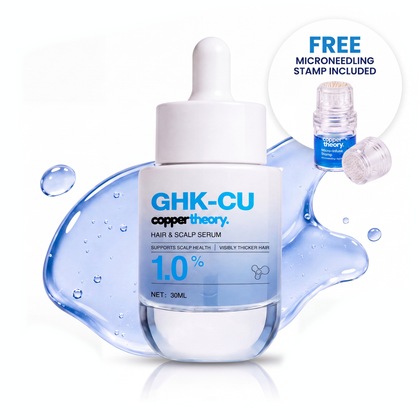
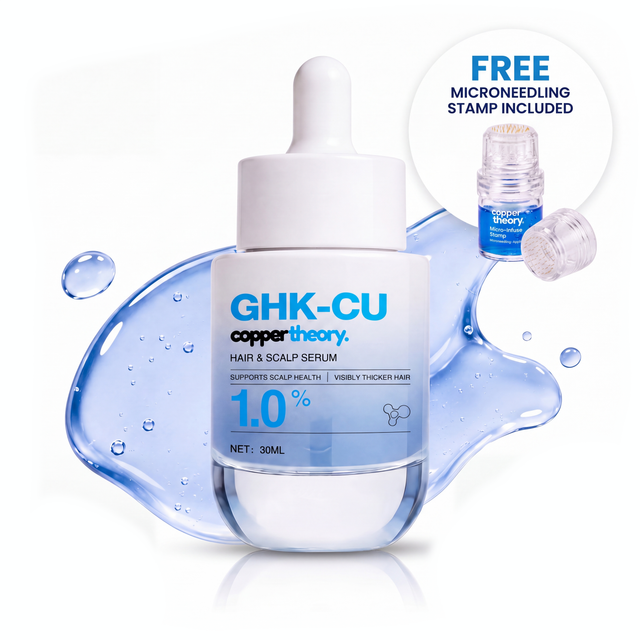
GHK-Cu Hair Serum
The leave-on scalp step. Copper Tripeptide-1 supports the scalp environment around the follicle, while Acetyl Tetrapeptide-3 and Red Clover focus on fuller density at the hairline, temples and crown.
Shop the Hair Serum
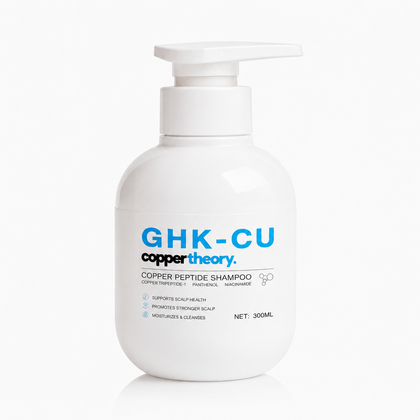
GHK-Cu Shampoo
Cleanses the scalp and removes buildup so the leave-on serum works on a clean base — the wash-day foundation of a scalp-first routine.
Shop the Shampoo
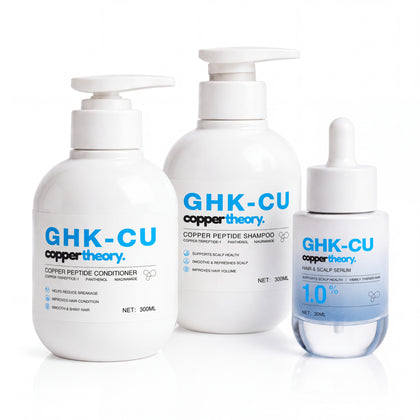
Complete GHK-Cu Hair Care Routine
Shampoo, conditioner and the leave-on serum together — the full scalp-to-strand routine, in the right order, for consistency.
Build the routineHow to Use GHK-Cu Hair Serum
The application technique — where to part, how much, and why it is left on.
Read guideGHK-Cu for Scalp Care
How a scalp-first, needle-free copper peptide routine supports the follicle's environment.
Read guideCopper Peptides for Hair
What copper peptides do for hair and scalp, and how the serum fits.
Read guideComplete Hair Routine Checklist
A simple checklist to keep your scalp-first routine consistent.
Read guideSources and further reading
These sources provide ingredient, clinical or professional context. Evidence for an ingredient or another formulation does not automatically prove the performance of a finished CopperTheory product.
The Science of Hair Growth FAQ
What are the three phases of the hair growth cycle?
Anagen (active growth, lasting years), catagen (a short transition of a few weeks) and telogen (rest for a few months, after which the hair sheds and a new one grows).
Why does hair thin at the hairline, temples and crown first?
These areas are most sensitive to the shift toward shorter growth phases and finer fibres, so reduced density tends to show there earliest.
What is the difference between shedding and breakage?
Shedding is a natural part of the cycle — telogen hairs falling with a small root bulb, and roughly 50 to 100 a day is a normal amount to lose. Breakage is different and mechanical, where the fibre snaps along its length from friction, heat or tension rather than being released at the root.
How long before a hair routine shows a difference?
Because the cycle turns over slowly, give a routine consistent months rather than days, and assess overall density in the same areas and light. Results vary and are not guaranteed.
Do copper peptides regrow hair or block DHT?
No. Topical copper peptides are cosmetic scalp care that supports the environment around the follicle; they do not block DHT and are not a substitute for medical treatments.
Where does GHK-Cu fit in the hair growth cycle?
It is a leave-on scalp step that supports scalp condition and the environment surrounding the follicle, used consistently in a scalp-first routine — while Acetyl Tetrapeptide-3 and Red Clover focus on fuller density.
Is the hair growth routine suitable for men and women?
Yes — the cycle works the same way for everyone, and the scalp-first routine suits men and women and all hair textures.
Should I use sunscreen?
Yes. Use sunscreen during the day as the final morning step.
Support your scalp, work with the cycle
Start with the leave-on GHK-Cu Hair Growth Serum, or build the complete scalp-first routine.