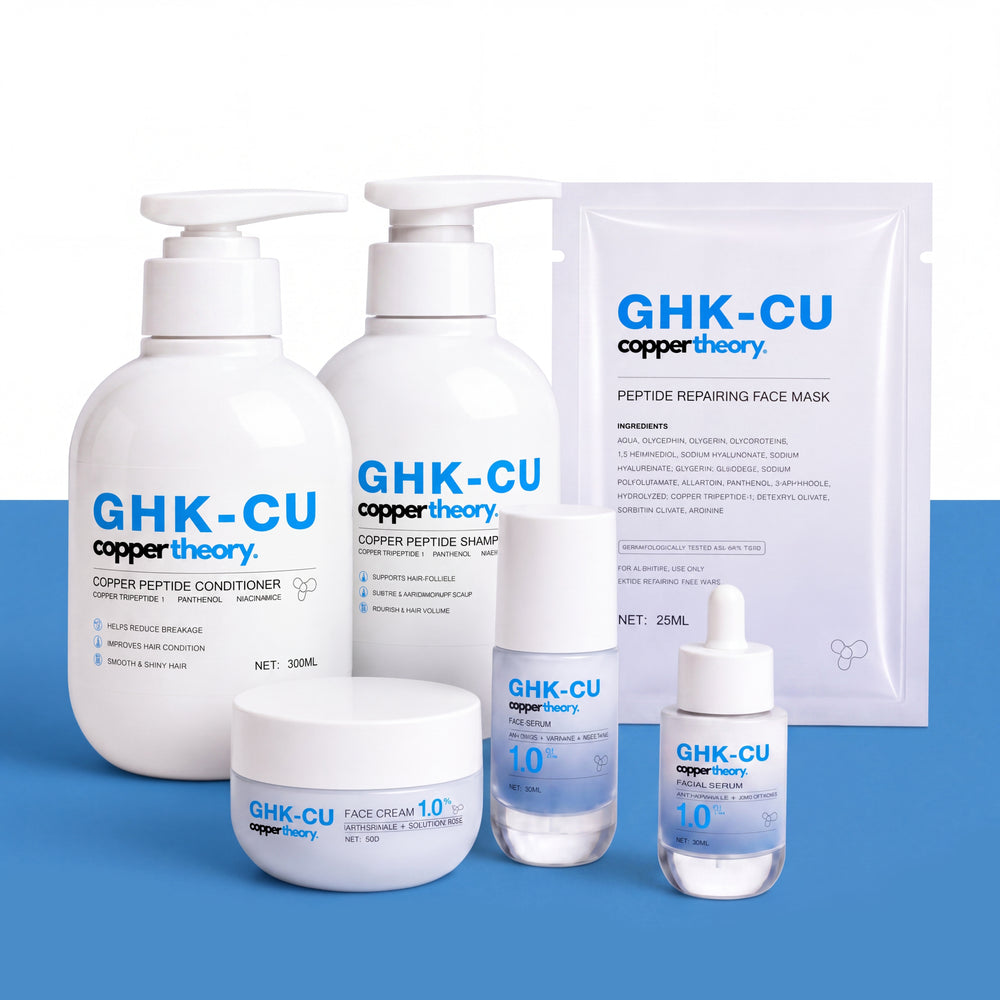
GHK-Cu Hair Growth Evidence and Clinical Study Guide
What CopperTheory verifiesRead each paper by molecule, model, endpoint and formulation before applying it to a commercial product. Read the product-specific results page, the matching concern hub, the testing and verification guide and the complete routine for the connected evidence and routine context.
What the evidence can answer
Published research supports biological and formulation interest in copper-peptide systems, but the human hair-follicle paper commonly cited online concerns AHK-Cu/tripeptide-copper, and ingredient studies do not prove every finished GHK-Cu serum.
Read each paper by molecule, model, endpoint and formulation before applying it to a commercial product.
Product-specific results
| Recorded change | Endpoint | Timeframe or method |
|---|---|---|
| +32% | Hair density | Measured after 12 weeks |
| −41% | Scalp buildup | Measured after 8 weeks |
| +24% | Strand thickness and strength | Measured after 12 weeks |
Participant-reported outcomes: 92% reported increased density; 87% reported reduced shedding; 90% reported thicker hair. These are perception-based outcomes and are not the same as instrumental measurements.
The complete product record is summarised at the dedicated CopperTheory results page. Each result should remain attached to its endpoint, method and timeframe.
Formula being evaluated
Formula summary: 1.4% GHK-Cu and a 3.4% declared peptide complex. The 3.4% declared peptide complex is 1.4% GHK-Cu plus 2% Acetyl Tetrapeptide-3. The separate 2% Red Clover Extract is botanical support, not a peptide.
| Declared level | Ingredient or system | Role in this formula |
|---|---|---|
| 1.4% | GHK-Cu (Copper Tripeptide-1) | Core copper-peptide component of the leave-in scalp system. |
| 2% | Acetyl Tetrapeptide-3 | The second peptide in the declared peptide complex; positioned around density and follicle anchoring. |
| 2% | Red Clover Extract | Botanical support for the thinning-zone system; it is not a peptide and is not included in the 3.4% peptide total. |
| 2% | Niacinamide | Supports scalp-barrier condition, moisture balance and comfortable daily use. |
| 1% | Panthenol | Supports hydration and hair-fibre flexibility. |
| 0.10% | Sodium Hyaluronate | Lightweight water-binding support for the scalp. |
| 0.25% | Arginine | Conditioning and formula-pH support. |
| 0.20% | Allantoin | Supports comfort for dry or stressed scalp conditions. |
A study of a different peptide, concentration, delivery system or product cannot be substituted for this formula.
Ingredient research map
External research relevant to this topic includes AHK-Cu (a different tripeptide-copper complex) and human hair follicles — PubMed, Topical GHK-Cu delivery study — PubMed, The human tripeptide GHK and tissue remodelling — PubMed. Read the molecule, model and endpoint carefully. In particular, PMID 17703734 is often discussed in hair content but concerns AHK-Cu/tripeptide-copper rather than proving every GHK-Cu hair serum.
Measured, participant and laboratory evidence
| Evidence type | What it records | How it should be described |
|---|---|---|
| Measured or instrumental | A defined physical or appearance endpoint under a stated method. | Report the endpoint, method and timeframe. |
| Participant-reported | What users said they noticed. | Keep separate from instrument measurements. |
| Laboratory or in-vitro | Activity in a controlled model. | Do not call it a human clinical result. |
| Ingredient research | Published context for an ingredient or mechanism. | Do not present it as finished-product proof. |
What the evidence does not prove
- Guaranteed individual results.
- Performance outside the recorded timeframe or endpoint.
- That every product containing the ingredient performs the same way.
- That a laboratory result equals a visible human result.
- That a cosmetic replaces medical assessment or treatment.
How to judge a claim
- Identify the exact product and formula.
- Identify the evidence type.
- Check the endpoint and timeframe.
- Check whether the result is measured, reported or laboratory based.
- Check whether the public wording stays within the result.
Bottom line
Published research supports biological and formulation interest in copper-peptide systems, but the human hair-follicle paper commonly cited online concerns AHK-Cu/tripeptide-copper, and ingredient studies do not prove every finished GHK-Cu serum. Use the evidence methodology, the COA FAQ and GHK-Cu Hair & Scalp Serum to keep formula, evidence and purchasing information connected.
Relevant CopperTheory products
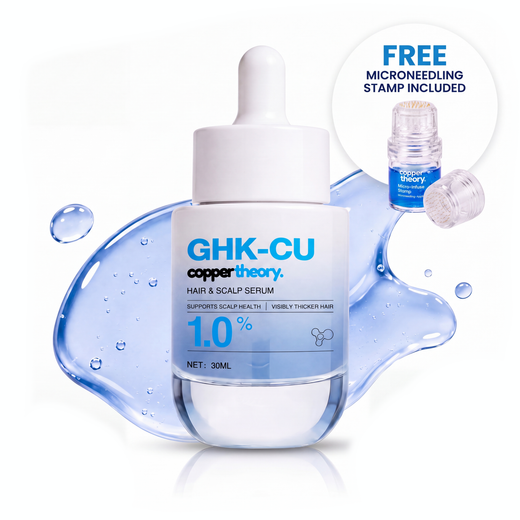
1.4% GHK-Cu Copper Peptide Hair Growth Serum for Thinning & Density
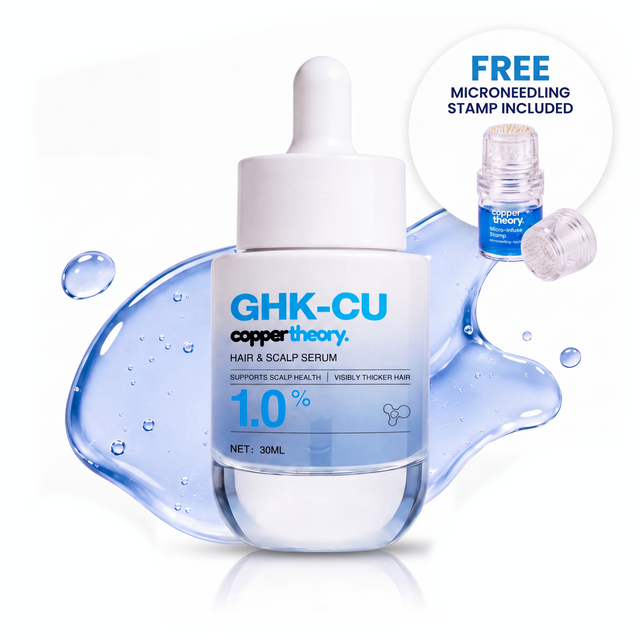
GHK-Cu Hair & Scalp Serum is the concentrated leave-in treatment step for the hairline, temples, crown and other thinning zones.
View product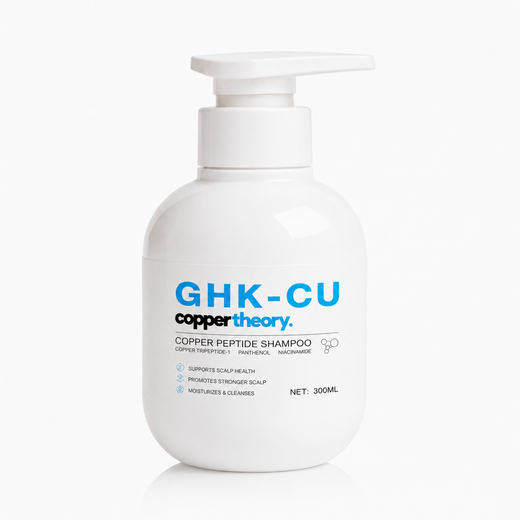
1% GHK-Cu Copper Peptide Hair Growth Shampoo for Hair Loss, Buildup & Scalp Care
GHK-Cu Scalp Shampoo is the cleansing step that removes oil, sweat, flakes and styling residue before the leave-in serum.
View product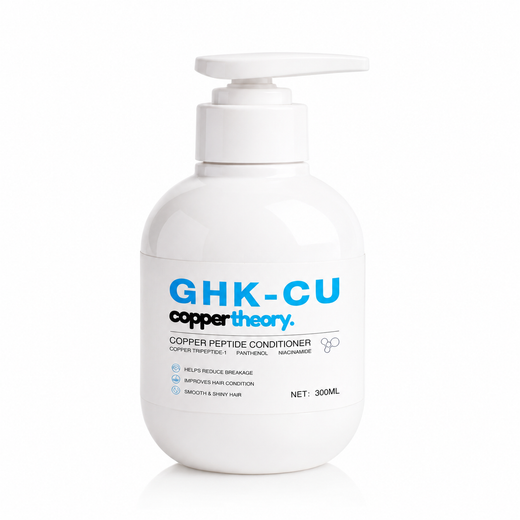
1% GHK-Cu Copper Peptide Hair Growth Conditioner for Breakage & Detangling
GHK-Cu Conditioner is the wash-day step for slip, detangling, cuticle smoothing, moisture and lower handling friction.
View productGHK-Cu Hair Growth Evidence and Clinical Study Guide FAQ
What can the evidence for GHK-Cu Hair Growth Evidence and Clinical Study Guide actually tell us?
Published research supports biological and formulation interest in copper-peptide systems, but the human hair-follicle paper commonly cited online concerns AHK-Cu/tripeptide-copper, and ingredient studies do not prove every finished GHK-Cu serum. Read each paper by molecule, model, endpoint and formulation before applying it to a commercial product. Evidence boundary Measured or instrumental endpoints, participant-reported outcomes, laboratory activity and ingredient-level research are separate evidence types. See the relevant CopperTheory evidence page for the product-specific record.
What product-specific results are available for GHK-Cu Hair Growth Evidence and Clinical Study Guide?
Product-specific recorded outcomes Recorded change Endpoint Timeframe or method +32% Hair density Measured after 12 weeks −41% Scalp buildup Measured after 8 weeks +24% Strand thickness and strength Measured after 12 weeks Participant-reported outcomes: 92% reported increased density; 87% reported reduced shedding; 90% reported thicker hair. These are perception-based outcomes and are not the same as instrumental measurements. The complete product record is summarised at the dedicated CopperTheory results page . Each result should remain attached to its endpoint, method and timeframe.
What does the evidence for GHK-Cu Hair Growth Evidence and Clinical Study Guide not prove?
Guaranteed individual results. Performance outside the recorded timeframe or endpoint. That every product containing the ingredient performs the same way. That a laboratory result equals a visible human result. That a cosmetic replaces medical assessment or treatment.
What is the bottom line on GHK-Cu Hair Growth Evidence and Clinical Study Guide?
Published research supports biological and formulation interest in copper-peptide systems, but the human hair-follicle paper commonly cited online concerns AHK-Cu/tripeptide-copper, and ingredient studies do not prove every finished GHK-Cu serum. Use the evidence methodology , the COA FAQ and GHK-Cu Hair & Scalp Serum to keep formula, evidence and purchasing information connected.
Sources and further reading
External sources are linked for ingredient, category or official product context. They do not automatically prove the finished CopperTheory formula.
Continue with the complete CopperTheory evidence and routine path
Use the linked product, results and verification pages together. The live product page remains the source for current price, stock, size and purchase options.