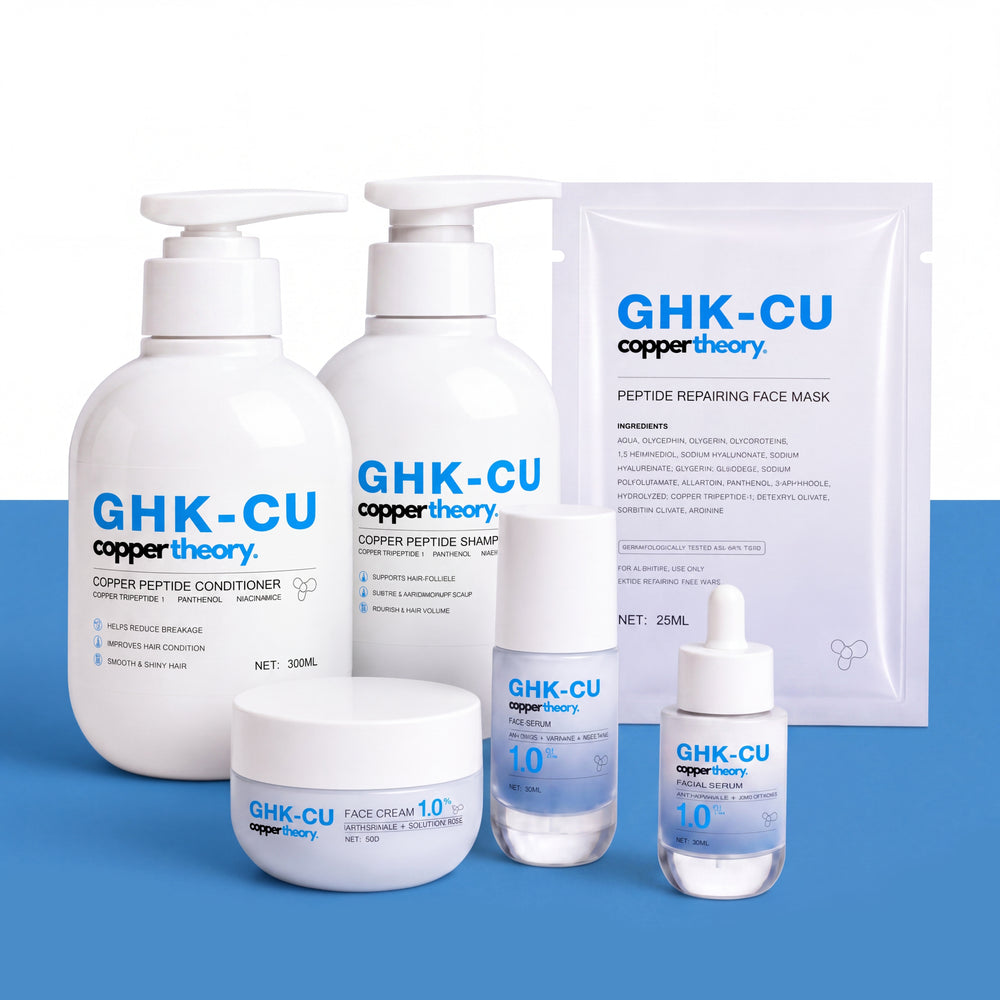
GHK-Cu Hair Serum Daily Routine: Frequency, Amount and Leave-In Time
How to use itMore product is not automatically better; complete, repeatable coverage is the goal. Read the product-specific results page, the matching concern hub, the testing and verification guide and the complete routine for the connected evidence and routine context.
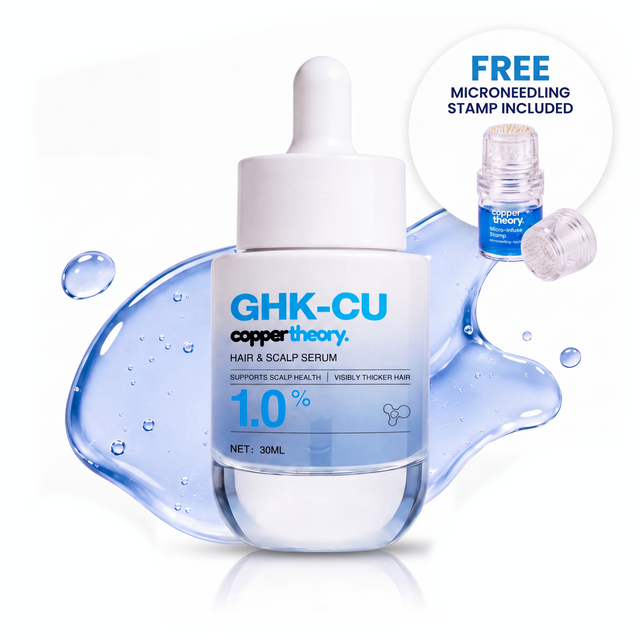
Direct routine answer
Use the serum as a consistent leave-in scalp step, applying a controlled amount across target zones and leaving it in until the next normal wash.
More product is not automatically better; complete, repeatable coverage is the goal.
Prepare the skin, scalp or hair correctly
Start with the correct surface: clean and dry or towel-dried where directed, free from heavy residue and accessible enough for even application. The product should reach the intended area rather than sitting only on hair, clothing or another product layer.
Read the product-specific results page, the matching concern hub, the testing and verification guide and the complete routine for the connected evidence and routine context.
Step-by-step application
- Cleanse with Scalp Shampoo when needed, apply Conditioner through the lengths and ends, rinse, towel-dry or dry the scalp, then apply the Hair & Scalp Serum directly to the target zones and leave it in.
- Use a controlled amount and spread it across the target area instead of flooding one point.
- Allow the product to settle before adding the next step or contacting pillows, hats or styling products.
- Keep the routine consistent enough to judge comfort, application quality and the stated result timeframe.
Formula roles during use
Formula summary: 1.4% GHK-Cu and a 3.4% declared peptide complex. The 3.4% declared peptide complex is 1.4% GHK-Cu plus 2% Acetyl Tetrapeptide-3. The separate 2% Red Clover Extract is botanical support, not a peptide.
| Declared level | Ingredient or system | Role in this formula |
|---|---|---|
| 1.4% | GHK-Cu (Copper Tripeptide-1) | Core copper-peptide component of the leave-in scalp system. |
| 2% | Acetyl Tetrapeptide-3 | The second peptide in the declared peptide complex; positioned around density and follicle anchoring. |
| 2% | Red Clover Extract | Botanical support for the thinning-zone system; it is not a peptide and is not included in the 3.4% peptide total. |
| 2% | Niacinamide | Supports scalp-barrier condition, moisture balance and comfortable daily use. |
| 1% | Panthenol | Supports hydration and hair-fibre flexibility. |
| 0.10% | Sodium Hyaluronate | Lightweight water-binding support for the scalp. |
| 0.25% | Arginine | Conditioning and formula-pH support. |
| 0.20% | Allantoin | Supports comfort for dry or stressed scalp conditions. |
The ingredient roles explain why placement, contact time and routine order matter. They do not mean that applying more product creates proportionally stronger results.
What to pair, separate or simplify
They can sometimes be used in the same broader routine because they are not identical technologies, but overlap, tolerance and complexity should be considered. The simpler decision is to choose the formula that already covers the main goal before adding another product.
- Follow any medicine or device instructions before cosmetic advice.
- Separate potentially irritating steps when the skin or scalp becomes difficult to assess.
- Keep rinse-off and leave-on roles distinct.
- Stop or reduce use when persistent irritation develops and seek professional advice for concerning symptoms.
Common application mistakes
- Applying to the wrong area or only to the hair lengths.
- Using excessive product and creating residue, pilling or unnecessary cost.
- Changing several products at once and losing the ability to identify the cause of irritation.
- Judging a long-cycle result after only a few days.
- Ignoring the product label or a medicine/device instruction.
How to track results
Use consistent application, lighting, photos and notes. Track comfort and immediate feel separately from longer-term appearance changes. A cleansing, hydration or slip endpoint can appear earlier than a hair-density or firmness endpoint.
| Recorded change | Endpoint | Timeframe or method |
|---|---|---|
| +32% | Hair density | Measured after 12 weeks |
| −41% | Scalp buildup | Measured after 8 weeks |
| +24% | Strand thickness and strength | Measured after 12 weeks |
Participant-reported outcomes: 92% reported increased density; 87% reported reduced shedding; 90% reported thicker hair. These are perception-based outcomes and are not the same as instrumental measurements.
Research, limitations and next step
Relevant research includes AHK-Cu (a different tripeptide-copper complex) and human hair follicles — PubMed, Topical GHK-Cu delivery study — PubMed. Use it to understand ingredient or procedure context, not as a guarantee. Continue to the product results page, the testing guide and the live product page.
Relevant CopperTheory products
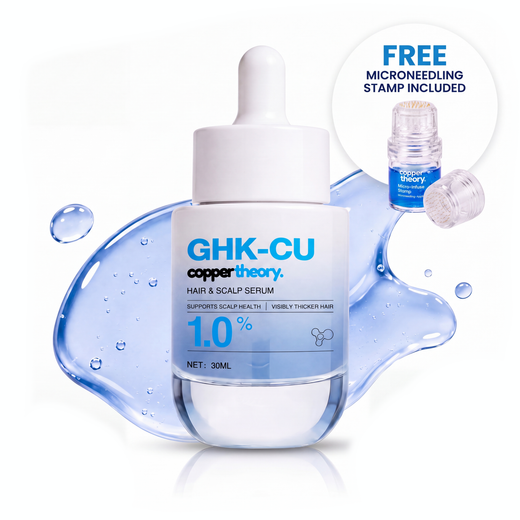
1.4% GHK-Cu Copper Peptide Hair Growth Serum for Thinning & Density
GHK-Cu Hair & Scalp Serum is the concentrated leave-in treatment step for the hairline, temples, crown and other thinning zones.
View product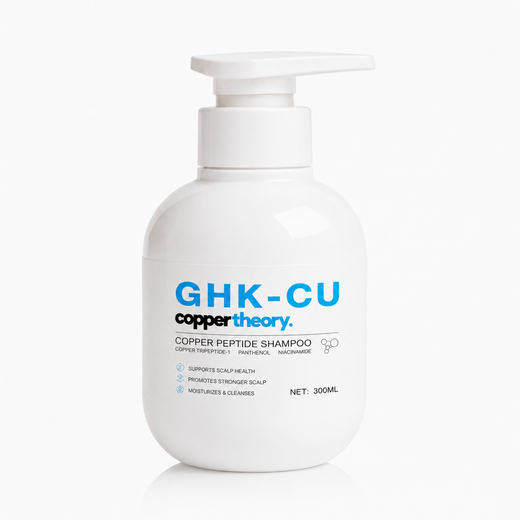
1% GHK-Cu Copper Peptide Hair Growth Shampoo for Hair Loss, Buildup & Scalp Care
GHK-Cu Scalp Shampoo is the cleansing step that removes oil, sweat, flakes and styling residue before the leave-in serum.
View product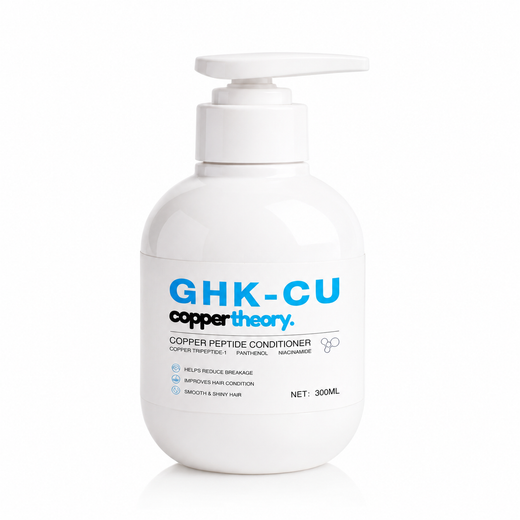
1% GHK-Cu Copper Peptide Hair Growth Conditioner for Breakage & Detangling
GHK-Cu Conditioner is the wash-day step for slip, detangling, cuticle smoothing, moisture and lower handling friction.
View productGHK-Cu Hair Serum Daily Routine: Frequency, Amount and Leave-In Time FAQ
What is the practical routine answer for GHK-Cu Hair Serum Daily Routine: Frequency, Amount and Leave-In Time?
Use the serum as a consistent leave-in scalp step, applying a controlled amount across target zones and leaving it in until the next normal wash. More product is not automatically better; complete, repeatable coverage is the goal.
How should you prepare before using GHK-Cu Hair Serum Daily Routine: Frequency, Amount and Leave-In Time?
Start with the correct surface: clean and dry or towel-dried where directed, free from heavy residue and accessible enough for even application. The product should reach the intended area rather than sitting only on hair, clothing or another product layer. Read the product-specific results page , the matching concern hub , the testing and verification guide and the complete routine for the connected evidence and routine context. On this page, that point is applied specifically to GHK-Cu Hair Serum Daily Routine: Frequency, Amount and Leave-In Time.
What mistakes should you avoid with GHK-Cu Hair Serum Daily Routine: Frequency, Amount and Leave-In Time?
Applying to the wrong area or only to the hair lengths. Using excessive product and creating residue, pilling or unnecessary cost. Changing several products at once and losing the ability to identify the cause of irritation. Judging a long-cycle result after only a few days. Ignoring the product label or a medicine/device instruction. On this page, that point is applied specifically to GHK-Cu Hair Serum Daily Routine: Frequency, Amount and Leave-In Time.
What does the evidence for GHK-Cu Hair Serum Daily Routine: Frequency, Amount and Leave-In Time support, and what does it not prove?
Relevant research includes AHK-Cu (a different tripeptide-copper complex) and human hair follicles — PubMed , Topical GHK-Cu delivery study — PubMed . Use it to understand ingredient or procedure context, not as a guarantee. Continue to the product results page , the testing guide and the live product page .
Sources and further reading
External sources are linked for ingredient, category or official product context. They do not automatically prove the finished CopperTheory formula.
Continue with the complete CopperTheory evidence and routine path
Use the linked product, results and verification pages together. The live product page remains the source for current price, stock, size and purchase options.