
GHK-Cu vs Minoxidil for Hair Growth: Evidence, Use and Expectations
Minoxidil is a drug with labelled use and human clinical evidence for certain forms of hair loss. Topical GHK-Cu serum is a cosmetic scalp-care product supported mainly by laboratory and preclinical research. They are not equivalent and should not be marketed as interchangeable.
This comparison matters because both products may appear in hair growth searches while occupying different evidence and regulatory categories. A fair comparison does not make GHK-Cu sound weak; it makes the role precise.
This guide compares what each product is, the evidence behind it, routine use, side effects and when diagnosis matters. It does not provide injectable GHK-Cu or dosing instructions.
What minoxidil is
Topical minoxidil is a drug used for specific hair-loss indications. Its label includes directions, warnings, expected-use conditions and advice about when to stop or seek care. Randomized human trials form part of its evidence base.
That does not mean it suits every person or every cause of hair loss. Users should follow the exact label and seek qualified advice when the pattern, health history or reaction creates uncertainty.
What topical GHK-Cu serum is
A GHK-Cu hair serum is a cosmetic leave-on scalp product containing Copper Tripeptide-1. It can be positioned for thinning hair, hair density and hair-growth-support routines, but it is not approved as a hair-loss medicine.
Research includes laboratory, review and animal-model work. Those findings support scientific interest, not a claim that a retail serum matches minoxidil in humans.
Evidence: direct comparison
Minoxidil: human clinical trial evidence and formal drug labelling.
GHK-Cu: extensive ingredient research with more limited direct human evidence for finished topical hair products.
There is no basis for claiming that GHK-Cu is equal or superior to minoxidil without appropriate direct comparative trials.
Routine and application differences
Minoxidil must be used according to its product label. GHK-Cu serum should be used according to its cosmetic directions, generally as a small leave-on amount applied directly to scalp focus areas.
Do not combine them automatically. The practical issues include scalp tolerance, vehicle ingredients, drying time and adherence. A pharmacist, doctor or dermatologist can advise on individual use.
Side effects and tolerance
Minoxidil labels describe warnings and possible adverse effects; those official instructions take priority. Cosmetic GHK-Cu products can also irritate some users because tolerance depends on the full formula, not just the peptide.
Stop and seek advice for significant reactions. Sudden hair loss, scalp disease or systemic symptoms should not be self-managed by adding more products.
Which option fits which goal?
Someone seeking an evidence-based drug option for a labelled hair-loss pattern may discuss minoxidil with a qualified professional. Someone seeking a cosmetic scalp serum for hair density and a structured hair growth routine may choose GHK-Cu.
The categories can coexist, but neither choice removes the need to understand the cause of hair loss.
Claims to reject
- “GHK-Cu works exactly like minoxidil.”
- “Copper peptides cure alopecia.”
- “Guaranteed regrowth in days.”
- “No side effects for anyone.”
- “You never need diagnosis.”
Strong language is useful only when it remains true. Hair growth, hair loss, thinning hair and hair density can be used directly without converting cosmetic support into a medical guarantee.
The practical decision
Choose based on evidence category, personal goals, tolerance and professional advice—not because two products share a search result. Minoxidil has the stronger direct human evidence for labelled use. GHK-Cu has a rational cosmetic role and promising preclinical research.
If using a GHK-Cu serum, apply it consistently to the scalp. If using minoxidil, follow the label exactly. If the cause of loss is unclear, investigate it.
The CopperTheory cosmetic pathway
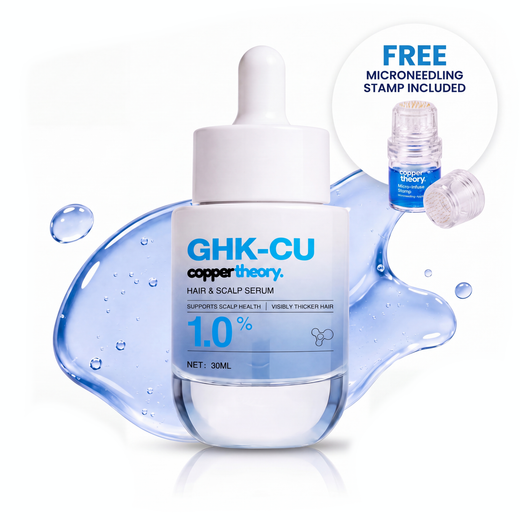
GHK-Cu Copper Peptide Hair Growth Serum for Thinning Hair & Hair Density
A cosmetic leave-on scalp serum for thinning hair, hair density and hair growth support.
View product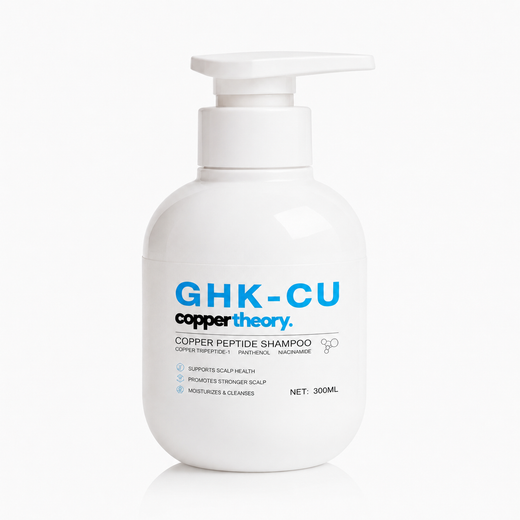
GHK-Cu Hair Growth Shampoo for Cleaner Scalp & Stronger Hair
The wash-day cleansing step in the CopperTheory scalp routine.
View product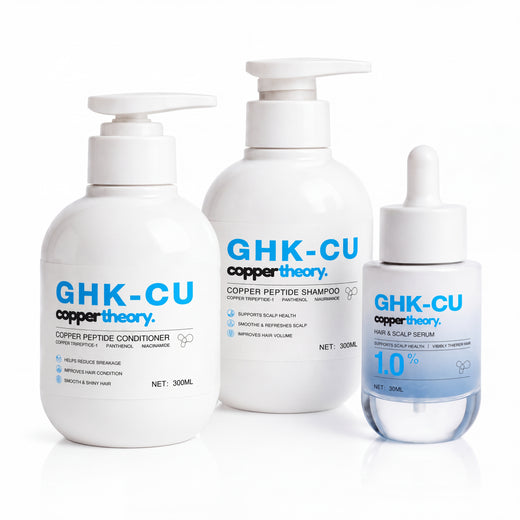
Complete 3-Step GHK-Cu Hair Growth Routine for Thinning Hair
A complete cosmetic shampoo, conditioner and serum routine.
View productGHK-Cu vs Minoxidil for Hair Growth: Evidence, Use and Expectations FAQ
Is GHK-Cu the same as minoxidil?
No. GHK-Cu serum is a cosmetic product; minoxidil is a drug.
Which has stronger human evidence?
Minoxidil has the stronger direct human clinical evidence for its labelled uses.
Can GHK-Cu replace minoxidil?
Do not treat it as an equivalent replacement. The categories and evidence differ.
Can both be used together?
Do not assume a combination is suitable. Follow labels and seek professional advice.
Does GHK-Cu regrow hair?
A cosmetic GHK-Cu serum cannot promise guaranteed hair regrowth.
Does minoxidil work for every type of loss?
No. Hair-loss causes differ, and the official label defines intended use and warnings.
When should I seek diagnosis?
Seek care for sudden, patchy, painful, inflamed, scarring or unexplained hair loss.
Does this article give dosage instructions?
No. It compares topical categories and directs users to official product labelling and qualified advice.
Sources and further reading
- US FDA — Minoxidil topical solution prescribing information
- Olsen et al. — Randomized clinical trial of topical minoxidil in male pattern hair loss (PMID 12196747)
- Dou et al. — The human tripeptide GHK-Cu in prevention of oxidative stress and degenerative conditions (PMID 35083444)
- Pickart et al. — Regenerative and protective actions of the GHK-Cu peptide in the light of the new gene data (PMID 29986520)
- Topical GHK-Cu delivery study in a mouse hair-growth model (PMID 38026438)
Choose the correct evidence category
Use CopperTheory as a cosmetic scalp routine. Follow minoxidil’s official label if you use the drug, and seek diagnosis when hair loss is sudden, patchy or unexplained.