Home › Learn › Copper Peptides FAQ
CopperTheory FAQ Guide

Copper Peptides FAQ

Answers to common GHK-Cu questions about skin, hair, scalp care, collagen, routines and ingredients.

This FAQ answers common questions about GHK-Cu, Copper Tripeptide-1, copper peptide skincare, scalp routines, haircare products and CopperTheory ingredients.

Use this page as a quick answer hub, then explore the deeper CopperTheory pillar pages for full explanations.

CopperTheory GHK-Cu Skin Hair and Scalp Routine
01

GHK-Cu Basics FAQ

What are copper peptides?

Copper peptides are peptide molecules that bind with copper. In skincare and haircare, GHK-Cu is one of the most recognised copper peptides.

What is GHK-Cu?

GHK-Cu stands for Glycyl-L-Histidyl-L-Lysine Copper. It is a copper-binding peptide made from three amino acids and copper.

What does GHK-Cu stand for?

GHK-Cu stands for Glycyl-L-Histidyl-L-Lysine Copper. GHK refers to the peptide, and Cu refers to copper.

Is Copper Tripeptide-1 the same as GHK-Cu?

Copper Tripeptide-1 is the cosmetic ingredient name commonly associated with GHK-Cu copper peptide.

Why is GHK-Cu popular?

GHK-Cu is popular because it is discussed around skin structure, collagen, elastin, fibroblasts, scalp health and haircare routines.

Is GHK-Cu naturally occurring?

GHK is naturally found in the body. When it binds to copper, it forms GHK-Cu.

Why are copper peptides blue?

Copper peptides can appear blue because of the copper component in the ingredient.

Is GHK-Cu used in skincare and haircare?

Yes. GHK-Cu is used in both skincare and scalp-focused haircare routines.

Where should I start learning about GHK-Cu?

Start with What Is GHK-Cu?, then explore the Copper Peptides Research Hub.

02

Copper Peptides for Skin FAQ

What do copper peptides do in skincare?

Copper peptides are used in advanced skincare routines because they are discussed around skin structure, collagen, elastin, fibroblasts, texture and firmer-looking skin.

Do copper peptides support collagen?

GHK-Cu is widely discussed in skincare and research for its relationship with collagen-related pathways and fibroblast activity.

Do copper peptides support elastin?

Copper peptides are often discussed around elastin because elastin is connected to bounce, flexibility and resilient-looking skin.

Are copper peptides good for mature-looking skin?

Copper peptides are popular in mature-looking skin routines because they are connected to conversations around firmness, elasticity, texture and skin structure.

Can copper peptides help with skin texture?

Copper peptides are often used in routines focused on smoother-looking skin texture, firmness and overall skin quality.

Are copper peptides good for firm-looking skin?

Yes, copper peptides are commonly discussed in routines focused on firmer-looking and more supported-looking skin.

Can I use GHK-Cu every day?

Many GHK-Cu cosmetic products are designed for consistent routine use. Follow the directions on each CopperTheory product.

Should I use copper peptides morning or night?

GHK-Cu can fit into morning or night routines depending on your preference and product directions. If used in the morning, finish with sunscreen.

What CopperTheory skincare product should I start with?

Start with the GHK-Cu Copper Peptide Collagen Support Face Serum.

What is the difference between a copper peptide serum and cream?

The serum is the focused copper peptide step, while the cream helps complete the routine with moisturising and comfort-supporting ingredients.

Do copper peptides replace sunscreen?

No. Sunscreen is still important during the day. Copper peptide skincare should be part of a routine, not a replacement for sun protection.

Can I use copper peptides with face masks?

Yes. CopperTheory face masks are designed as weekly boosters that fit into the wider GHK-Cu skincare routine.

Deep skin guide

Go deeper into collagen, elastin, fibroblasts and skin texture.

Copper Peptides for Skin
03

Copper Peptides for Hair FAQ

What do copper peptides do in haircare?

Copper peptides are used in scalp-focused haircare routines because they are discussed around scalp health, follicle biology and the hair growth cycle.

Are copper peptides good for scalp health?

Copper peptides fit naturally into scalp-focused routines because healthy-looking hair starts at the scalp and follicle.

What is a copper peptide hair serum?

A copper peptide hair serum is a leave-on scalp product built around copper peptide ingredients such as Copper Tripeptide-1.

Why does scalp health matter?

The scalp is the environment surrounding the follicle. Every visible hair strand grows from a follicle embedded in the scalp.

What is the hair growth cycle?

The hair growth cycle is commonly described in three phases: anagen, catagen and telogen.

What is anagen?

Anagen is the active growth phase of the hair cycle.

What is catagen?

Catagen is the transition phase of the hair cycle.

What is telogen?

Telogen is the resting phase before shedding and the next cycle begins.

How do I use a hair growth serum?

Apply the serum directly to the scalp as directed, usually by parting the hair and targeting the scalp rather than only coating the strand.

How often should I use a scalp serum?

Follow the directions on the specific product. Hair routines usually need consistency over time.

What CopperTheory hair product should I start with?

Start with the GHK-Cu Copper Peptide Hair Growth Serum, then add shampoo and conditioner.

Can I use the hair serum with shampoo and conditioner?

Yes. CopperTheory’s hair serum is designed to pair with the GHK-Cu shampoo and conditioner as part of a complete scalp and hair routine.

Deep hair guide

Go deeper into scalp health, follicles and hair cycle biology.

Copper Peptides for Hair
04

Ingredient FAQ

What are the key ingredients in the face serum?

The face serum includes Copper Tripeptide-1, Acetyl Hexapeptide-8, panthenol, niacinamide, sodium hyaluronate, hydrolyzed sodium hyaluronate, allantoin and arginine.

What are the key ingredients in the face cream?

The face cream includes Copper Tripeptide-1, squalane, argan oil, ceramide NP, phytosphingosine, cholesterol, sodium hyaluronate, panthenol, niacinamide and allantoin.

What are the key ingredients in the hair serum?

The hair serum includes Copper Tripeptide-1, Acetyl Tetrapeptide-3, Trifolium Pratense Flower Extract, arginine, panthenol, niacinamide, sodium hyaluronate and allantoin.

What is Acetyl Hexapeptide-8?

Acetyl Hexapeptide-8 is a cosmetic peptide used in advanced skincare formulas.

What is Acetyl Tetrapeptide-3?

Acetyl Tetrapeptide-3 is a peptide used in the CopperTheory hair serum formula alongside Trifolium Pratense Flower Extract.

What is Trifolium Pratense Flower Extract?

Trifolium Pratense Flower Extract is red clover flower extract, included in the CopperTheory hair serum formula.

What does sodium hyaluronate do?

Sodium hyaluronate is a hyaluronic acid salt used to support hydration and a plumper-looking finish.

What is hydrolyzed sodium hyaluronate?

Hydrolyzed sodium hyaluronate is a form of hyaluronic acid used in skincare for hydration support.

What does panthenol do?

Panthenol, also known as provitamin B5, helps support a softer and more comfortable skin or hair feel.

What does niacinamide do?

Niacinamide is a popular skincare and scalp care ingredient used in CopperTheory formulas.

What is squalane?

Squalane is a lightweight moisturising ingredient used in the CopperTheory face cream for comfort and softness.

What is Ceramide NP?

Ceramide NP is a barrier-supporting lipid used in the CopperTheory face cream.

What is cholesterol in skincare?

Cholesterol is a skin-identical lipid used in skincare formulas, often alongside ceramides and fatty components.

What is phytosphingosine?

Phytosphingosine is a lipid-related skincare ingredient used in the CopperTheory face cream formula.

What is allantoin?

Allantoin is used in skincare and haircare formulas to support a comfortable product feel.

What is arginine?

Arginine is an amino acid used in formulas for conditioning, pH support and overall formula performance.

Where can I see all ingredients?

Visit the Ingredient Transparency page for product ingredient lists and role explanations.

05

Routine FAQ

What is the best CopperTheory skincare routine?

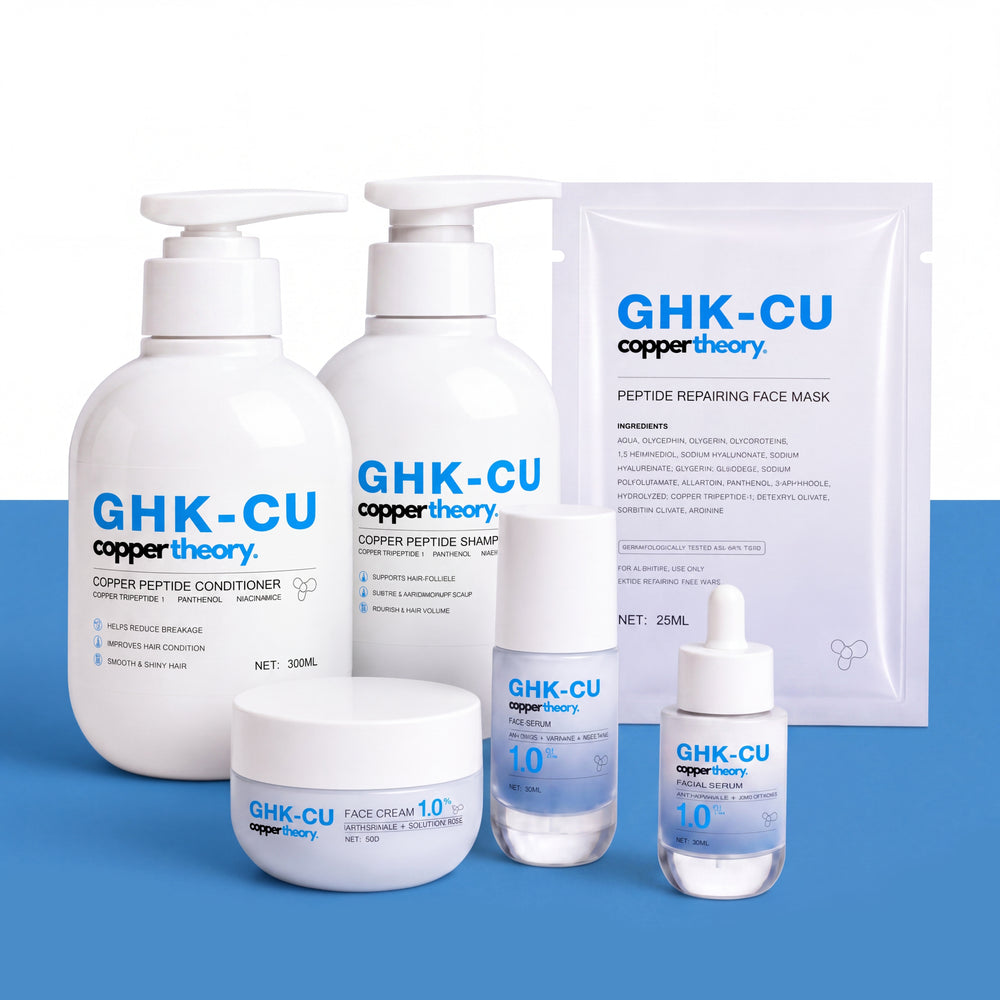
A simple routine is cleanser, GHK-Cu Copper Peptide Collagen Support Face Serum, Firming Face Cream and weekly masks as boosters.

What is the best CopperTheory hair routine?

A simple routine is GHK-Cu Hair Growth Shampoo, GHK-Cu Hair Growth Conditioner and GHK-Cu Copper Peptide Hair Growth Serum applied to the scalp.

Do I need the complete routine?

The complete routine is the easiest way to use CopperTheory products together, but you can also start with the face serum for skin or hair serum for scalp care.

Can I use multiple GHK-Cu products together?

Yes. CopperTheory products are designed to work as routines across skincare, haircare and scalp care.

What order should I apply my skincare?

A simple order is cleanser, face serum, face cream, then sunscreen during the day.

Should I use masks with the routine?

Masks can be used as weekly routine boosters depending on your skin goal and product directions.

How long does GHK-Cu take to work?

Visible cosmetic results depend on consistency, product use, routine, skin type and hair goals. Skin and hair routines usually need time rather than overnight expectations.

What is the Complete GHK-Cu Routine?

The Complete GHK-Cu Routine brings together CopperTheory skin, hair and scalp products built around GHK-Cu copper peptide.

Skincare Routine

Cleanser, serum, cream and masks.

Read guide

Hair Routine

Shampoo, conditioner and scalp serum.

Read guide

Research Hub

All GHK-Cu education in one place.

Explore hub
06

Comparison FAQ

GHK-Cu vs retinol: what is the difference?

GHK-Cu is a copper peptide used in routines focused on skin structure and comfort. Retinol is a vitamin A derivative used in many ageing-focused routines. Read the full comparison on GHK-Cu vs Retinol.

GHK-Cu vs rosemary oil: what is the difference?

GHK-Cu is a copper peptide used in scalp-focused formulas, while rosemary oil is a botanical oil commonly discussed in haircare. Read GHK-Cu vs Rosemary Oil.

GHK-Cu vs minoxidil: what is the difference?

GHK-Cu is used in cosmetic scalp care routines, while minoxidil is a regulated hair growth medicine in many markets. Read GHK-Cu vs Minoxidil.

GHK-Cu vs hyaluronic acid: what is the difference?

GHK-Cu is a copper peptide, while hyaluronic acid ingredients like sodium hyaluronate are mainly hydration-supporting ingredients.

GHK-Cu vs vitamin C: what is the difference?

GHK-Cu is a copper peptide, while vitamin C is commonly used in brightening and antioxidant-focused skincare routines.

Copper peptides vs collagen creams: what is the difference?

Copper peptides are peptide ingredients discussed around skin structure, while collagen creams often focus on moisturising and surface feel.

07

Start With These Products

GHK-Cu Copper Peptide Collagen Support Face Serum

Collagen Support Face Serum

The hero skincare serum built around Copper Tripeptide-1.

Shop Face Serum
GHK-Cu Copper Peptide Hair Growth Serum

Hair Growth Serum

The targeted leave-on scalp step.

Shop Hair Serum
Complete CopperTheory GHK-Cu Routine

Complete GHK-Cu Routine

The full skin, hair and scalp routine.

Shop Complete Routine

Need the full explanation?

Start with the master GHK-Cu guide or explore the CopperTheory Research Hub.