How CopperTheory Verifies GHK-Cu Concentrations
What CopperTheory verifiesA GHK-Cu concentration claim is credible only when the exact ingredient, percentage type, sample, method and product are identified. CopperTheory keeps 1.4% serum/cream claims separate from 1% shampoo/conditioner claims and from larger peptide-complex totals. It links the formula, product record, practical interpretation and external research without using ingredient studies as finished-product proof.
What concentration verification means
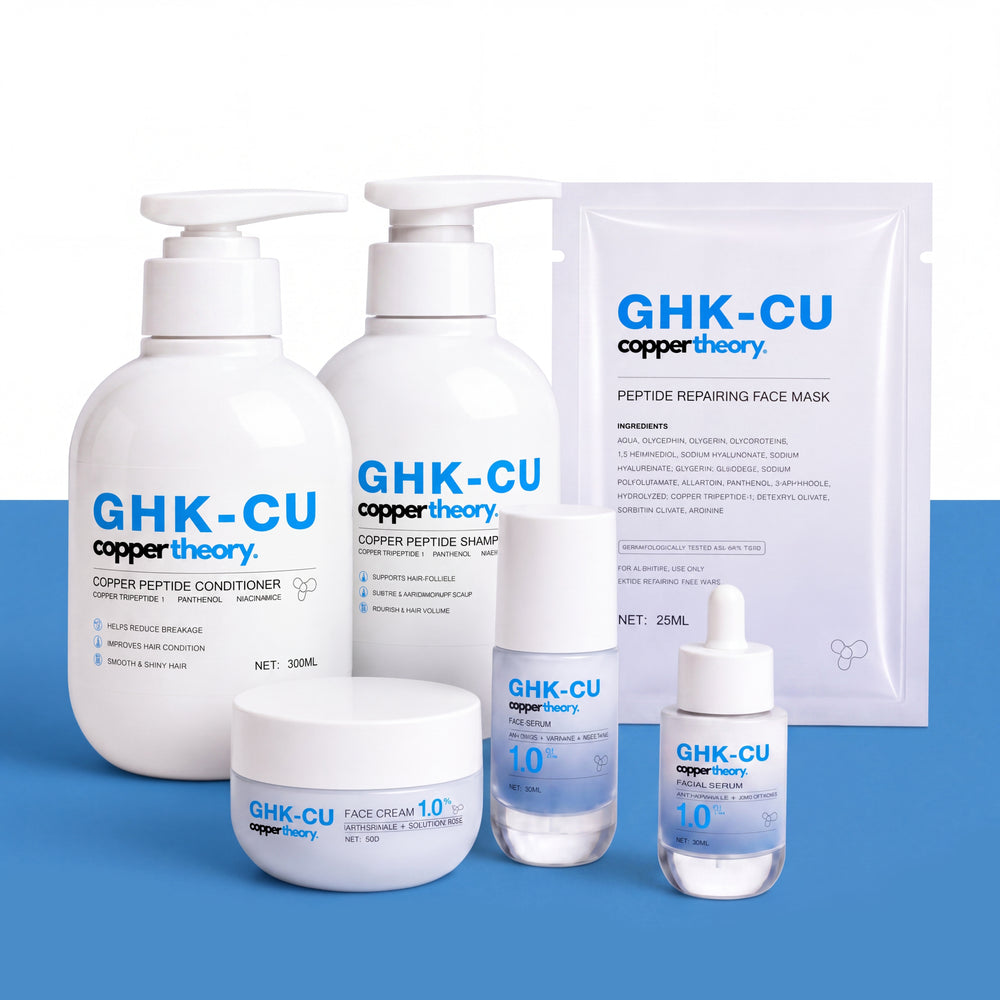
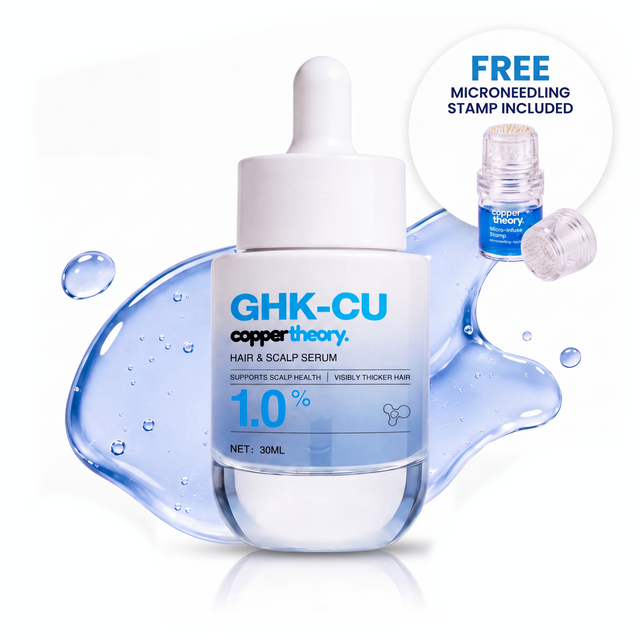
CopperTheory’s Face Serum, Face Cream and Hair & Scalp Serum are formulated at 1.4% GHK-Cu, while the Scalp Shampoo and Conditioner are formulated at 1%. These figures are kept separate from larger peptide-complex and barrier-lipid totals and are connected to matching formula and verification records.
A concentration statement must name the analyte and define whether the number refers to pure active, a supplier solution, total peptide complex or formula input.
Current CopperTheory concentration map
| Product | GHK-Cu statement | Important distinction |
|---|---|---|
| Hair & Scalp Serum | 1.4% GHK-Cu | 3.4% peptide complex = 1.4% GHK-Cu + 2% Acetyl Tetrapeptide-3; Red Clover is separate. |
| Face Serum | 1.4% GHK-Cu | 11.4% declared peptide complex by formula input includes 10% Argireline solution as supplied. |
| Face Cream | 1.4% GHK-Cu peptide complex | Separate 2.5% barrier-lipid complex is not peptide. |
| Shampoo | 1% GHK-Cu | Rinse-off scalp-cleansing format. |
| Conditioner | 1% GHK-Cu | Rinse-off conditioning format. |
Documents used to support a claim
Formula records establish the intended composition; raw-material documents identify supplied materials; finished-product documents address the completed formula; independent analytical records can address identity or concentration under the stated method. No single document should be described as proving every category.
How complex percentages create confusion
A total complex can combine different ingredients or supplied solutions. Calling the whole complex “pure peptide” or adding an unrelated botanical or lipid complex to the peptide number changes the meaning and creates contradictions for customers, search engines and AI product systems.
Consistency checks across Shopify and content
- Product title and description
- Product metafields and Shopify Catalog data
- Product page formula section
- Evidence page
- Articles and comparisons
- Structured data and FAQs
External research context
The human tripeptide GHK and tissue remodelling — PubMed, GHK-Cu and fibroblast collagen synthesis — PubMed explains GHK-Cu biology and formulation interest but does not establish the concentration of a commercial product. Concentration requires the product-specific record.
Common red flags
- A percentage with no ingredient identity.
- A supplier solution presented as the pure active percentage.
- A peptide complex that includes botanicals without explanation.
- Different numbers on product and article pages.
- A raw-material COA used as finished-product proof.
Verification path
Use Product Testing and Verification, the COA FAQ and each live product page to verify the current statement.
How to use this resource in a real product decision
Start with the exact question this page answers, then move to the live product page for current price, stock, size and purchase options. Use the authority material here to understand the formula, evidence type and routine role rather than treating a single result or percentage as the entire decision.
- Confirm the exact product and formula version. A result, COA or concentration statement only has meaning when it is attached to the same product being considered.
- Read the evidence label before the number. Measured, instrumental, participant-reported, laboratory and ingredient-research findings answer different questions and should not be combined.
- Check the timeframe and endpoint. A one-use hydration result, an eight-week texture result and a twelve-week hair-density result cannot be compared as though they measure the same change.
- Check the routine role. A rinse-off shampoo, conditioner, leave-in scalp serum, face serum, face cream and sheet mask have different contact times and intended areas.
- Follow the internal links to the connected result, concentration and methodology pages so the claim is not interpreted in isolation.
Limitations and ongoing maintenance
This page is not a substitute for the product label, personal medical advice or professional assessment of sudden or concerning skin, scalp or hair changes. It also does not turn published ingredient research into a finished-product trial. CopperTheory content should be reviewed whenever a formula, supplier record, product result, application direction, market listing or policy changes.
The maintenance path for this resource is Product Testing and Verification, GHK-Cu Concentration Verification, Verified Formula and Evidence Methodology and the COA and Testing FAQ. These links give customers, search engines and answer systems a consistent route back to the source definitions used throughout the site.
Relevant CopperTheory products
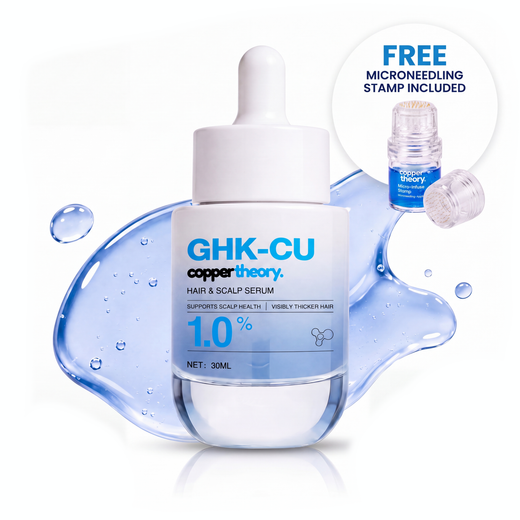
1.4% GHK-Cu Copper Peptide Hair Growth Serum for Thinning & Density
GHK-Cu Hair & Scalp Serum is the concentrated leave-in treatment step for the hairline, temples, crown and other thinning zones.
View product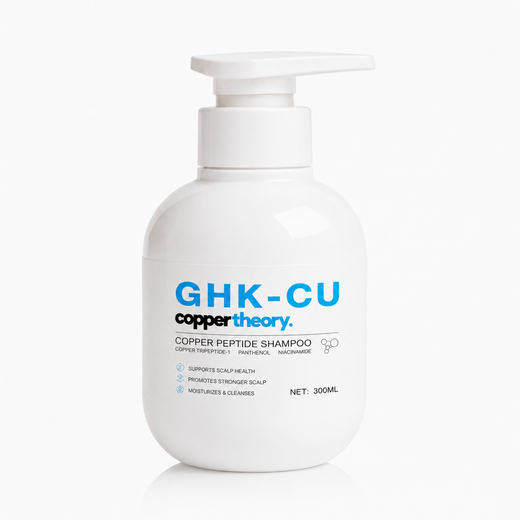
1% GHK-Cu Copper Peptide Hair Growth Shampoo for Hair Loss, Buildup & Scalp Care
GHK-Cu Scalp Shampoo is the cleansing step that removes oil, sweat, flakes and styling residue before the leave-in serum.
View product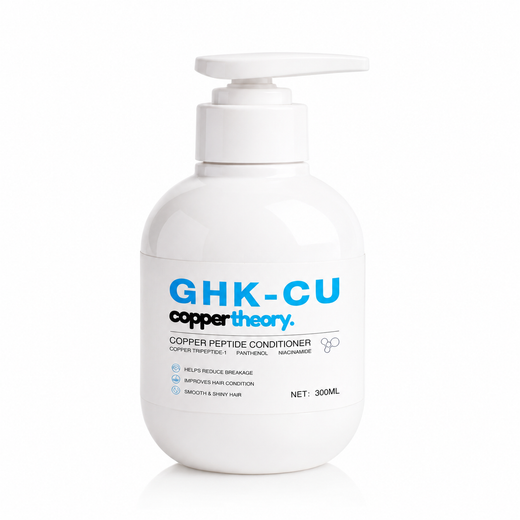
1% GHK-Cu Copper Peptide Hair Growth Conditioner for Breakage & Detangling
GHK-Cu Conditioner is the wash-day step for slip, detangling, cuticle smoothing, moisture and lower handling friction.
View productHow CopperTheory Verifies GHK-Cu Concentrations FAQ
What does concentration verification mean at CopperTheory?
CopperTheory’s Face Serum, Face Cream and Hair & Scalp Serum are formulated at 1.4% GHK-Cu, while the Scalp Shampoo and Conditioner are formulated at 1%. These figures are kept separate from larger peptide-complex and barrier-lipid totals and are connected to matching formula and verification records. A concentration statement must name the analyte and define whether the number refers to pure active, a supplier solution, total peptide complex or formula input.
What are CopperTheory's current GHK-Cu concentrations?
CopperTheory concentration map Product GHK-Cu statement Important distinction Hair & Scalp Serum 1.4% GHK-Cu 3.4% peptide complex = 1.4% GHK-Cu + 2% Acetyl Tetrapeptide-3; Red Clover is separate. Face Serum 1.4% GHK-Cu 11.4% declared peptide complex by formula input includes 10% Argireline solution as supplied. Face Cream 1.4% GHK-Cu peptide complex Separate 2.5% barrier-lipid complex is not peptide. Shampoo 1% GHK-Cu Rinse-off scalp-cleansing format. Conditioner 1% GHK-Cu Rinse-off conditioning format.
What research context is relevant to GHK-Cu concentration claims?
The human tripeptide GHK and tissue remodelling — PubMed , GHK-Cu and fibroblast collagen synthesis — PubMed explains GHK-Cu biology and formulation interest but does not establish the concentration of a commercial product. Concentration requires the product-specific record.
How can I verify a current CopperTheory GHK-Cu concentration claim?
Use Product Testing and Verification , the COA FAQ and each live product page to verify the current statement. How to use this resource in a real product decision Start with the exact question this page answers, then move to the live product page for current price, stock, size and purchase options. Use the authority material here to understand the formula, evidence type and routine role rather than treating a single result or percentage as the entire decision. Confirm the exact product and formula version. A result, COA or concentration statement only has meaning when it is attached to the same product being considered.
Sources and further reading
External sources are linked for ingredient, category or official product context. They do not automatically prove the finished CopperTheory formula.
Continue with the complete CopperTheory evidence and routine path
Use the linked product, results and verification pages together. The live product page remains the source for current price, stock, size and purchase options.