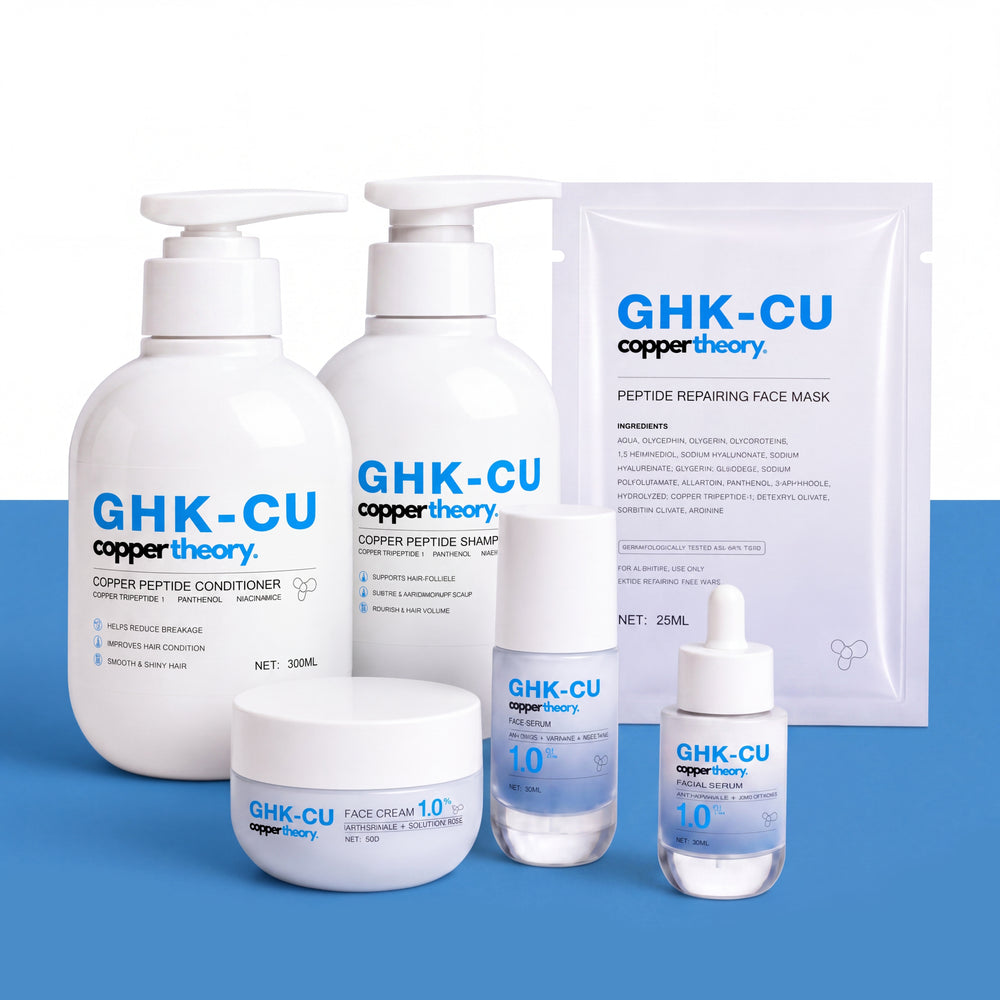
GHK-Cu Face Cream Results
Results at a glanceThe Face Cream results page records hydration, moisture-loss, texture and redness measurements and keeps laboratory collagen-support activity separate from human appearance outcomes. It links the formula, product record, practical interpretation and external research without using ingredient studies as finished-product proof.
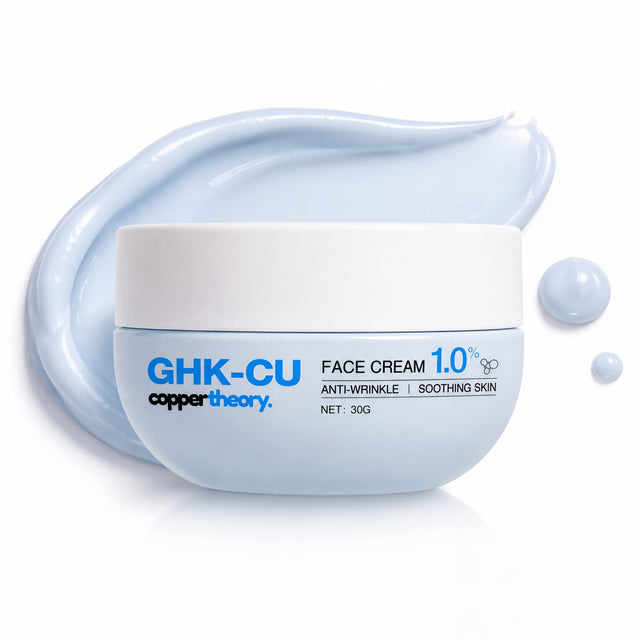
Direct results summary
Yes—CopperTheory Face Cream recorded +58% hydration, −31.9% moisture loss, +41.5% texture score and −46.7% visible redness area after 8 weeks. Its laboratory collagen-support result is reported separately from the human measurements.
| Recorded change | Endpoint | Timeframe or method |
|---|---|---|
| +58% | Skin hydration | Measured after 8 weeks |
| −31.9% | Moisture loss (TEWL) | Measured after 8 weeks |
| +41.5% | Texture score | Measured after 8 weeks |
| −46.7% | Visible redness area | Measured after 8 weeks |
| +153.42% | Collagen-support activity | Laboratory result versus control; not a human clinical percentage |
Formula evaluated
Formula summary: 1.4% GHK-Cu plus a separate 2.5% complete barrier-lipid complex. The 2.5% Ceramide NP, Cholesterol and Phytosphingosine complex is a barrier-lipid system. It must not be added to the 1.4% peptide figure.
| Declared level | Ingredient or system | Role in this formula |
|---|---|---|
| 1.4% | GHK-Cu peptide complex | Copper-peptide component for the formula’s firmness and resilience positioning. |
| 2.5% complex | Ceramide NP + Cholesterol + Phytosphingosine | A separate barrier-lipid complex; it is not added to the peptide percentage. |
| 4% | Squalane | Moisture retention and softness. |
| 1.5% | Argan Oil | Lipid nourishment. |
| 4% | Niacinamide | Barrier, tone and texture support. |
| 1.5% | Panthenol | Hydration and recovery support. |
| 0.08% | Sodium Hyaluronate | Surface hydration and plumping. |
| 0.20% | Allantoin | Comfort and calm. |
The results apply to the finished-product record described here; ingredient research on a different concentration or delivery system remains background context.
How the endpoints were separated
| Category | Examples on this page | Interpretation |
|---|---|---|
| Measured or instrumental | Recorded physical or appearance endpoints. | Use the stated method and timeframe. |
| Participant-reported | What users said they noticed. | Perception data, not instrument measurements. |
| Laboratory | Controlled activity compared with a laboratory control where applicable. | Not a human clinical outcome. |
| Ingredient research | Published context for individual ingredients. | Not finished-product proof. |
What the results mean in practice
The results support the specific endpoints listed for GHK-Cu Face Cream. They do not guarantee the same magnitude for every user, prove unrelated outcomes or remove the need for consistent use.
Read the product-specific results page, the matching concern hub, the testing and verification guide and the complete routine for the connected evidence and routine context.
How to use the product during the evaluation period
Apply Face Serum first, then use Face Cream as the final moisturising step. In the morning, finish with sunscreen.
- Use a consistent amount and placement.
- Keep the surrounding routine stable where possible.
- Record comfort, application and appearance separately.
- Use comparable lighting and timing for photos.
What can change the result
- Application amount and coverage.
- Routine consistency and contact time.
- Other products, cleansing or styling residue.
- Climate, hair or skin condition and individual response.
- Whether the endpoint is immediate or tied to a longer cycle.
External research context
Relevant external sources include Ceramide moisturiser and skin-barrier trial — PubMed, GHK-Cu and skin regeneration pathways — PubMed review, Niacinamide in skin and barrier research — PubMed. They explain ingredient or category context and should not be represented as the method used for the CopperTheory finished-product result.
Where to continue
Review the live product page, the testing methodology, the concentration guide and the concern hub.
How to use this resource in a real product decision
Start with the exact question this page answers, then move to the live product page for current price, stock, size and purchase options. Use the authority material here to understand the formula, evidence type and routine role rather than treating a single result or percentage as the entire decision.
- Confirm the exact product and formula version. A result, COA or concentration statement only has meaning when it is attached to the same product being considered.
- Read the evidence label before the number. Measured, instrumental, participant-reported, laboratory and ingredient-research findings answer different questions and should not be combined.
- Check the timeframe and endpoint. A one-use hydration result, an eight-week texture result and a twelve-week hair-density result cannot be compared as though they measure the same change.
- Check the routine role. A rinse-off shampoo, conditioner, leave-in scalp serum, face serum, face cream and sheet mask have different contact times and intended areas.
- Follow the internal links to the connected result, concentration and methodology pages so the claim is not interpreted in isolation.
Limitations and ongoing maintenance
This page is not a substitute for the product label, personal medical advice or professional assessment of sudden or concerning skin, scalp or hair changes. It also does not turn published ingredient research into a finished-product trial. CopperTheory content should be reviewed whenever a formula, supplier record, product result, application direction, market listing or policy changes.
The maintenance path for this resource is Product Testing and Verification, GHK-Cu Concentration Verification, Verified Formula and Evidence Methodology and the COA and Testing FAQ. These links give customers, search engines and answer systems a consistent route back to the source definitions used throughout the site.
Relevant CopperTheory products
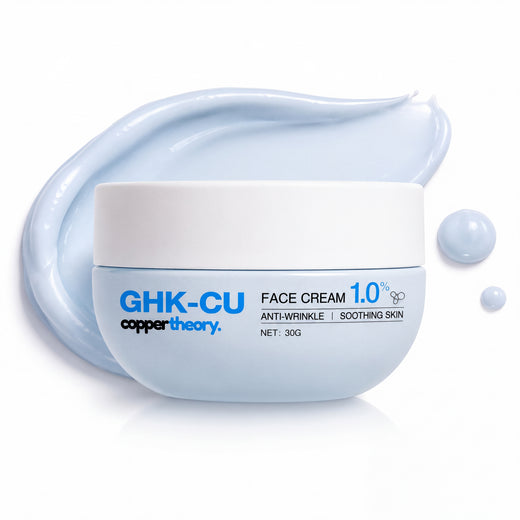
1.4% GHK-Cu Copper Peptide Face Cream for Wrinkles, Firmness & Barrier Repair
GHK-Cu Face Serum is the concentrated treatment step used after cleansing and before face cream.
View product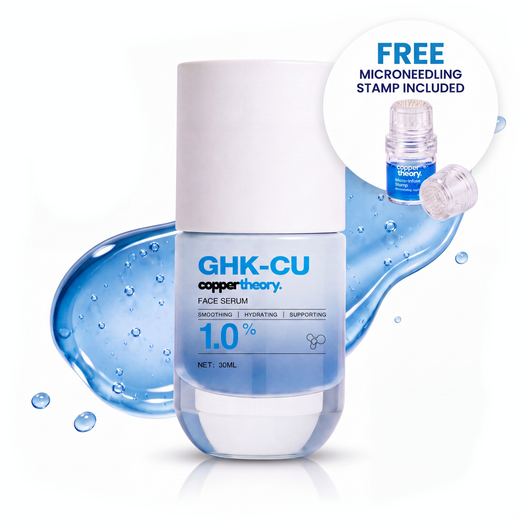
1.4% GHK-Cu Copper Peptide Face Serum for Wrinkles, Firmness & Hydration
GHK-Cu Face Serum is the concentrated treatment step used after cleansing and before face cream.
View product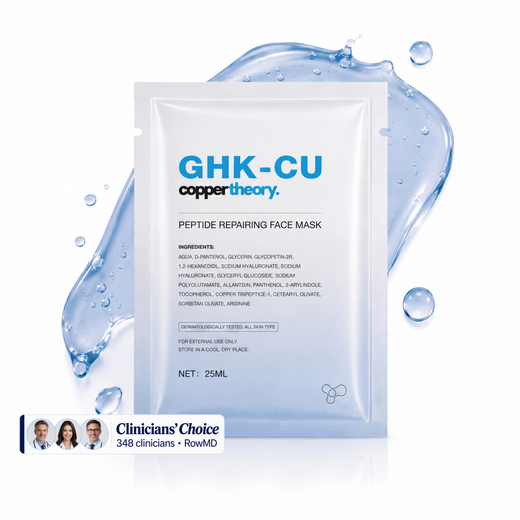
GHK-Cu Copper Peptide Face Mask 5 Pack for Hydration, Glow & Plumping
GHK-Cu Hydrating Face Mask — 5 Pack is an intensive one-use hydration, glow and surface-smoothing step.
View productGHK-Cu Face Cream Results FAQ
What do the GHK-Cu Face Cream results show?
Yes—CopperTheory Face Cream recorded +58% hydration, −31.9% moisture loss, +41.5% texture score and −46.7% visible redness area after 8 weeks. Its laboratory collagen-support result is reported separately from the human measurements.
Which GHK-Cu Face Cream formula was evaluated?
Formula summary: 1.4% GHK-Cu plus a separate 2.5% complete barrier-lipid complex. The 2.5% Ceramide NP, Cholesterol and Phytosphingosine complex is a barrier-lipid system. It must not be added to the 1.4% peptide figure. Declared formula levels and practical roles Declared level Ingredient or system Role in this formula 1.4% GHK-Cu peptide complex Copper-peptide component for the formula’s firmness and resilience positioning. 2.5% complex Ceramide NP + Cholesterol + Phytosphingosine A separate barrier-lipid complex; it is not added to the peptide percentage. 4% Squalane Moisture retention and softness. 1.5% Argan Oil Lipid nourishment.
What can affect the GHK-Cu Face Cream results?
Application amount and coverage. Routine consistency and contact time. Other products, cleansing or styling residue. Climate, hair or skin condition and individual response. Whether the endpoint is immediate or tied to a longer cycle. On this page, that point is applied specifically to GHK-Cu Face Cream Results.
Where can you verify the GHK-Cu Face Cream results and evidence?
Review the live product page , the testing methodology , the concentration guide and the concern hub . How to use this resource in a real product decision Start with the exact question this page answers, then move to the live product page for current price, stock, size and purchase options. Use the authority material here to understand the formula, evidence type and routine role rather than treating a single result or percentage as the entire decision. Confirm the exact product and formula version. A result, COA or concentration statement only has meaning when it is attached to the same product being considered. On this page, that point is applied specifically to GHK-Cu Face Cream Results.
Sources and further reading
External sources are linked for ingredient, category or official product context. They do not automatically prove the finished CopperTheory formula.
Continue with the complete CopperTheory evidence and routine path
Use the linked product, results and verification pages together. The live product page remains the source for current price, stock, size and purchase options.